Is Russian Oil Flowing to Bulgaria in 2026?
Bulgaria's only oil refinery, Lukoil Neftochim Burgas, processed Russian crude for most of its post-Soviet history. Since March 2024, that has been banned by law
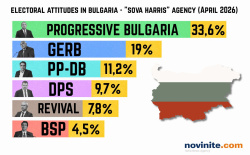
HOT: » Which party would you vote for (if you could) in the upcoming snap vote in Bulgaria on April 19?
 Send to Kindle
Shared concerns about Turkey's radicalism leads to expanding ties and new opportunities for economic and security cooperation.
By Barak Ravid
Haaretz.com
Since its relations with Turkey crumbled over the past year, Israel has begun looking to the Balkan states for new friends and allies. The new initiatives extend to shared intelligence, joint military exercises and boosting tourism, officials say.
In the past year Israel has expanded relations with Greece and Bulgaria and upgraded its existing ties with Cyprus, Romania, Serbia, Montenegro, Macedonia and Croatia. These states share concerns about Turkey's new radicalism and world jihad's growing influence there and see new opportunities for economic, technical and security cooperation with Israel.
"They realized a great danger was in store for them and the issue rose in the talks between Prime Minister Benjamin Netanyahu and Bulgarian Prime Minister Boyko Borisov in January," a senior Israeli official said.
The botched Israeli raid on a Turkish flotilla increased Bulgaria's motivation for intelligence and defense cooperation with Jerusalem. Borisov and Netanyahu had three conversations with each other within two weeks following the action, intended to facilitate the release of two Bulgarian journalists who had been on board one of the ships, the official said.
Borisov suggested increasing military cooperation by enabling the Israeli Air Force to use Bulgaria's bases and air space for training. The first training session is due to be held soon.
"Unlike the past, Borisov decided in favor of cooperation with Israel. Immediately after his election he visited Jerusalem, the first visit of a Bulgarian prime minister for the past 18 years," says Israel's ambassador to Bulgaria, Noah Gal-Gendler.
The Bulgarians are hoping that Israeli tourists who stopped visiting Turkey will come en masse to Bourgas and Varna on the Black Sea coast. Some 150,000 Israelis are expected to visit Bulgaria by the end of the year and Bulgaria wants to increase the number to 250,000 in 2011.
"Borisov's government sees us as top priority," says Gal-Gendler. "They are looking for a new economic engine like Israeli high-tech and want to learn how we did it," he says.
Israel's relations with Greece have also taken a dramatic turn. In February Greek Prime Minister George Papandreou met Netanyahu in Moscow's Cafe Pushkin restaurant.
Papandreou, who is seeking a greater role in the peace process, realized he must change Greece's relations with Israel. After the Turkish flotilla incident, the Greek army and security forces urged him to forge closer ties with Israel.
When the economic crisis erupted in Greece, Athens was disappointed not to receive any assistance or investments from Arab states, despite 60 years of pro-Arab policy, a senior Israeli diplomat said.
Israeli and Greek officials have since discussed defense and strategic cooperation. Greece is also planning to attract Israeli vacationers who used to go to Turkey. Israeli tourism to Greece has increased by 200 percent this year and is expected to reach 250,000 by the end of the year.

Bulgaria's only oil refinery, Lukoil Neftochim Burgas, processed Russian crude for most of its post-Soviet history. Since March 2024, that has been banned by law

Energy expert Martin Vladimirov from the Center for the Study of Democracy has warned that fuel prices in Bulgaria have not yet reached their peak, adding that the country is gradually converging with average EU levels.

Former Defense Minister Prof. Todor Tagarev has commented on Bulgaria’s military aviation situation, noting concerns about the condition of the country’s current fighter fleet and the pace at which new aircraft are being integrated.

Healthcare costs in Bulgaria are rising at a significantly faster pace than overall inflation, with price growth in the sector in 2026 roughly twice the national average compared to 2025

Around half a million Bulgarians chose to spend Easter inside the country, while roughly 120,000 traveled abroad

Bulgargaz has submitted a proposal to the Energy and Water Regulatory Commission (EWRC) suggesting a natural gas price of €35.98 per megawatt hour (MWh) for May

Brazen Bulgarian gangs "terrorise the elderly and rob them over their life savings with increasingly aggressive phone scams nettling millions of euros," according to an AFP story.

The prospect of US President Donald Trump's moving closer to Russia has scrambled the strategy of "balancing East and West" used for decades by countries like Bulgaria, the New York Times says.

Bulgarians have benefited a lot from their EU membership, with incomes rising and Brussels overseeing politicians, according to a New York Times piece.

German businesses prefer to trade with Bulgaria rather than invest into the country, an article on DW Bulgaria's website argues.

The truth about Bulgaria and Moldova's presidential elections is "more complicated" and should not be reduced to pro-Russian candidates winning, the Economist says.

President-elect Rumen Radev "struck a chord with voters by attacking the status quo and stressing issues like national security and migration," AFP agency writes after the presidential vote on Sunday.

Aniventure Comic Con Returns to Bulgaria with Star Guest Christopher Judge!
Global Fuel Shock: Oil Jumps Over 40% Since Iran War Began