€7.3 Billion on the Table: Is Bulgarian Business Ready for Europe’s Defense Boom?
Europe is undergoing a fundamental shift in how it approaches defense, moving beyond increased spending toward the creation of an entirely new industrial ecosystem
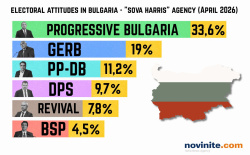
HOT: » Which party would you vote for (if you could) in the upcoming snap vote in Bulgaria on April 19?
 Send to Kindle
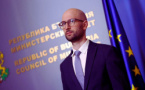
 Education Minister Sergey Ignatov is convinced that Bulgaria is the leader in education in Southeastern Europe. Photo by BGNES
Bulgaria is the leader in education in Southeastern Europe even after 22 years of chaotic transition from communism to democracy.
The statement was made Monday in an interview for Nova TV by Education Minister Sergey Ignatov, commenting on the decision of neighboring Turkey to suspend its recognition of Bulgarian university and college diplomas.
Turkey suspended the recognition of Bulgarian-issued college diplomas for an indefinite period of time over forgery suspicions.
Initially, Ignatov announced that the problematic diplomas were forged by Turkish citizens, but now he only reiterated that the scandal was triggered by some business interests such as Turkey attempting for years to become the educational leader in the region.
Foreign students from non-EU countries pay on average EUR 3 000 to 8 000 to study in Bulgarian universities and colleges, he explained, adding in the last years universities have been opened in almost all regional centers in Turkey, and the investments have been huge.
"I fully understand the ambitions of our southern neighbor, but nevertheless, Ankara's decision, in the light of Turkey trying to become member of the EU, seems strange," the Minister stressed.
At the end of July, on grounds that forgery of exam marks and college diplomas has reached the dimensions of organized crime in Bulgaria, Turkey advised all of its aspiring university students to refrain from applying for Bulgarian schools.
The decision was made by the Turkish University Education Council, the institution accrediting foreign diplomas.
Its official site notes that documents of students from Bulgaria will no longer be legalized. It further warns transfers from Bulgarian colleges to Turkish ones are not being accepted, while the documents of those who have applied for accreditation will be put on hold.
Ignatov now says "things will return to normal as soon as the enrollment process is over." He explained that he has sent a letter to Deputy Prime Minister and Interior Minister, Tsvetan Tsvetanov, listing all facts surrounding the fake diploma scandal.
The Council of College Presidents is prepared to fully assist the authorities in probing the case.
When the news emerged in July, Bulgarian university and college presidents asked Bulgaria's Foreign Ministry to send a protest note to Turkey, and to refer the issue to the EU institutions since, in their words, the suspended recognition of Bulgarian diplomas by Turkey is a "violation of the European educational space".
At the time, the Education Minister also announced that he has sent an envoy to the Turkish Education Minister but refused to reveal their identity, saying only that they are "a very high-ranking person in Bulgaria."
Ignatov did not rule out Bulgarians' involvement in the forgery of university diplomas, and promised that those responsible for the crime will be punished.
The Bulgarian Education Ministry further intends to send a delegation of experts to Turkey in order to convince the Turkish authorities that it has a mechanism for verifying the authenticity of Bulgarian university diplomas, and that Turkey does not need to suspend their recognition.
Ignatov has claimed that the Bulgarian authorities have very little official information about the Turkish decision.
Meanwhile, new measures are in place to better protect Bulgarian diplomas such as special stickers and scanning and uploading the documents on the site of the Education Ministry.
Europe is undergoing a fundamental shift in how it approaches defense, moving beyond increased spending toward the creation of an entirely new industrial ecosystem

A leading global research center on democratic systems has issued a stark warning about political trends in several countries, concluding in its latest annual report that Bulgaria is now among those showing clear signs of democratic backsliding

Industrial output in Bulgaria posted a modest monthly increase in February 2026, but continued to decline sharply on an annual basis, according to preliminary, seasonally adjusted data from the National Statistical Institute.
The president of the Confederation of Bulgarian Trade Unions, Plamen Dimitrov, has warned that inflation in Bulgaria is likely to exceed earlier projections, even if fuel prices begin to decline

The introduction of the euro in Bulgaria has so far produced only a limited and largely one-off effect on consumer prices, according to an analysis by the European Central Bank
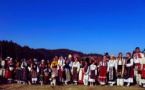
Orthodox Easter Monday is the day following Easter Sunday and is observed across Bulgaria as part of the wider Easter celebration within the Orthodox Christian tradition
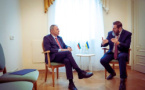
Acting Education Minister Sergey Ignatov said that his recent visit to Kyiv came at a critical moment, stressing that it could not be delayed. According to him, the signing of a protocol with his Ukrainian counterpart was decisive for the future of the Bu
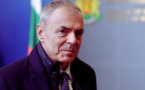
Acting Education Minister Prof. Sergey Ignatov stated during a briefing at the Council of Ministers that a significant part of Bulgaria’s intellectual and revolutionary elite historically studied at the Bolgrad High School in the Odesa Oblast
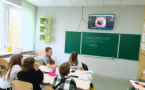
Bulgaria is preparing steps to introduce the Ukrainian language into its school system as part of foreign language education, alongside broader plans to expand educational cooperation with Ukraine
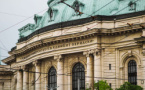
The Bulgarian government has proposed changes that would increase student tuition and application fees starting from the 2026/2027 academic year, according to a draft decision released for public consultation
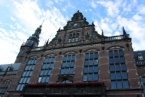
Interest among Bulgarian high school graduates in pursuing higher education abroad continues to grow, reflecting both the ongoing digital transformation of the economy and expectations for major changes in the future labor market

Sofia Municipality has proposed changes to the rules governing admission to nurseries and kindergartens in the Bulgarian capital

Aniventure Comic Con Returns to Bulgaria with Star Guest Christopher Judge!
Global Fuel Shock: Oil Jumps Over 40% Since Iran War Began