A failed bidder plans to join the battle against Bulgaria at the highest court in matters of European Union law over the controversial tenders for the operation of what will be the country's DTT multiplexes, according to insiders.
DVBT company has submitted a complaint against the alleged monopoly on Bulgaria's multiplex market at the European Commission on Friday, local Trud daily reported.
The move has come a week after a five-member panel of the Supreme Administrative Court rejected DVBT complaint against the selection of Latvia-based Hannu Pro for operating what will be the country's public service DTT multiplex. It will distribute the digital programs of the national state-owned television BNT and radio BNR.
DVBT complaint will be part of the documents, which the EU executive is expected to bring to the Luxembourg-based European Union Court of Justice, demanding that the deals, clinched in 2009 by Latvia-based Hannu Pro and Slovakia's Towercom, be declared void.
Bulgaria has awarded the licenses for its six multiplexes to only two companies - Latvia's Hannu Pro (four) and Slovakia's Towercom (two).
"There are solid grounds to believe that these companies are legally and economically linked," reads the complaint by DVBT, which was ranked second in the tender, just 0.3 points behind Hannu Pro.
The European Commission launched in May 2011 an infringement procedure following conflicting requirements for the eligible bidders in the mux contests, which drove away Austria's Oesterreichischer Rundfunksender GmbH & Co KG (ORS).
The requirements in fact made possible a near monopoly on the mux market as all companies which were granted licences are linked in one way or another to Tsvetan Vassilev, majority owner of Bulgaria's Corporate Commercial Bank.
At first it was not clear who stands behind the foreign investors Towercom and Hannu Pro, but soon the names of Tsvetan Vassilev, head of Bulgaria's Corporate Commercial Bank and Irena Krasteva, a media mogul, believed to be funded by the bank and ethnic Turkish leader Ahmed Dogan, popped up in all deals.
Brussels is expected to deliver its verdict on the unusual situation within days. Should the case go to the Luxembourg court and the judges rule against Bulgaria, the country will be forced to pay hefty fines, worth up to EUR 200.000 per day.
In a bid to prevent legal action by the European Commission, Bulgaria decided at the end of December to hold a tender for yet another multiplex, its seventh.
The government has boasted that the new amendments will allow companies such as Austria's ORS, which have TV channels outside Bulgaria, to participate in the new DTT contest.
Experts however say that the new procedure is a mere attempt to throw dust in the eyes of Brussels officials.
The seventh multiplex will be just a collection of frequencies and its holder - in a much more disadvantaged position than Hannu Pro and Towercom, which have already grabbed the lion's share of the market, according to them.


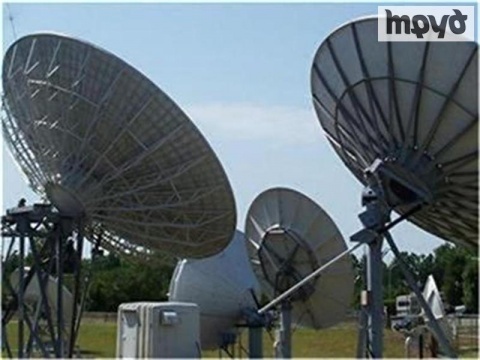 Photo by Trud daily