Borissov Loses Patience: Political Bargaining Over Key Positions and Budget 2025
"Everyone wants positions – in regulatory bodies and ministries," he emphasized.
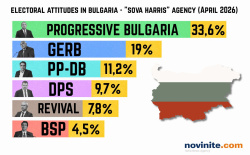
HOT: » Which party would you vote for (if you could) in the upcoming snap vote in Bulgaria on April 19?
 Send to Kindle
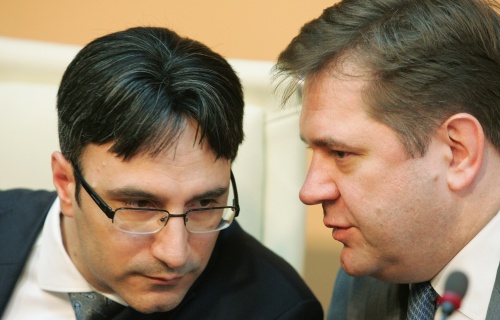 Bulgarian Energy Minister Traicho Traikov (L) is pcitured here during together with his Russian counterpart Sergei Shmatko during their meeting in Sofia on February 19. Photo by BGNES
There has been no official decision to scrap the pipeline project Burgas-Alexandrupolis or Belene nuclear power station, said Bulgarian energy minister Traicho Traikov, minutes after PM Boyko Borisov strongly suggested that Bulgaria will pull out of both projects.
The Council of Ministers has not adopted any resolution to stop the Burgas-Alexandrupolis projects, said Traikov.
Traikov expressed extreme surprise at claims that Borisov said Bulgaria will give up the two high-profile energy projects, exclaiming “I can't believe he said that!”
Bulgaria, Greece and Russia had agreed to build a pipeline between Burgas and Alexandroupolis, taking Caspian oil to the Mediterranean skirting the congested Bosphorus, in 2007 after more than a decade of intermittent talks.
The agreement for the company which will construct the Burgas-Alexandroupolis oil transit pipeline was signed by Bulgaria during Russian President Putin's visit to Bulgaria in 2008.
The 280-kilometer pipeline, with 166 kilometers passing through Bulgaria, would have an initial annual capacity of 35 million tonnes, which could be later expanded to 50 million tonnes. Its costs are estimated at up to USD 900 M.
After its initial start in the late 1980s, the Belene project was restarted in 2008 by the Socialist government of Sergey Stanishev. It was estimated to cost about EUR 4 B, half of which were supposed to come from the German energy company RWE in exchange for a 49% stake in the plant.
After the Borisov government took office in the summer of 2009, Bulgarian officials estimated the price of the plant at about EUR 10 B. In the fall of 2009, RWE withdrew from the project, prompting the Borisov government to start searching anew for a strategic foreign investor.
The Russian government, whose company Atomstroyexport is supposed to construct the future nuclear plant, has offered Bulgaria state loans on a couple of occasions – EUR 4 B in the spring of 2009, and EUR 2 in the spring of 2010, in order to keep the construction going until Bulgaria finds an investor.
However, those offers have been rejected by both the Stanishev and the Borisov governments. Prime Minister Borisov has explicitly made it clear that Bulgaria will not construct the new 2000 MW plant unless it finds a strategic investor from Western Europe.

"Everyone wants positions – in regulatory bodies and ministries," he emphasized.
During a forum in Alexandroupolis, US Assistant Secretary of State for Energy, Jeffrey Payatt, highlighted the significance of a gas pipeline project through Bulgaria as the next pivotal step for energy development in the region
Bulgaria and the United States have formally sealed an agreement to collaborate on the construction of two new units at the Kozloduy Nuclear Power Plant

Bulgaria has officially joined a significant declaration aimed at tripling the global share of nuclear power

Boyko Borisov chose to cast his vote with a paper ballot in Bankya today.

As a country through which the Turkish Stream gas pipeline (TurkStream) passes, Bulgaria is in potential danger after the Nord Stream 1 and 2 explosions

Bulgaria’s fuel market has recorded a sharp upward shift since the outbreak of the war in Iran, with diesel and petrol prices rising significantly across the country
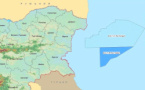
The second exploration drilling in the Krum-1 area of the Khan Asparuh block in Bulgaria’s Black Sea has also failed to identify commercially significant natural gas deposits, according to OMV Petrom

The Ombudswoman institution has voiced strong opposition to the proposed increase in heating prices in Sofia, which is expected to approach nearly 30 percent
The Energy and Water Regulatory Commission (EWRC) in Bulgaria has set the price of natural gas for April 2026 at 34.27 euros per megawatt-hour, excluding access, transmission, excise duties and VAT

Fuel prices in Bulgaria have recorded a sharp upward movement over the past month, with diesel showing the most significant increase, according to data from the Fuelo platform
Bulgargaz has defended its previously submitted proposal for a 5% rise in natural gas prices for April before the Energy and Water Regulatory Commission, with CEO Veselin Sinabov stressing that there is currently no justification for any further increases

Aniventure Comic Con Returns to Bulgaria with Star Guest Christopher Judge!
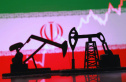
Global Fuel Shock: Oil Jumps Over 40% Since Iran War Began