Bulgaria: Full Recovery of Pirin Forest After Wildfire May Take 50 Years
The forest in Pirin, severely damaged by one of the largest wildfires in recent memory, will need at least half a century to return to its previous state
HOT: » Which party would you vote for (if you could) in the upcoming snap vote in Bulgaria on April 19?
 Send to Kindle
 Bulgaria's Finance Minister Djankov (left, pictured with PM Borisov) has promised the economic recovery is on its way. Photo by BGNES
Bulgaria has started to overcome the economic crisis in the second quarter of 2010, according to Finance Minister Simeon Djankov.
“In the first quarter, we have been paying out sums owed by the state to tobacco producers and other agricultural producers. To do that, we used revenues raised by the Customs Agency. It has turned out that we had smaller revenues that expected but starting in April, we are going to have a balanced budget, or we might even have a small monthly surplus. It is crucial to demonstrate that we are in firm control of Bulgaria’s finances despite the difficulties generated by the financial crisis,” Djankov said on the BNT 1 TV Thursday.
The Minister vowed to carry out a large-scale administrative reform by optimizing the civil servants staff and bringing it down to the 2005 numbers.
“We are going to optimize the administration – this means a lot more than just layoffs. We will do so that those who work well would be getting paid more,” Djankov said while slamming the Stanishev government for expanding unnecessarily the number of the civil servants after 2005.
In his words, the administrative reform was aimed at equalizing the salaries of the employees of the various ministries.
“At present, a head of a ministerial department gets about BGN 1 000 per month. After the optimization, the average salary will rise to BGN 1 200 per month. Of those, BGN 850 will be the base salary, while the rest will come from bonuses paid on the basis of performance,” Djankov explained.
“Only the number of Interior Ministry employees will remain higher but things in Bulgaria are more centralized than elsewhere. Our colleagues there have more work than in the other ministries because Bulgaria is only now introducing the rule of law,” he declared.
Facing much criticism that the Borisov government has delayed long overdue state payments to private companies for public procurement projects over the recent months, Djankov said that the government was trying to figure out ways in which to pay private business only for work they had actually performed.

The forest in Pirin, severely damaged by one of the largest wildfires in recent memory, will need at least half a century to return to its previous state

The European Commission recently approved Bulgaria’s proposed amendments to its Recovery and Sustainability Plan, along with projects and reforms under the RepowerEU initiative

The European Commission has officially endorsed the revised version of Bulgaria’s recovery and resilience plan, which now totals €6.17 billion in grants

Bulgaria is significantly delayed in implementing its Recovery and Sustainability Plan

The economic landscape of the country is experiencing a dynamic shift as new hotels, restaurants, and technology startups emerge at an unprecedented rate

The new acting finance minister, Lyudmila Petkova, unveiled the budget for the upcoming elections, which amounts to BGN 100 million
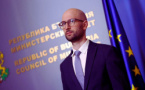
The Ministry of Finance has released a broad public dataset covering more than 7,000 public procurement contracts with a combined value exceeding 30 billion euros
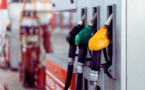
Caretaker Finance Minister Georgi Klisurski said he expects fuel prices at gas stations to ease in the coming period, pointing to a sharp decline in international oil markets

Bulgaria’s new government borrowing for 2026 has surpassed the 1 billion euro mark following the latest successful auction of state securities, according to data cited from the Bulgarian National Bank

Bulgaria recorded only a modest and one-off increase in inflation following the adoption of the euro on January 1, with the effect estimated at between 0.3 and 0.4 percentage points

Data released by the Ministry of Finance, covering budget execution for February 2026 and preliminary estimates for March 2026, indicate a marked deterioration in Bulgaria’s fiscal position

In the 2026 edition of the Index of Economic Freedom, compiled by the Heritage Foundation, Bulgaria is placed 38th out of 176 countries, positioned between Costa Rica and Oman

Aniventure Comic Con Returns to Bulgaria with Star Guest Christopher Judge!
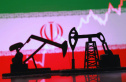
Global Fuel Shock: Oil Jumps Over 40% Since Iran War Began