Italians Reject Judicial Reform in Referendum Blow to Meloni
Italian Prime Minister Giorgia Meloni conceded defeat after voters rejected her government’s judicial reform in a national referendum, but made clear she would remain in power.
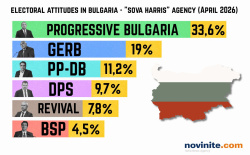
HOT: » Which party would you vote for (if you could) in the upcoming snap vote in Bulgaria on April 19?
 Send to Kindle
 The site of Bulgaria's frozen second NPP at Belene. Photo by BGNES
The Members of the Parliament from the ruling GERB party are initiators of the informational campaign for the referendum on the future of nuclear energy in Bulgaria and cannot be eliminated from this campaign.
This is the official opinion of the country's Central Electoral Commission, CEK, sent after the initiative committee of the left-wing Bulgarian Socialist Party, BSP, requested for MPs from GERB to be eliminated and sanctioned over changing their position from "yes" to "no" in the last minute.
CEK has debated the request at a sitting late Friday evening and has decided that the 76 MPs have the right to stay because of their initiators statute.
Legal experts of BSP, however, counter that CEK has registered the GERB MPs as an initiative committee backing the "yes" position and now must take them out since currently they are proponents of the "no" one.
Participants in the referendum information campaign matter for the State-owned Bulgarian National Television and Radio, BNT and BNR, and time shares in the debates.
The ruling Citizens for European Development of Bulgaria party, GERB, representatives, however, missed the first such debate and declared they would not take part in any paid campaigning for the referendum.
On January 27, 2013, Bulgarians will have to answer in the referendum the following question: "Should nuclear energy be developed in Bulgaria through the construction of new nuclear power units?"
Initially, senior GERB officials said the party position would be a "yes" answer, but last weekend, Prime Minister, Boyko Borisov, declared that GERB party supporters will be instructed to vote "no."
In what seems to be a U-turn, on Wednesday, during the first session of the Parliament, the Chairman of the GERB parliamentary group, Krasimir Velchev, stressed his party is working for preserving the units at the existing "Kozloduy" NPP and for installing a new 7th reactor there.
Despite the official declarations, MPs and GERB officials are said to be in dismay after Borisov's latest change of mind precisely because the 76 MPs are indeed registered as initiators of a position "yes" for the referendum.
The specific cause for the convocation of a referendum was the unclear fate of frozen Belene NPP project.
The referendum was sponsored by the Bulgarian Socialist Party, which gathered a petition of more than the 0.5 million legally needed signatures.
In his latest statement, Borisov made it clear that GERB supports nuclear energy in principle, but opposes the Belene NPP. The Bulgarian PM added that the government and GERB are also in favor of the extension of the exploitation lives of currently functioning units 5 and 6 of Kozloduy NPP.
Initially, two entities were to attempt to convince voters to back the development of nuclear energy through building new nuclear units. One of them is an initiative committee formed by the opposition Bulgarian Socialist Party, while the other consisted of the 76 lawmakers from the ruling centrist-right GERB.
Two initiative committees formed by two right-wing formations – the Democrats for Strong Bulgaria and the United People's Party – will try to persuade people to vote against.
Originally, Belene NPP had to be built by Russian state company Atomstroyexport, but the Bulgarian cabinet froze the project in the early spring of 2012 due to perceived lack of economic effectiveness.
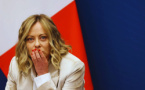
Italian Prime Minister Giorgia Meloni conceded defeat after voters rejected her government’s judicial reform in a national referendum, but made clear she would remain in power.

The election campaign, in Bulgaria, for the early parliamentary vote scheduled for April 19 officially began at midnight on March 20 and will continue until April 17, followed by a day of reflection on April 18
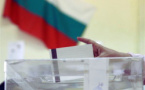
The election campaign for Bulgaria’s early parliamentary elections on April 19 officially begins at midnight on March 20. Political parties and coalitions will have until midnight on April 17 to campaign and seek voter support
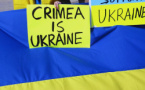
On March 16, 2026, Ukraine marked twelve years since Russia staged a sham referendum in Crimea, a move widely condemned as illegal by the international community.
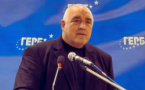
During a gathering in Stara Zagora with nearly 1,000 mayors from villages, municipalities, and regional cities, GERB leader Boyko Borissov spoke candidly about the party’s achievements and the upcoming electoral challenges
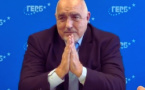
GERB leader Boyko Borissov met with ministers from the outgoing “Zhelyazkov” cabinet after they formally handed over power to the caretaker government, using the gathering to review the work of the administration and outline the party’s next political ste
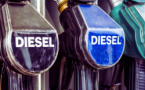
Bulgaria’s fuel market has recorded a sharp upward shift since the outbreak of the war in Iran, with diesel and petrol prices rising significantly across the country
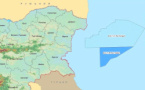
The second exploration drilling in the Krum-1 area of the Khan Asparuh block in Bulgaria’s Black Sea has also failed to identify commercially significant natural gas deposits, according to OMV Petrom

The Ombudswoman institution has voiced strong opposition to the proposed increase in heating prices in Sofia, which is expected to approach nearly 30 percent
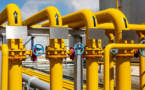
The Energy and Water Regulatory Commission (EWRC) in Bulgaria has set the price of natural gas for April 2026 at 34.27 euros per megawatt-hour, excluding access, transmission, excise duties and VAT
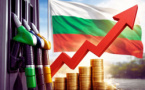
Fuel prices in Bulgaria have recorded a sharp upward movement over the past month, with diesel showing the most significant increase, according to data from the Fuelo platform
Bulgargaz has defended its previously submitted proposal for a 5% rise in natural gas prices for April before the Energy and Water Regulatory Commission, with CEO Veselin Sinabov stressing that there is currently no justification for any further increases

Aniventure Comic Con Returns to Bulgaria with Star Guest Christopher Judge!
Global Fuel Shock: Oil Jumps Over 40% Since Iran War Began