Easter Monday in Bulgaria: Tradition and Family Visits
Orthodox Easter Monday is the day following Easter Sunday and is observed across Bulgaria as part of the wider Easter celebration within the Orthodox Christian tradition
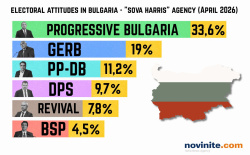
HOT: » Which party would you vote for (if you could) in the upcoming snap vote in Bulgaria on April 19?
 Send to Kindle
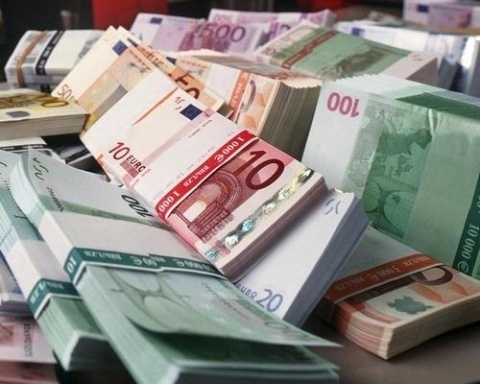 Bulgaria plans to tap international markets this summer to raise funds to repay about EUR 835 M (USD 1.07 B) in 11-year eurobonds maturing on January 15, 2013. File photo
Bulgaria's government has selected BNP Paribas, HSBC and Raiffeisen as mediators for the eurobond issue that the country plans to float this year.
This becomes clear from a bill for ratifying the contracts with the three banks that the cabinet has tabled to Bulgaria's parliament, thus confirming earlier media reports.
BNP Paribas, HSBC and Raiffeisen will be appointed to advise the Bulgarian state as well as manage the sale of the bond.
The authorities evaluated bids submitted by 17 financial institutions, insiders say. They were ranked according to the price offered, the bank's experience in issuing debt, the amount of the commission fee, as well as their capacity to insure the participation of investors on the domestic market.
Bulgaria plans to tap international markets this summer to raise funds to repay about EUR 835 M (USD 1.07 B) in 11-year eurobonds maturing on January 15, 2013.
The bonds offered on international markets will be worth up to EUR 950 M.
According to unconfirmed information Finance Minister Simeon Djankov has decided to go for a five-year maturity partly because of the low indicative prices that the three financial institutions offered - less than a 4% yield - on bonds with that maturity.
The finance minister is also believed to be counting on the banks' assurance that managers will help Bulgaria tap international markets at an affordable cost if the eurobond placement does not draw strong demand.
Bulgaria's Finance Minister Simeon Djankov defended in April the draft law that allows the government to purchase unrated Bulgaria bonds after it came under fire by the European Central Bank (ECB).
In an opinion requested by the Bulgarian government and dated April 13, ECB President Mario Draghi argued that such a law would discriminate against foreign debt securities, which do require a credit rating.
"This leads to unequal treatment of the different investment instruments, which could create competition and market distortions," Draghi wrote.
The Bulgarian government wants to allow its Silver Fund, set up to anchor the public pension system, to also invest in bonds issued by national and local administrations. At the moment, only foreign securities with an adequate credit rating may be purchased.
According to the ECB, the fact that Bulgarian securities would not require a rating could place the Bulgarian government in "a privileged position compared to other issuers."
Such "indirect discrimination" could lead to "unjustified restrictions on the free movement of capital," thus violating European Union rules.
Another concern is that provisions allowing the Silver Fund to channel up to 70 per cent of its portfolio on Bulgarian bonds by 2016 could lead to skewed yields not driven purely by the markets.
Finance Minister Simeon Djankov has responded in a letter by stressing that any Bulgarian bond issues purchased by the fund would have interest rates based on market benchmarks.
Analysts have warned that Bulgaria's government may be forced to struggle with volatile markets if it misses out on the current benign conditions.

Orthodox Easter Monday is the day following Easter Sunday and is observed across Bulgaria as part of the wider Easter celebration within the Orthodox Christian tradition

Industrial output in Bulgaria posted a modest monthly increase in February 2026, but continued to decline sharply on an annual basis, according to preliminary, seasonally adjusted data from the National Statistical Institute.
The president of the Confederation of Bulgarian Trade Unions, Plamen Dimitrov, has warned that inflation in Bulgaria is likely to exceed earlier projections, even if fuel prices begin to decline

The introduction of the euro in Bulgaria has so far produced only a limited and largely one-off effect on consumer prices, according to an analysis by the European Central Bank

Easter is the most important religious holiday in the Orthodox Christian calendar and is widely celebrated across Bulgaria. It marks the resurrection of Jesus Christ and follows the completion of Holy Week, which includes Good Friday and Holy Saturday

Holy Saturday, known in Bulgaria as Lazarus Saturday’s continuation of the Easter cycle, is a quiet but deeply symbolic day in the Orthodox Christian calendar

The Ministry of Finance has released a broad public dataset covering more than 7,000 public procurement contracts with a combined value exceeding 30 billion euros

Caretaker Finance Minister Georgi Klisurski said he expects fuel prices at gas stations to ease in the coming period, pointing to a sharp decline in international oil markets
Bulgaria’s new government borrowing for 2026 has surpassed the 1 billion euro mark following the latest successful auction of state securities, according to data cited from the Bulgarian National Bank

Bulgaria recorded only a modest and one-off increase in inflation following the adoption of the euro on January 1, with the effect estimated at between 0.3 and 0.4 percentage points

Data released by the Ministry of Finance, covering budget execution for February 2026 and preliminary estimates for March 2026, indicate a marked deterioration in Bulgaria’s fiscal position

In the 2026 edition of the Index of Economic Freedom, compiled by the Heritage Foundation, Bulgaria is placed 38th out of 176 countries, positioned between Costa Rica and Oman

Aniventure Comic Con Returns to Bulgaria with Star Guest Christopher Judge!

Global Fuel Shock: Oil Jumps Over 40% Since Iran War Began