Easter Monday in Bulgaria: Tradition and Family Visits
Orthodox Easter Monday is the day following Easter Sunday and is observed across Bulgaria as part of the wider Easter celebration within the Orthodox Christian tradition
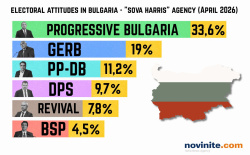
HOT: » Which party would you vote for (if you could) in the upcoming snap vote in Bulgaria on April 19?
 Send to Kindle
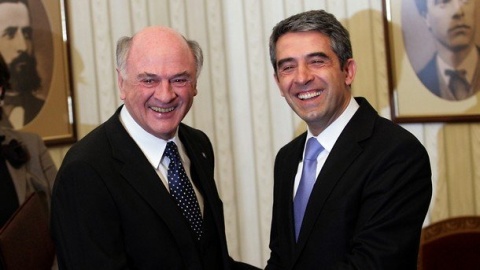 The Governer of Lower Austria, Edwin Proll (l) and Bulgarian President, Rosen Pleveneliev during their meeting in Sofia. Photo by BGNES
Lower Austria fully supports the advancing of the "Gorna Arda" hydro power plant project, says the province's Governor, Edwin Proll.
Proll spoke after his Friday meeting in Sofia with the new Bulgarian President, Rosen Pleveneliev.
Plevneliev stated that the project is of prime importance to Bulgaria and the investment is crucial, especially in time of crisis and in an underdeveloped region of the country.
Proll stressed that the joint project of the Austrian EVN, which is also one of the three power utilities in Bulgaria, and of the Bulgarian National Electric Company, NEK, is valued at EUR 0.5 M and the investment will create hundreds of new job openings in the region of the Eastern Rhodoppes.
On other topics, Proll declared that Lower Austria also supports Bulgaria's joining of Schengen because the membership will help solve the problem of human trafficking to Central and Western Europe, since its main road passes through Bulgaria.
The Austrian politician also said that the province is considering investing further in the energy sector and in the infrastructure in the country.
Plevneliev explained that the Greek debt crisis should not trigger problems in Bulgaria's bank system since Greek banks in Bulgaria are independent and controlled by the Central Bank. He stressed Bulgaria will apply all effort to support Greece's attempts to avoid bankruptcy because the southern neighbor is an important partner.
In July 2010, Austrian utility EVN signed a deal with Bulgaria's state power utility NEK to take a majority stake in the Bulgarian hydropower project. Under the agreement Austrian utility EVN will own a 70% stake, while NEK will hold the remaining 30% in the joint venture. The agreement was sealed during the visit of Prime Minister Boyko Borisov in Vienna.
Back then the opposition Socialist Party criticized the government for the agreement asking how and why the EVN company was selected for the project without a tender, to which Economy Minister Traikov replied no tender was necessary for this specific project under the existing legislation.
Austria's Alpine Bau withdrew from the construction of Gorna Arda hydropower project in the middle of May that year, leaving energy firm EVN, which holds a 67% stake in one of Bulgaria's three power distributors and serves clients in Southwestern Bulgaria, the sole partner of NEK.
At the beginning of September 2009, Bulgaria's new government sealed a letter of approval for the construction of the hydro power project on the Arda river.
This was a requirement for wrapping up of the sale of a 30.1% stake, owned by Turkey's CCG, part of the Ceylan conglomerate, to an Austrian consortium of EVN and Alpine Bau.
The move was made after a trial in the International Court of Arbitration, in which Ceylan Holding filed claims for EUR 75 M against the other member in the joint venture - Bulgaria's National Electric Company NEK, was suspended for three months.
The Turkish company was contracted to implement the project under an electricity-for-infrastructure swap deal Bulgaria and Turkey signed in 1998, during the term of the government of Ivan Kostov. The launch of the hydropower construction was delayed after the Turkish company ran into financial troubles.
In July 2011, EVN approved a capital hike to boost its stake in the Bulgarian hydro power plant project Gorna Arda to 70%.
The Gorna Arda hydropower project is expected to cost around EUR 500 M, which should be paid by the consortium. It is planned to have an electricity production capacity of 160 MW.
Orthodox Easter Monday is the day following Easter Sunday and is observed across Bulgaria as part of the wider Easter celebration within the Orthodox Christian tradition

Industrial output in Bulgaria posted a modest monthly increase in February 2026, but continued to decline sharply on an annual basis, according to preliminary, seasonally adjusted data from the National Statistical Institute.
The president of the Confederation of Bulgarian Trade Unions, Plamen Dimitrov, has warned that inflation in Bulgaria is likely to exceed earlier projections, even if fuel prices begin to decline

The introduction of the euro in Bulgaria has so far produced only a limited and largely one-off effect on consumer prices, according to an analysis by the European Central Bank

Easter is the most important religious holiday in the Orthodox Christian calendar and is widely celebrated across Bulgaria. It marks the resurrection of Jesus Christ and follows the completion of Holy Week, which includes Good Friday and Holy Saturday

Holy Saturday, known in Bulgaria as Lazarus Saturday’s continuation of the Easter cycle, is a quiet but deeply symbolic day in the Orthodox Christian calendar

Bulgaria’s fuel market has recorded a sharp upward shift since the outbreak of the war in Iran, with diesel and petrol prices rising significantly across the country
The second exploration drilling in the Krum-1 area of the Khan Asparuh block in Bulgaria’s Black Sea has also failed to identify commercially significant natural gas deposits, according to OMV Petrom

The Ombudswoman institution has voiced strong opposition to the proposed increase in heating prices in Sofia, which is expected to approach nearly 30 percent
The Energy and Water Regulatory Commission (EWRC) in Bulgaria has set the price of natural gas for April 2026 at 34.27 euros per megawatt-hour, excluding access, transmission, excise duties and VAT
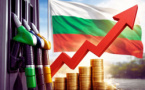
Fuel prices in Bulgaria have recorded a sharp upward movement over the past month, with diesel showing the most significant increase, according to data from the Fuelo platform
Bulgargaz has defended its previously submitted proposal for a 5% rise in natural gas prices for April before the Energy and Water Regulatory Commission, with CEO Veselin Sinabov stressing that there is currently no justification for any further increases

Aniventure Comic Con Returns to Bulgaria with Star Guest Christopher Judge!
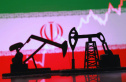
Global Fuel Shock: Oil Jumps Over 40% Since Iran War Began