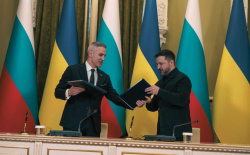
Putin Declares Easter Ceasefire in Ukraine War
The Kremlin has announced that Russian President Vladimir Putin has ordered an “Easter ceasefire” in the war in Ukraine, declaring a temporary halt in hostilities lasting around 36 hours
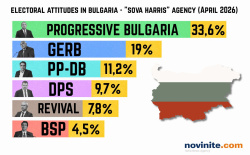
HOT: » Which party would you vote for (if you could) in the upcoming snap vote in Bulgaria on April 19?
 Send to Kindle
 The 280-km pipeline, planned to link the Black Sea port of Burgas to Alexandroupolis on the Aegean Sea, is designed to transport 35 million tons of oil a year. File photo
The meeting of the Control Board of the Burgas-Alexandroupolis oil pipeline project, scheduled in Amsterdam for Wednesday had been canceled.
The news was reported Tuesday by the Bulgarian National Radio, BNR, citing a Transneft representative.
Transneft is the main Russian shareholder in the project.
The Control Board of the project company Trans-Balkan Pipeline was to discuss the situation around plans for the pipeline's construction after the decision of the Bulgarian cabinet to withdraw from the project. The initiative to cancel it had come from the Greek side and had been supported by Russia, the spokesman of Transneft, Igor Diomin, told BNR, pointing out the official Bulgarian position had been received only on Monday.
"Because we are talking of dissolving an inter-government agreement, Transneft will have to receive directions from the Russian cabinet on what actions to undertake and there are a number of possibilities - liquidation, freeze, or continuing work without Bulgaria," Diomin explained.
Claims that Bulgaria can be asked to pay penalties all the way up to USD 1 B were labeled by the Transneft spokesperson as "something close to science fiction."
Bulgaria broke the news about the cancellation of the oil pipeline project last Wednesday.
Deputy Prime Minister and Finance Minister Simeon Djankov explained that Bulgaria would seek a termination of the trilateral intergovernmental agreement by mutual consent.
If the request was rejected, Bulgaria would withdraw from the oil pipeline project in 12 months, Djankov added, stressing that the country would not incur sanctions with the step.
The motive behind the government's decision was said to be the fact that Burgas-Alexandroupolis was financially and economically unsound and could not be implemented under the terms of the 2007 agreement.

The Kremlin has announced that Russian President Vladimir Putin has ordered an “Easter ceasefire” in the war in Ukraine, declaring a temporary halt in hostilities lasting around 36 hours
A group of Members of the European Parliament has raised concerns over the potential leakage of confidential EU information to Russia, urging stronger safeguards within the European Parliament

A criminal network linked to Bulgaria has been accused of defrauding dozens of elderly people in northern Greece through an elaborate telephone scam that resulted in losses exceeding 600,000 euros, according to Kathimerini.
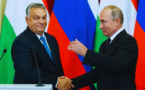
A leaked transcript of a phone call between Hungarian Prime Minister Viktor Orban and Russian President Vladimir Putin shows Orban offering extensive support to Moscow and describing himself as ready to help “in any way” in relation to the war in Ukraine

The United States is expanding shipments of liquefied natural gas to Southeast Europe and Ukraine via Greece, according to remarks by the US Ambassador to Athens, Kimberly Guilfoyle

A police operation in Burgas has led to the discovery of a significant quantity of ammunition and a weapon equipped with optics in a residential property in the Ostritsata-2 area, near the Banevo district.

Bulgaria’s fuel market has recorded a sharp upward shift since the outbreak of the war in Iran, with diesel and petrol prices rising significantly across the country
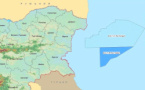
The second exploration drilling in the Krum-1 area of the Khan Asparuh block in Bulgaria’s Black Sea has also failed to identify commercially significant natural gas deposits, according to OMV Petrom

The Ombudswoman institution has voiced strong opposition to the proposed increase in heating prices in Sofia, which is expected to approach nearly 30 percent
The Energy and Water Regulatory Commission (EWRC) in Bulgaria has set the price of natural gas for April 2026 at 34.27 euros per megawatt-hour, excluding access, transmission, excise duties and VAT

Fuel prices in Bulgaria have recorded a sharp upward movement over the past month, with diesel showing the most significant increase, according to data from the Fuelo platform

Bulgargaz has defended its previously submitted proposal for a 5% rise in natural gas prices for April before the Energy and Water Regulatory Commission, with CEO Veselin Sinabov stressing that there is currently no justification for any further increases

Aniventure Comic Con Returns to Bulgaria with Star Guest Christopher Judge!
Global Fuel Shock: Oil Jumps Over 40% Since Iran War Began