Easter Monday in Bulgaria: Tradition and Family Visits
Orthodox Easter Monday is the day following Easter Sunday and is observed across Bulgaria as part of the wider Easter celebration within the Orthodox Christian tradition
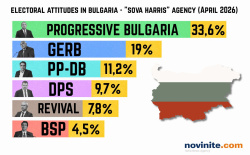
HOT: » Which party would you vote for (if you could) in the upcoming snap vote in Bulgaria on April 19?
 Send to Kindle
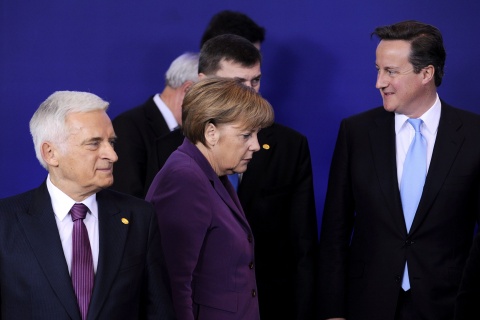 German Chancellor Angela Merkel (C) and British Prime Minister David Cameron (R) pictured during the family group picture after the European Council meeting, at the EU headquarters in Brussels, Belgium, 09 December 2011. Photo by EPA/BGNES
Bulgaria has supported the new deal, which the majority of European leaders agreed on early Friday in a bid to tighten fiscal discipline in the eurozone and tackle the bloc's debt problems.
Twenty three states - all seventeen eurozone members and six other EU nations, including Bulgaria - agreed to adopt an accord with penalties for breaking deficit rules.
Four countries including Britain however refused to back a new intergovernmental treaty to deepen the integration of national budgets, raising concerns that the EU may turn into a two-tier system, with some countries pursuing deeper integration than others.
"What is on offer isn't in Britain's interests, so I didn't agree to it," Cameron said at a briefing.
"We're doing everything we can to save the euro," President Nicolas Sarkozy of France said at a news conference in Brussels following a marathon summit meeting of EU leaders.
"We would rather have reformed the treaty with 27 members," Sarkozy said. But Prime Minister David Cameron of Britain demanded an "unacceptable" opt out clause related to the financial services sector, Sarkozy said.
"Having seen it was not possible to get unanimity, it was the proper decision to go ahead at least with those ready to commit immediately," Sarkozy told journalists.
"That includes all 17 in the eurozone, plus some who are not in the euro area but want to take part in this fiscal compact," Sarkozy said.
Bulgaria and five more countries have agreed to sign up - Denmark, Latvia, Lithuania, Poland and Romania.
Chancellor Angela Merkel of Germany, who pressed hard for a treaty that would ensure debt limits and central oversight of national budgets, said the decisions made will restore the credibility of the euro zone.
"I have always said the 17 states of the euro zone need to win back credibility," she said. "And I think that this can happen, will happen, with today's decisions."
The main measures agreed to as part of the new agreement, called a "fiscal compact" include:
- a cap of 0.5% of GDP on countries' annual structural deficits
- "automatic consequences" for countries whose public deficit exceeds 3% of GDP
- the tighter rules to be enshrined in countries' constitutions
- European Stability Mechanism (ESM) to be accelerated and brought into force in July 2012
- adequacy of EUR 500 B limit for ESM to be reassessed
- Eurozone and other EU countries to provide up to EUR 200 B to the IMF to help debt-stricken eurozone members
Hungary also said it will not play a part in a new inter-governmental agreement, while Sweden and the Czech Republic will consult their parliaments before making a decision.
After the agreement on the treaty was reached early Friday morning in Europe, stock markets gradually rose over the course of the trading session.
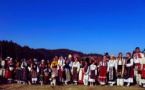
Orthodox Easter Monday is the day following Easter Sunday and is observed across Bulgaria as part of the wider Easter celebration within the Orthodox Christian tradition

Industrial output in Bulgaria posted a modest monthly increase in February 2026, but continued to decline sharply on an annual basis, according to preliminary, seasonally adjusted data from the National Statistical Institute.
The president of the Confederation of Bulgarian Trade Unions, Plamen Dimitrov, has warned that inflation in Bulgaria is likely to exceed earlier projections, even if fuel prices begin to decline

The introduction of the euro in Bulgaria has so far produced only a limited and largely one-off effect on consumer prices, according to an analysis by the European Central Bank
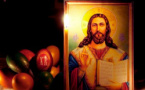
Easter is the most important religious holiday in the Orthodox Christian calendar and is widely celebrated across Bulgaria. It marks the resurrection of Jesus Christ and follows the completion of Holy Week, which includes Good Friday and Holy Saturday
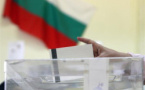
The Central Election Commission (CEC) in Bulgaria has confirmed that a total of 6,575,151 citizens are eligible to vote in the upcoming elections on April 19

EU countries will each have to secure guarantees worth billions of euros for the loan to Ukraine funded by frozen Russian assets, Politico’s Brussels edition reports.

Bulgaria's Minister of Defense Todor Tagarev admitted the possibility that an explosive device might have been planted on board the crashed plane in which Yevgeny Prigozhin was traveling

The European Commission has announced that it is preparing criminal proceedings against Bulgaria, Cyprus, Greece, Malta, and Portugal for incorrect application of the rules on the exchange of data on criminal records and the establishment of the relevant

The European Commission has started an evaluation of the Plan for Reconstruction and Development of Bulgaria, said the spokesman of the European Commission Eric Mamer. The document was submitted to the Commission on 15 October.

58% of Bulgarians do not support the introduction of the euro as the official currency in the country. This shows a study prepared by Trend agency specifically for the financial forum NEXT DIFI 2021, organized by b2b Media for the fifth year. The data dur

Too late Bulgaria began to explain its own position towards North Macedonia, as it should have been clear to our European partners some time ago.

Aniventure Comic Con Returns to Bulgaria with Star Guest Christopher Judge!
Global Fuel Shock: Oil Jumps Over 40% Since Iran War Began