Bulgaria Rises to Fifth Place in CEE for Number of Large Companies
Bulgaria has advanced to fifth place in Central and Eastern Europe in terms of the number of large companies
Business | November 17, 2025, Monday // 08:26
HOT: » Which party would you vote for (if you could) in the upcoming snap vote in Bulgaria on April 19?
 Send to Kindle
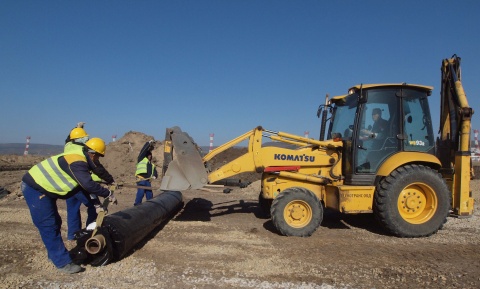 A report of Coface Bulgaria has identified construction as a sector which is particularly vulnerable to insolvency. Photo by BGNES
Bulgarians most often postpone paying cable TV (65%), central heating (60%) and water (55%) bills.
Every fifth default is on a vehicle lease, a consumer loan or a credit card, while the smallest share of overdue payments is on home loans and electricity bills.
The trends were outlined in a survey carried out by the association of debt collectors in Bulgaria, which was published on Tuesday.
"The main reason for the situation with mortgage payments is the famous attachment of Bulgarians to their homes," says Dimitrinka Grinko, Director at Cycle Credit BG.
She attributes the low percentage of overdue power bills to the fact that companies in the sector are quick to cut off power supply to defaulting customers.
Debt collection agencies claim that a substantial share of the problems arise from the lack of information, with every fifth default caused by the absence of a basic financial culture.
24% of Bulgarians fail to pay their bills on time over unforeseen eventualities such as the loss of a job, health issues, loss of work capability, or an accident in the family.
As much as 35% of the overdue payments are caused by omissions of Bulgarians traveling abroad.
At the same time, 8% of Bulgarians do not read the contracts they sign and fail to grasp the essence of the financial products they commit to, for instance credit cards.
6% of defaulters refuse to "give money to monopolies", while 12% do not know how to terminate their relations with the creditor.
The average debtor is a 41 to 50-year-old worker, has a family, and lives in Northwestern Bulgaria or in Danube city of Ruse, according to the survey.
The growing debts of citizens and companies are forcing many businesses into bankruptcy.
"We expect around 350 companies to go bankrupt this year, which constitutes a 40% year-on-year increase", Ivaylo Toskov from Coface Bulgaria predicts.
The 40% spike in bankruptcies in 2011 comes against a backdrop of a 22% increase in 2010 and an 18% increase in 2009.
According to Coface Bulgaria, the most vulnerable sectors are trade, construction, and industry.
Intercompany indebtedness registers a 20% year-on-year increase in 2011 and the delay period grows to 105 days, compared to 78 days in 2010.
Debt collecting agencies have increased sixfold to a total of 60-65 as a result of the crisis.
Despite the huge workload and the higher turnover, profits made by such companies are dropping because debt collection is getting slower and more difficult, according to Rayna Mitkova-Todorova, Managing Director at the Bulgarian branch of EOS Matrix.

Bulgaria has advanced to fifth place in Central and Eastern Europe in terms of the number of large companies

The 2025 edition of Coface’s annual survey on payment discipline among German companies reveals a further decline in payment behaviour

The recent Israeli strikes on Iranian territory have triggered serious concerns over a potential broader conflict in the region, with possible global consequences

The global credit insurer Cofas has released its annual insolvency report for Central and Eastern Europe (CEE)

According to recent data from the Trend Research Center, shared during the "Personal Finance" event by Money.bg, 38% of Bulgarians are unable to set aside any savings

According to Coface’s latest analysis, while the global uncertainty surrounding the high number of elections last year is easing, the overall economic landscape remains uncertain, with significant risks ahead

Acting Energy Minister Traycho Traykov said Bulgaria should not tap into its 90-day fuel reserves to ease prices, stressing that they must remain a safeguard in case of an actual supply disruption

Bulgaria has secured a six-month extension of the Lukoil waiver, following a decision by the US Treasury Department’s Office of Foreign Assets Control (OFAC)

The Bulgarian National Bank (BNB) has decided to increase the countercyclical capital buffer to 2.25%, in a move aimed at easing pressure on the rapidly growing housing credit market and strengthening the resilience of the banking system.

Energy expert Boyan Rashev has warned that Europe could be moving toward what he described as an “energy lockdown” scenario if fuel supply pressures continue to worsen

Fuel prices in Bulgaria have continued to edge upward, with diesel and gasoline both registering increases in the days following the Easter holiday

Bulgaria’s tourism sector has never been stronger and has been achieving steady growth for the past few years.

Aniventure Comic Con Returns to Bulgaria with Star Guest Christopher Judge!
Global Fuel Shock: Oil Jumps Over 40% Since Iran War Began