Shrinking Population, Rising Wages: The Contradictions Shaping Bulgaria Today
Bulgaria’s population continues to shrink, entire settlements are being emptied, while at the same time new housing is being built and left unoccupied
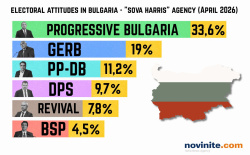
HOT: » Which party would you vote for (if you could) in the upcoming snap vote in Bulgaria on April 19?
Bulgarian Finance Minister, Simeon Djankov, dismisses any talks about increasing salaries and pensions in 2011. Photo by BGNES
There are no funds in budget 2011 to increase minimum wages and/or minimum retirement pensions, Bulgarian Finance Minister, Simeon Djankov, declared.
In the beginning of the week, the Minister of Social Policy and Labor, Totyu Mladenov, hinted minimum wages and pensions might go up beginning July 1, 2011 – a move interpreted by many as part of the ruling Citizens for European Development of Bulgaria (GERB) party election campaign since budget 2011, indeed, does not foresee increase of salaries and pensions. (Local and presidential elections are to be held in the fall of 2011.)
Also during the week, the labor union, Confederation of Bulgarian Independent Syndicates, KNSB, issued a proposal to increase minimum monthly wages by BGN 50 to reach BGN 290 a month, again starting on July 1, 2011.
The Finance Minister has firmly dismissed both proposals.
On another subject, Djankov announced cabinet's plans to connect electronically grain producers with the National Revenue Agency similarly to gas stations, in order to improve accounting of revenues. There are such plans for pharmacies and wine makers as well.
The Ministry of Finance has released a broad public dataset covering more than 7,000 public procurement contracts with a combined value exceeding 30 billion euros
Caretaker Finance Minister Georgi Klisurski said he expects fuel prices at gas stations to ease in the coming period, pointing to a sharp decline in international oil markets
Bulgaria’s new government borrowing for 2026 has surpassed the 1 billion euro mark following the latest successful auction of state securities, according to data cited from the Bulgarian National Bank
Bulgaria recorded only a modest and one-off increase in inflation following the adoption of the euro on January 1, with the effect estimated at between 0.3 and 0.4 percentage points
Data released by the Ministry of Finance, covering budget execution for February 2026 and preliminary estimates for March 2026, indicate a marked deterioration in Bulgaria’s fiscal position
In the 2026 edition of the Index of Economic Freedom, compiled by the Heritage Foundation, Bulgaria is placed 38th out of 176 countries, positioned between Costa Rica and Oman
Aniventure Comic Con Returns to Bulgaria with Star Guest Christopher Judge!
Global Fuel Shock: Oil Jumps Over 40% Since Iran War Began