Putin Declares Easter Ceasefire in Ukraine War
The Kremlin has announced that Russian President Vladimir Putin has ordered an “Easter ceasefire” in the war in Ukraine, declaring a temporary halt in hostilities lasting around 36 hours
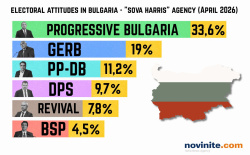
HOT: » Which party would you vote for (if you could) in the upcoming snap vote in Bulgaria on April 19?
 Send to Kindle
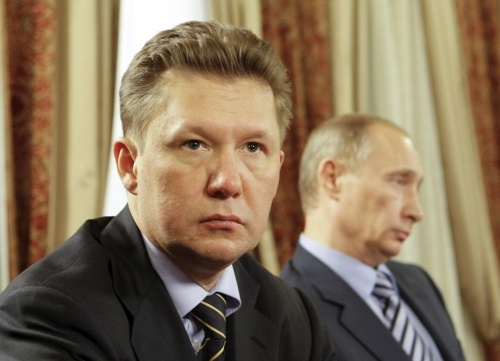 Gazprom CEO Alexei Miller (left) pictured with Russian PM Vladimir Putin. Photo by EPA/BGNES
Russian energy company Gazprom and Romania's Transgas have made a deal considered the last step before Romania formally joins the South Stream pipeline.
Gazprom said in a statement that it had signed a memorandum of mutual understanding with Romania's Transgas SA to establish a joint group of experts, who will conduct a technical and economic assessment of the pipeline construction in Romania.
"If the results of the assessment are positive, Gazprom and Transgas will suggest signing a Russian-Romanian intergovernmental agreement on cooperation in the South Stream project in the first quarter of 2011. The agreement will be the political, international and legal basis for further development of the project in Romania," the statement said as cited by RIA Novosti.
After meeting Romanian officials in Bucharest on Wednesday, Gazprom CEO Alexei Miller said he had no doubts the South Stream pipeline will be finished in 2015.
He made it clear the deal made in Bucharest brought Romania a step closer to becoming part of South Stream.
"We have signed a document to make a technical, economic analysis of a pipeline transiting Romania and after this analysis we can sign an intergovernmental agreement," Miller said as quoted by Romanian media.
Thus, the agreement for Romania's accession to South Stream will most likely be signed in the first quarter of 2011.
Russia and Romania first started talks for that in June fueling fears in Bulgaria that Romania's inclusion into the project – combined with Macedonia's accession for which talks are under way - might allow the Russians to go around Bulgaria as a result of the Borisov Cabinet balking at two other large-scale Russian-sponsored energy deals – the Belene NPP and the Burgas-Alexandroupolis oil pipeline.
While Russia sought to refute such fears by saying that Romania will only be supplied with gas through South Stream, and most likely will not be a transit country, recent publications in the Russian media interpreting a statement by Italian PM Berlusconi that Bulgaria was creating difficulties for the project continue to fuel suspicions that Moscow might swap Bulgaria for Romania.
The South Stream gas transit pipeline is supposed to be ready by 2015. Its construction is expected to cost between EUR 19 B and EUR 24 B. It will be transporting 63 billion cubic meters of natural gas annually, or 35% of Russia's total annual natural gas export to Europe.
The South Stream pipe will start near Novorosiysk on the Russian Black Sea coast, and will go to Bulgaria's Varna; the underwater section will be long 900 km.
In Bulgaria, the pipe is supposed to split in two – one pipeline going to Greece and Southern Italy, and another one going to Austria and Northern Italy through Serbia, Croatia and Slovenia.
The project was initiated by Gazprom and the Italian company Eni, and the French company EdF is also planned to join as a shareholder. It is seen as a competitor to the EU-sponsored project Nabucco seeking to bring non-Russian gas to Europe.
As early as April 2010, Russian Prime Minister Vladimir Putin announced that the French company EDF will also become a partner in the South Stream project. Back then he said that EDF asked for a 20% share, which, if granted, will probably leave Gazprom and Eni with 40% each.
At their meeting on Saturday in St. Petersburg, Berlusconi and Putin welcomed the idea of having German companies join in as shareholders. There is no indication as to how the joining of RWE or some other German company would re-apportion the stakes.
The Kremlin has announced that Russian President Vladimir Putin has ordered an “Easter ceasefire” in the war in Ukraine, declaring a temporary halt in hostilities lasting around 36 hours
A group of Members of the European Parliament has raised concerns over the potential leakage of confidential EU information to Russia, urging stronger safeguards within the European Parliament
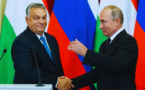
A leaked transcript of a phone call between Hungarian Prime Minister Viktor Orban and Russian President Vladimir Putin shows Orban offering extensive support to Moscow and describing himself as ready to help “in any way” in relation to the war in Ukraine
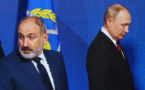
Vladimir Putin stated that Armenia cannot realistically pursue membership in the European Union while remaining part of the Moscow-led Eurasian Economic Union, arguing that the two frameworks are fundamentally incompatible
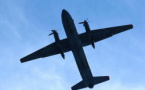
A Russian An-26 military transport aircraft has crashed in Crimea, killing all 29 people on board, according to information released by the country’s defense ministry and cited by Russian state media

Four years after the liberation of Bucha, the town remains a central reference point for understanding the nature of the war in Ukraine and the limits of current diplomatic efforts.
Bulgaria’s fuel market has recorded a sharp upward shift since the outbreak of the war in Iran, with diesel and petrol prices rising significantly across the country
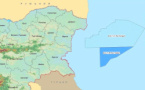
The second exploration drilling in the Krum-1 area of the Khan Asparuh block in Bulgaria’s Black Sea has also failed to identify commercially significant natural gas deposits, according to OMV Petrom
The Ombudswoman institution has voiced strong opposition to the proposed increase in heating prices in Sofia, which is expected to approach nearly 30 percent
The Energy and Water Regulatory Commission (EWRC) in Bulgaria has set the price of natural gas for April 2026 at 34.27 euros per megawatt-hour, excluding access, transmission, excise duties and VAT
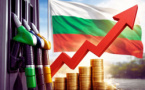
Fuel prices in Bulgaria have recorded a sharp upward movement over the past month, with diesel showing the most significant increase, according to data from the Fuelo platform
Bulgargaz has defended its previously submitted proposal for a 5% rise in natural gas prices for April before the Energy and Water Regulatory Commission, with CEO Veselin Sinabov stressing that there is currently no justification for any further increases

Aniventure Comic Con Returns to Bulgaria with Star Guest Christopher Judge!
Global Fuel Shock: Oil Jumps Over 40% Since Iran War Began