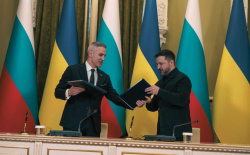
Russian Drone Strikes Estonian Power Plant
A drone originating from Russia struck the chimney of the Narva power plant in northeastern Estonia on the morning of March 25, according to the country’s Internal Security Service in Tallinn
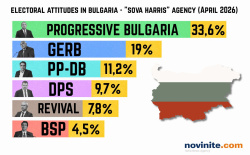
HOT: » Which party would you vote for (if you could) in the upcoming snap vote in Bulgaria on April 19?
 Send to Kindle
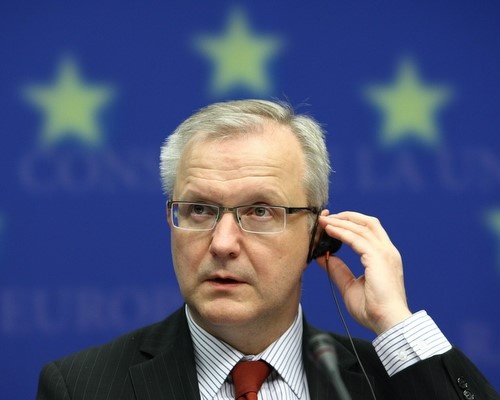 European Monetary Affairs Commissioner Finnish Olli Rehn during a press conference after an Extraordinary Ecofin Council meeting in Brussels, Belgium, on 10 May 2010. Photo by EPA/BGNES
Bulgaria and seven other EU member states do not yet meet all the conditions for the adoption of the euro, the European Commission has concluded in its convergence report.
The European Commission told Bulgaria, Cyprus, Denmark and Finland Wednesday that their budget deficits are too large, and set them under the so called “excessive deficit procedure,” special procedure under the EU’s Stability and Growth Pact to ensure that they will reduce switftly their state spending.
The EC Report setting Bulgaria under the excessive deficit procedure READ HERE
“Rigorous application of budget rules set out in the EU's Stability and Growth Pact is the best way to assure financial markets that the reduction of deficit and debt levels will be conducted properly and timely," said EU Commissioner for Economic and Monetary Affairs Olli Rehn during a news conference in Brussels Wednesday.
The European Union sets a cap on budget overspends at 3% of gross domestic product, and Bulgaria reached a general government deficit of 3.9% in 2009, according to latest data revealed in April 2010. Likewise, Cyprus breached its budget by 6.1%, Denmark is projecting a 5.4% shortfall this year, while Finland expects its deficit to reach 4.1%.
A total of 21 countries are already subject to EDPs, with Bulgaria, Cyprus, Denmark, and Finland now added to the list. Estonia and Sweden are currently the only EU countries within the debt and deficit limits.
The European Commission’s decision to place Bulgaria under the excessive deficit procedure has come a couple of weeks after the European Union's official statistics agency said the Bulgarian budget deficit in 2009 was wider than the government had estimated and exceeded the 3% ceiling.
In the first of its twice-yearly reviews of government finances in the 27-member bloc, Eurostat said the Bulgarian government's budget deficit was 3.9% of gross domestic product last year, which is up by 0.2% over the government's revised figure.
Bulgaria's center-right government announced earlier in April a larger than expected 2009 deficit allegedly caused by unaccounted procurement deals, signed by the previous Socialist-led cabinet. The previously undiscovered expenses increased the 2009 gap to 3.7% of gross domestic product (GDP) from an initial 1.9% under the EU rules, the cabinet said.
Prime Minister Boyko Borisov has blamed the increase on extra spending due to annexes to public procurement deals the previous government had signed with some 150 contractors at the end of its term. Borisov said his ministers were kept in the dark about the additional costs to the treasury.
Bulgaria's Finance Minister Simeon Djankov had orignally hoped to be able to submit an application for joining the euro zone waiting room, the ERM II in the spring of 2010, in order for Bulgaria to be able to adopt the euro in 2013. With the budget issues the Bulgarian government is now facing, experts say the earliest remotely possible date that Bulgaria could hope to join the euro zone is 2014.
In its convergence report issued Wednesday, the European Commission has found that Estonia is the only one of the nine European Union member states under consideration for euro membership that is ready to adopt the single European currency.
"Estonia has achieved a high degree of sustainable economic convergence and is ready to adopt the euro on January 1 2011," European Commissioner for Economic and Monetary Affairs, Olli Rehn said in a statement. The Commission's endorsement comes despite concerns of the European Central Bank that Estonia's inflation rate might not be sustainable.
The other eight bidders to join the euro zone - Bulgaria, the Czech Republic, Latvia, Lithuania, Hungary, Poland, Romania and Sweden – are found not to meet all the necessary conditions yet.
Estonia's euro bid will now be discussed by the European Parliament and the EU heads of state and government before a final decision is taken by the Council of European Union finance ministers at their July meeting.
Detailed information about the country-specific procedures by the EC is available HERE

A drone originating from Russia struck the chimney of the Narva power plant in northeastern Estonia on the morning of March 25, according to the country’s Internal Security Service in Tallinn
Electricity prices in Cyprus are expected to rise significantly in the coming months, with projections pointing to an increase of up to 20% by August.

The ongoing war in Iran is already casting a shadow over the tourism sectors of Cyprus and Greece, two countries geographically close to the conflict.

The government of Cyprus has launched an international communications campaign to protect the country’s tourism sector amid rising tensions in the Middle East
Sweden is stepping up its preparations for potential crises or conflicts by creating stockpiles of essential supplies, including fuel, food, and power generators.
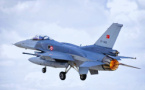
Turkey has deployed six F-16 fighter jets along with air defense systems to the Turkish Republic of Northern Cyprus (TRNC) as tensions in the Middle East intensify

The Ministry of Finance has released a broad public dataset covering more than 7,000 public procurement contracts with a combined value exceeding 30 billion euros
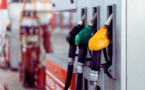
Caretaker Finance Minister Georgi Klisurski said he expects fuel prices at gas stations to ease in the coming period, pointing to a sharp decline in international oil markets
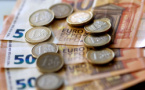
Bulgaria’s new government borrowing for 2026 has surpassed the 1 billion euro mark following the latest successful auction of state securities, according to data cited from the Bulgarian National Bank

Bulgaria recorded only a modest and one-off increase in inflation following the adoption of the euro on January 1, with the effect estimated at between 0.3 and 0.4 percentage points

Data released by the Ministry of Finance, covering budget execution for February 2026 and preliminary estimates for March 2026, indicate a marked deterioration in Bulgaria’s fiscal position

In the 2026 edition of the Index of Economic Freedom, compiled by the Heritage Foundation, Bulgaria is placed 38th out of 176 countries, positioned between Costa Rica and Oman

Aniventure Comic Con Returns to Bulgaria with Star Guest Christopher Judge!
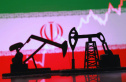
Global Fuel Shock: Oil Jumps Over 40% Since Iran War Began