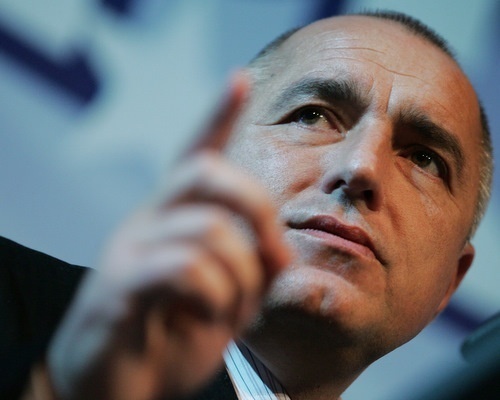
The report comes just days after Prime Minister Boyko Borisov said the country will issue debt to fill in the fiscal reserve and give a sign to foreign observers that the currency board is stable. Photo by BGNES
Bulgaria’s government has approved a revised 2010 budget law that taps into the fiscal reserve as it battles recession and seeks for ways to fill in gaps, reports say.
The fiscal reserve will slump from BGN 6.4 B to BGN 4.5 B at the end of the year, shows the revised budget that the government has tabled in parliament and which local Sega daily has obtained.
The report comes just days after Prime Minister Boyko Borisov said the country will issue debt to fill in the fiscal reserve and give a sign to foreign observers that the currency board is stable.
Bulgaria operates in a currency board regime, under which the lev is pegged to the euro, and is obliged to keep a fiscal reserve. At the end of March it stood at BGN 6.3 B, flat month-on-month, and down from BGN 7.95 B in the same period a year ago, data showed.
The government announced last week plans to cut spending on state administration by 20% and issue debt to fund infrastructure projects and increase benefit payments.
The cabinet proposed that parliament revise the budget to include increased spending, but has never even mentioned a cut in the fiscal reserve, which under local legislation should not fall under BGN 6.3 B.
The center-right cabinet has already announced one package of austerity measures, which include the introduction of a luxury tax, the sale of minority stakes in state-owned companies and a bond issue.
Bulgaria passed a 2010 budget planning for a 0.7% deficit, but was forced to revise that target to 2.4% at the start of the year.
Bulgaria’s budget deficit will reach 2.8% of gross domestic product (GDP) this year, after 3.9% in 2009, according to a European Commission forecast.
The government forecasts economic growth of 1% this year after a 5.1% contraction in 2009.