IMF Slashes Eurozone Growth to 1.1% as Energy Crisis Bites
The International Monetary Fund has revised downward its outlook for the euro area, now projecting economic growth of 1.1% this year
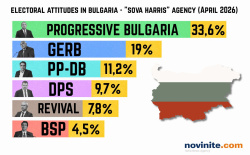
HOT: » Which party would you vote for (if you could) in the upcoming snap vote in Bulgaria on April 19?
 Send to Kindle
 Bulgaria's entry in the eurozone, initially scheduled for 2010, has been set back for some time around 2012-2013. File photo
Poland may adopt the euro in 2014- 2015, while Hungary, Bulgaria and Romania are a story for the second half of the next decade, Morgan Stanley said in a report.
The fiscal deficit limit of 3% of gross domestic product "looks like a distant prospect" for all the eastern European Union members, Pasquale Diana, an economist at Morgan Stanley in London, wrote in the report, as cited by Bloomberg agency.
Deficits in Poland, the Czech Republic and Romania are "heading to around 6% of GDP this year, maybe even wider in 2010 and are unlikely to shrink to the euro limit until 2013- 2014," according to the report, which also forecasts debt ratios "heading dangerously" to 60% of GDP in Poland and to 80% in Hungary.
Bulgaria's entry in the eurozone, initially scheduled for 2010, has been set back for some time around 2012-2013. Experts say it is conditional on continued fiscal prudence and lower inflation.
In fact, Bulgaria has yet to join the Exchange Rate Mechanism, the "waiting room" for euro membership, amid concerns about its inflation rates and external trade imbalances. Stricter application of membership criteria has also been a factor in the delay.
Bulgaria plans to apply in November to join the exchange-rate mechanism, the European Union's two-year currency stability test before the country can drop the lev and adopt the euro.

The International Monetary Fund has revised downward its outlook for the euro area, now projecting economic growth of 1.1% this year

The introduction of the euro in Bulgaria has so far produced only a limited and largely one-off effect on consumer prices, according to an analysis by the European Central Bank

Nikolay Vassilev, former Minister of Economy, dismissed claims that prices in Bulgaria have doubled following eurozone-related developments, arguing instead that inflation remains low and that public fears about sharp price increases are exaggerated.

Unemployment in the euro area edged up slightly in February, reaching 6.2% compared to the record low of 6.1% recorded in January, according to figures released by Eurostat
With the initial months following the introduction of the euro, institutional oversight in Bulgaria is gradually shifting from intensive inspections to a more systematic and long-term monitoring framework

The Bulgarian real estate market is showing signs of cooling in early 2026, with experts reporting a slowdown in transactions and a shift toward more balanced conditions between buyers and sellers

The Bulgarian National Bank (BNB) has decided to increase the countercyclical capital buffer to 2.25%, in a move aimed at easing pressure on the rapidly growing housing credit market and strengthening the resilience of the banking system.

The Ministry of Finance has released a broad public dataset covering more than 7,000 public procurement contracts with a combined value exceeding 30 billion euros
Caretaker Finance Minister Georgi Klisurski said he expects fuel prices at gas stations to ease in the coming period, pointing to a sharp decline in international oil markets
Bulgaria’s new government borrowing for 2026 has surpassed the 1 billion euro mark following the latest successful auction of state securities, according to data cited from the Bulgarian National Bank

Bulgaria recorded only a modest and one-off increase in inflation following the adoption of the euro on January 1, with the effect estimated at between 0.3 and 0.4 percentage points

Data released by the Ministry of Finance, covering budget execution for February 2026 and preliminary estimates for March 2026, indicate a marked deterioration in Bulgaria’s fiscal position

Aniventure Comic Con Returns to Bulgaria with Star Guest Christopher Judge!
Global Fuel Shock: Oil Jumps Over 40% Since Iran War Began