Bulgaria Weather: Mixed Easter Forecast With Sun, Rain, and Gradually Rising Temperatures
Holiday weather conditions are expected to remain mixed across Bulgaria, with alternating periods of sunshine and rain showers, according to the forecast
HOT: » Which party would you vote for (if you could) in the upcoming snap vote in Bulgaria on April 19?
 Send to Kindle
Fitch Ratings has revised its outlook for Bulgaria’s public finances downward, increasing its projections for future budget deficits, while keeping the country’s sovereign credit rating unchanged at BBB+ with a stable outlook. The rating was raised earlier in the year, following the announcement of Bulgaria’s forthcoming entry into the eurozone, which the agency says is not at risk.
In its assessment, Fitch points to the resignation of the Bulgarian government as a sign of the difficulties surrounding the implementation of structural reforms, including the required fiscal consolidation. According to the agency, this political uncertainty could put pressure on economic growth, even though Bulgaria’s path toward eurozone membership remains secure.
The agency notes that Bulgaria’s fiscal position has weakened over recent years. This has been driven by higher social spending, significant pay increases in the public sector, and delays in reform implementation. Despite this deterioration, public debt remains at a very low level, projected to stay below 30 percent of GDP in 2025. Fitch also warns that repeated changes of government may undermine the authorities’ ability to carry out medium-term fiscal adjustments aimed at limiting growing deficits.
Fitch now expects the budget deficit to widen to 3.2 percent of GDP in 2026 and 4.3 percent in 2027, compared with 3 percent in 2025. This marks a clear revision from its previous outlook, which anticipated no change in the deficit in 2026 and only a modest increase to 3.1 percent in 2027. The agency explains that the adjustment reflects the outgoing government’s failure to introduce planned revenue measures in the current year, as well as the effect of scheduled military equipment deliveries in 2027, estimated at around 1.2 percent of GDP.
The report also comments on the political situation, noting that the minority government led by Rosen Zhelyazkov has been in office only since January. Fitch’s baseline scenario foresees early parliamentary elections, most likely in the spring of 2026. If this happens, it would be the eighth early election in Bulgaria since 2021, underlining the depth of political instability.
According to Fitch, institutional weaknesses and ongoing political turbulence have slowed progress on structural reforms compared with peer countries, even though Bulgaria has successfully completed the formal process for adopting the euro. The agency highlights that the country is behind schedule in absorbing EU funds under both the Recovery and Resilience Mechanism and the Cohesion Funds. These delays could complicate access to financing under the Economic and Investment Plan, given that the implementation deadline expires at the end of August 2026.
On the macroeconomic front, Fitch attributes Bulgaria’s economic expansion in 2025 to strong nominal wage growth, solid household consumption and robust investment activity. The agency has revised its forecast for real GDP growth this year upward to 3.3 percent, from 3.1 percent previously, citing better-than-expected performance during the first nine months of 2025. At the same time, Fitch cautions that slower execution of EU-funded projects and renewed political uncertainty are likely to weigh on growth in the following year, offsetting the positive carry-over from 2025.
As a result, the agency has slightly reduced its growth projections for 2026 and 2027, now expecting real GDP growth of 2.7 percent in both years, compared with the earlier estimate of 2.8 percent made in September.
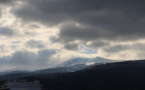
Holiday weather conditions are expected to remain mixed across Bulgaria, with alternating periods of sunshine and rain showers, according to the forecast
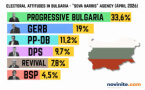
A new survey by the “Sova Harris” agency indicates that six political formations would enter the next Bulgarian National Assembly, based on data collected between April 2 and 6 among 800 respondents through standardized face-to-face interviews

Up to 90 percent of construction and renovation workers in Bulgaria are operating outside the legal framework, according to entrepreneur Lozan Lozanov, who raised concerns about the lack of regulation in construction and installation services

The Ministry of Finance has released a broad public dataset covering more than 7,000 public procurement contracts with a combined value exceeding 30 billion euros

The Easter holiday getaway has officially begun in Bulgaria, with traffic leaving Sofia surging as thousands of people set off for the long weekend

A 53-year-old man with a criminal record has been detained in Bulgaria during a targeted police operation against vote buying, carried out in the village of Brestnitsa in the Lovech region
The Ministry of Finance has released a broad public dataset covering more than 7,000 public procurement contracts with a combined value exceeding 30 billion euros
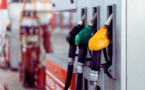
Caretaker Finance Minister Georgi Klisurski said he expects fuel prices at gas stations to ease in the coming period, pointing to a sharp decline in international oil markets

Bulgaria’s new government borrowing for 2026 has surpassed the 1 billion euro mark following the latest successful auction of state securities, according to data cited from the Bulgarian National Bank

Bulgaria recorded only a modest and one-off increase in inflation following the adoption of the euro on January 1, with the effect estimated at between 0.3 and 0.4 percentage points

Data released by the Ministry of Finance, covering budget execution for February 2026 and preliminary estimates for March 2026, indicate a marked deterioration in Bulgaria’s fiscal position

In the 2026 edition of the Index of Economic Freedom, compiled by the Heritage Foundation, Bulgaria is placed 38th out of 176 countries, positioned between Costa Rica and Oman

Aniventure Comic Con Returns to Bulgaria with Star Guest Christopher Judge!
Global Fuel Shock: Oil Jumps Over 40% Since Iran War Began