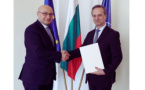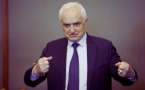
Bulgarian National Bank Governor Dimitar Radev
Bulgaria recorded only a limited and one-off increase in inflation after joining the euro on January 1, with the impact estimated at 0.3% to 0.4%, Bulgarian National Bank Governor Dimitar Radev said in an interview with Reuters. He stressed that the effect was in line with Croatia’s experience and that overall inflation trends remained broadly stable, easing to 2.3% in January from 3.5% a month earlier.
“The effect on inflation was in the range of 0.3 to 0.4 percentage points,” Radev said, adding that the transition had unfolded more smoothly than expected. He also noted that the process of adopting the euro did not cause major disruption for most companies, with a large majority reporting no significant operational issues.
Public backing for the common currency has strengthened since its introduction. According to Radev, support among households has risen to 54%, compared to 45% before accession, while business approval has reached around 70%. He suggested that geopolitical uncertainty could further reinforce this trend, arguing that in times of instability the euro is increasingly seen as a source of economic security.
“The geopolitical situation… may further strengthen positive attitudes due to the feeling of greater economic protection,” he said, referring to broader global tensions.
At the same time, Radev warned that inflation risks across the eurozone are increasing, driven mainly by rising energy prices and uncertainty linked to global conflicts. He cautioned that the balance of risks is shifting and that conditions could deteriorate if current pressures persist.
“The balance of risks has shifted to the downside,” he said, warning that the likelihood of a more negative scenario is growing amid the energy shock.
He also highlighted the danger that inflation expectations could adjust more quickly, potentially feeding into wages and prices and creating a self-reinforcing cycle.
“There is a risk that households and businesses will adjust their inflation expectations more quickly,” Radev said, warning this could lead to an inflationary spiral.
According to him, the European Central Bank must be ready to act decisively if price pressures become persistent, including through interest rate increases if necessary. He added that markets are already pricing in more than two rate hikes this year, with the first expected in June.
Radev noted that inflation expectations are still relatively stable but stressed that the situation remains highly sensitive to external shocks. “If the shock continues and starts to spill over into wages, margins and expectations, the cost of inaction will increase,” he said.
The ECB, he added, will closely monitor inflation trends, energy markets, economic sentiment and geopolitical developments, particularly in the Middle East, as these factors will shape future monetary policy decisions. While the eurozone is entering this period from a stronger position compared to 2022, Radev warned that broad government subsidies could also add to inflationary pressures.