Easter Monday in Bulgaria: Tradition and Family Visits
Orthodox Easter Monday is the day following Easter Sunday and is observed across Bulgaria as part of the wider Easter celebration within the Orthodox Christian tradition
HOT: » Which party would you vote for (if you could) in the upcoming snap vote in Bulgaria on April 19?
 Send to Kindle
The Easter holiday getaway has officially begun in Bulgaria, with traffic leaving Sofia surging as thousands of people set off for the long weekend. Authorities expect more than 191,000 vehicles to exit the capital, according to the Road Infrastructure Agency (RIA), marking an increase compared to last year’s roughly 185,000 cars.
Officials warn that traffic will be especially heavy on the country’s main highways, with around 130,000 vehicles expected to head toward the “Trakia,” “Hemus,” and “Struma” routes. The busiest corridor is projected to be “Trakia,” where about 62,000 vehicles may travel, followed by “Hemus” with over 35,000 and “Struma” with approximately 32,000. Peak congestion is expected in the afternoon and evening hours, with flow potentially reaching up to 4,000 vehicles per hour.
To ease movement and improve road safety, restrictions on trucks over 12 tons are being introduced on key routes, including sections of the Trakia, Hemus and Struma highways, as well as road I-1 in Blagoevgrad region. Heavy goods traffic leaving Sofia is restricted during specific time windows on Thursday afternoon and Friday morning, while return traffic restrictions will apply on Monday afternoon. Certain exemptions remain in place for passenger transport, emergency shipments, hazardous materials, live animals, and perishable goods.
On major travel routes such as the Struma highway and the Simitli area, authorities are also introducing reverse traffic schemes to improve flow toward tourist destinations like Bansko. From April 9 to April 11, two lanes will be allocated toward Kulata, while traffic toward Sofia will be limited to one lane; the arrangement will reverse over the weekend to accommodate returning travelers. In Kresna, left turns at a key junction will also be temporarily restricted, while pedestrian crossings will operate via signal-controlled demand systems.
Road authorities have urged drivers to avoid risky maneuvers and respect speed limits, warning against using emergency lanes to bypass congestion, as this could hinder emergency response vehicles in case of incidents. “We call on drivers to drive carefully and comply with traffic rules,” the RIA emphasized, highlighting the expected intensity of holiday traffic.
Separately, traffic flow at the Danube Bridge near Ruse is set to be fully restored for the holiday period after completion of repair works on a 320-meter section of the structure. However, further renovation work will resume after Easter, with construction on the remaining section scheduled to begin on April 14 and expected to continue until June 2026.
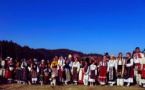
Orthodox Easter Monday is the day following Easter Sunday and is observed across Bulgaria as part of the wider Easter celebration within the Orthodox Christian tradition

Industrial output in Bulgaria posted a modest monthly increase in February 2026, but continued to decline sharply on an annual basis, according to preliminary, seasonally adjusted data from the National Statistical Institute.
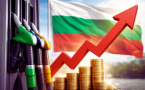
The president of the Confederation of Bulgarian Trade Unions, Plamen Dimitrov, has warned that inflation in Bulgaria is likely to exceed earlier projections, even if fuel prices begin to decline

The introduction of the euro in Bulgaria has so far produced only a limited and largely one-off effect on consumer prices, according to an analysis by the European Central Bank
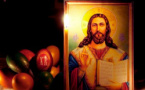
Easter is the most important religious holiday in the Orthodox Christian calendar and is widely celebrated across Bulgaria. It marks the resurrection of Jesus Christ and follows the completion of Holy Week, which includes Good Friday and Holy Saturday

The Central Election Commission (CEC) in Bulgaria has confirmed that a total of 6,575,151 citizens are eligible to vote in the upcoming elections on April 19

Holy Saturday, known in Bulgaria as Lazarus Saturday’s continuation of the Easter cycle, is a quiet but deeply symbolic day in the Orthodox Christian calendar

Health authorities in Bulgaria report a total of 101 confirmed measles cases across the country, according to data from the Ministry of Health
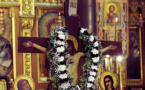
Good Friday, known in Bulgaria as Razpeti petak, is one of the most solemn and deeply observed days in the Orthodox Christian calendar

The Bulgarian scientific research vessel “Sts. Cyril and Methodius” (NIC 421) has returned to Varna, docking at the Marine Station and marking the official end of the country’s 34th Antarctic expedition
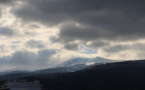
Holiday weather conditions are expected to remain mixed across Bulgaria, with alternating periods of sunshine and rain showers, according to the forecast
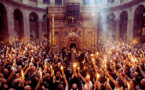
The Bulgarian Orthodox Church has decided that no official delegation will travel to Jerusalem this year to receive the Holy Fire, citing the ongoing tensions in the Middle East

Aniventure Comic Con Returns to Bulgaria with Star Guest Christopher Judge!

Global Fuel Shock: Oil Jumps Over 40% Since Iran War Began