Easter Monday in Bulgaria: Tradition and Family Visits
Orthodox Easter Monday is the day following Easter Sunday and is observed across Bulgaria as part of the wider Easter celebration within the Orthodox Christian tradition
HOT: » Which party would you vote for (if you could) in the upcoming snap vote in Bulgaria on April 19?
 Send to Kindle
 Photo: Stella Ivanova
Bulgaria stands out among European Union countries for having one of the longest average working weeks, clocking in at 39 hours compared to the EU average of just over 36 hours per week, according to the latest data from Eurostat. Only Greece exceeds Bulgaria with nearly 40 hours, while Romania and Poland also exceed 39 hours weekly, reports the Bulgarian National Radio (BNR). Conversely, the Netherlands boasts one of the shortest working weeks in the EU, averaging just over 32 hours.
Trade unionists attribute Bulgaria's lengthy working hours primarily to low incomes among workers. Velichka Mikova, national secretary of the National Labor and Social Security Council and an expert in labor law, pointed out in an interview for the BNR that many Bulgarian workers exceed the standard 8-hour workday or 40-hour workweek to supplement their earnings with additional hours.
"The main reason for the longer working week in Bulgaria is the low wages," Mikova emphasized.
She noted that other EU countries have begun experimenting with alternative work models like the 4-day work week, citing initiatives in Spain, Belgium, and Germany. Mikova clarified that these efforts are not mere trials but are backed by state-supported economic actions, particularly through the State Recovery and Resilience Plans.
In Bulgaria, discussions about adopting a shorter working week have surfaced, but Mikova highlighted that serious negotiations between social partners have not yet taken place to explore reducing working hours while safeguarding workers' rights.
Mikova also discussed evolving workplace practices, such as flexible telecommuting arrangements. She explained recent legislative updates that allow teleworkers to operate from multiple locations within Bulgaria without altering their employment status, promoting greater flexibility in work arrangements.
Additionally, Mikova highlighted new labor protections, including the right for workers to disconnect from work-related communications during designated rest periods between days and weeks. This provision ensures that employees cannot face penalties for not responding to employer communications outside of regular working hours or on weekends.
Looking ahead, Mikova mentioned the imminent development of a new Employment Promotion Law in Bulgaria, aimed at further enhancing labor regulations and support mechanisms for workers across various sectors.
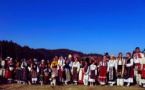
Orthodox Easter Monday is the day following Easter Sunday and is observed across Bulgaria as part of the wider Easter celebration within the Orthodox Christian tradition

Industrial output in Bulgaria posted a modest monthly increase in February 2026, but continued to decline sharply on an annual basis, according to preliminary, seasonally adjusted data from the National Statistical Institute.
The president of the Confederation of Bulgarian Trade Unions, Plamen Dimitrov, has warned that inflation in Bulgaria is likely to exceed earlier projections, even if fuel prices begin to decline

The introduction of the euro in Bulgaria has so far produced only a limited and largely one-off effect on consumer prices, according to an analysis by the European Central Bank
Easter is the most important religious holiday in the Orthodox Christian calendar and is widely celebrated across Bulgaria. It marks the resurrection of Jesus Christ and follows the completion of Holy Week, which includes Good Friday and Holy Saturday
Holy Saturday, known in Bulgaria as Lazarus Saturday’s continuation of the Easter cycle, is a quiet but deeply symbolic day in the Orthodox Christian calendar

The Bulgarian scientific research vessel “Sts. Cyril and Methodius” (NIC 421) has returned to Varna, docking at the Marine Station and marking the official end of the country’s 34th Antarctic expedition
Holiday weather conditions are expected to remain mixed across Bulgaria, with alternating periods of sunshine and rain showers, according to the forecast
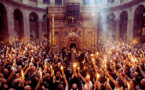
The Bulgarian Orthodox Church has decided that no official delegation will travel to Jerusalem this year to receive the Holy Fire, citing the ongoing tensions in the Middle East

Plovdiv will host the International Street Arts Festival 6Fest from April 20 to 26, 2026, turning the city into an open-air stage featuring performers from 11 countries across three continents

The Easter holiday getaway has officially begun in Bulgaria, with traffic leaving Sofia surging as thousands of people set off for the long weekend

Holy Thursday marks one of the most significant days in Holy Week, as Christians reflect on the final moments before the crucifixion of Jesus Christ

Aniventure Comic Con Returns to Bulgaria with Star Guest Christopher Judge!
Global Fuel Shock: Oil Jumps Over 40% Since Iran War Began