Bulgaria under Potential Threat of an Attack against "Turkish Stream" on its Territory
As a country through which the Turkish Stream gas pipeline (TurkStream) passes, Bulgaria is in potential danger after the Nord Stream 1 and 2 explosions
HOT: » Which party would you vote for (if you could) in the upcoming snap vote in Bulgaria on April 19?
 Send to Kindle
 Photo by BGNES
The special vessel that was supposed to lay the pipes for the South Stream gas pipeline has left Bulgaria’s Port Burgas to start work on the Turkish Stream gas pipeline project.
The special pipe-laying vessel, Saipem 7000, left Port Burgas on Monday and headed into the Black Sea, according to the Marine Traffic Global Positionining System, as cited by Russian online newspaper Vzglyad and money.bg.
Castro Sei, the other pipe-laying vessel of Saipem involved in the cancelled South Stream project, remains in Burgas at this stage.
Italy’s Saipem was contracted by Gazprom lay the pipe's offshore section.
However, Vladimir Putin announced in December 2014 that Russia was quitting the South Stream gas pipeline project.
On May 8 Saipem announced the renewal of the contract with South Stream Transport on the construction of the offshore section of the alternative gas pipeline project, Turkish.
The pipe-laying works for Turkish Stream will be carried out at a speed of around 3 kilometers a day, according to RIA Novosti.
Meanwhile, Turkey announced Monday that it had given the green light to engineering studies for Turkish Stream in its exclusive economic zone and territorial waters.
660 kilometers of the offshore route of Turkish Stream coincide with the route of South Stream, but the new project also includes a new corridor of 250 kilometers towards the European part of Turkey.
The entire capacity of Turkish Stream has been earmarked for the Turkish market.

As a country through which the Turkish Stream gas pipeline (TurkStream) passes, Bulgaria is in potential danger after the Nord Stream 1 and 2 explosions

The President of Serbia, Aleksandar Vucic, said during a visit to the city of Leskovac, where he inspected the construction of a stadium in the city, that he was concerned of the possibility of sabotage on the Turkish Stream

,,This small stretch of 11 km is extremely important for Bulgaria.

Work on the construction of the Turkish Stream is officially underway today after the agreement between the state gas operator Bulgartransgaz and the Saudi-based Arcad Consortium was signed yesterday.

The construction of the receiving terminal for the Turkish Stream Offshore Pipeline reached 95% of the total volume of work.

Almost 90% of all terminal work has now been completed.

Bulgaria’s fuel market has recorded a sharp upward shift since the outbreak of the war in Iran, with diesel and petrol prices rising significantly across the country
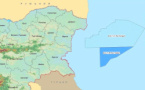
The second exploration drilling in the Krum-1 area of the Khan Asparuh block in Bulgaria’s Black Sea has also failed to identify commercially significant natural gas deposits, according to OMV Petrom

The Ombudswoman institution has voiced strong opposition to the proposed increase in heating prices in Sofia, which is expected to approach nearly 30 percent
The Energy and Water Regulatory Commission (EWRC) in Bulgaria has set the price of natural gas for April 2026 at 34.27 euros per megawatt-hour, excluding access, transmission, excise duties and VAT

Fuel prices in Bulgaria have recorded a sharp upward movement over the past month, with diesel showing the most significant increase, according to data from the Fuelo platform

Bulgargaz has defended its previously submitted proposal for a 5% rise in natural gas prices for April before the Energy and Water Regulatory Commission, with CEO Veselin Sinabov stressing that there is currently no justification for any further increases

Aniventure Comic Con Returns to Bulgaria with Star Guest Christopher Judge!
Global Fuel Shock: Oil Jumps Over 40% Since Iran War Began