Easter Monday in Bulgaria: Tradition and Family Visits
Orthodox Easter Monday is the day following Easter Sunday and is observed across Bulgaria as part of the wider Easter celebration within the Orthodox Christian tradition
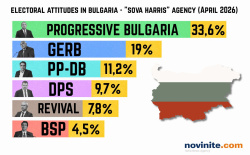
HOT: » Which party would you vote for (if you could) in the upcoming snap vote in Bulgaria on April 19?
 Send to Kindle
Bulgaria remains a country with partly free media, according to the Global Survey of Media Independence - Freedom of the Press 2013.
The data comes from the latest edition of the annual index published by Freedom House since 1980.
Bulgaria is ranked 77th among 199 surveyed countries, right before Mongolia. Serbia is ahead of Bulgaria, but Romania (88) and Greece (85) have been downgraded compared to last year, when Bulgaria was 78th among 197, meaning the situation is virtually the same.
Bulgaria's index has improved by just one point on a scale of 100.
In the region of Central and Eastern Europe and the former Soviet Union, Bulgaria is 11th out of a total of 29. There are only 7 countries with free media in this group, 13 – are partly free, and 9, including Russia, are not free.
The ranking for this group is the worst in a decade as three of a total of eight countries with the most repressive regimes against media are part of it and 56% if its population lives without free media.
Out of the total of the surveyed countries, 32% have free media, 36% - partly free and 32% - not free.
The Freedom of the Press index assesses the degree of print, broadcast, and internet freedom in every country in the world, analyzing the events and developments of each calendar year.
Ratings are determined through an examination of three broad categories: the legal environment in which media operate; political influences on reporting and access to information; and economic pressures on content and the dissemination of news.
Under the legal category, the index assesses the laws and regulations that could influence media content as well as the extent to which the government uses these tools to restrict the media's ability to function.
The political category encompasses a variety of issues, including editorial pressure by the government or other actors, censorship and self-censorship, the ability of reporters to cover the news, and the extralegal intimidation of and violence against journalists.
Under the economic category, the index examines issues such as the structure, transparency, and concentration of media ownership; costs of production and distribution; and the impact of advertising, subsidies, and bribery on content.
Ratings reflect not just government actions and policies, but the behavior of the press itself in testing boundaries, even in more restrictive environments, as well as the impact of nonstate actors
Each country receives a numerical rating from 0 (the most free - Norway) to 100 (the least free - Turkmenistan), which serves as the basis for a press freedom status designation of Free, Partly Free, or Not Free.
Heightened contestation over new media is among the main conclusions with citizen journalists and their use of new media tools, including microblogs, online social networks, mobile telephones, and other information and communication technologies. They have made major contributions to revolutions in the Middle East and prevented authoritarian regimes in China, Russia, and elsewhere from gaining total domination of the information landscape. However, a range of governments intensified efforts to restrict new media. Repressive measures included the passage or heightened use of new cybercrime laws (Thailand, Russia); jailing of bloggers (Egypt, Gulf Arab states, Vietnam); and blocks on web-based content and text-messaging services during periods of political upheaval (India, Tajikistan).
The report notes that fair elections impossible without free press: political contests in a number of key countries in 2012 demonstrated that a level electoral playing field is impossible when the government, as in authoritarian settings like Russia or Venezuela, is able to use its control over broadcast media to skew coverage, and ultimately votes, in its favor.
Freedom House further informs that the decline of media freedom in several European countries can be attributed to the economic crisis.
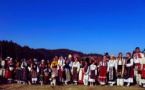
Orthodox Easter Monday is the day following Easter Sunday and is observed across Bulgaria as part of the wider Easter celebration within the Orthodox Christian tradition

Industrial output in Bulgaria posted a modest monthly increase in February 2026, but continued to decline sharply on an annual basis, according to preliminary, seasonally adjusted data from the National Statistical Institute.
The president of the Confederation of Bulgarian Trade Unions, Plamen Dimitrov, has warned that inflation in Bulgaria is likely to exceed earlier projections, even if fuel prices begin to decline
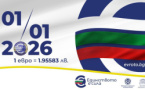
The introduction of the euro in Bulgaria has so far produced only a limited and largely one-off effect on consumer prices, according to an analysis by the European Central Bank
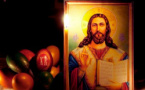
Easter is the most important religious holiday in the Orthodox Christian calendar and is widely celebrated across Bulgaria. It marks the resurrection of Jesus Christ and follows the completion of Holy Week, which includes Good Friday and Holy Saturday
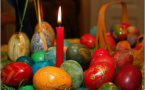
Holy Saturday, known in Bulgaria as Lazarus Saturday’s continuation of the Easter cycle, is a quiet but deeply symbolic day in the Orthodox Christian calendar
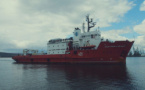
The Bulgarian scientific research vessel “Sts. Cyril and Methodius” (NIC 421) has returned to Varna, docking at the Marine Station and marking the official end of the country’s 34th Antarctic expedition
Holiday weather conditions are expected to remain mixed across Bulgaria, with alternating periods of sunshine and rain showers, according to the forecast
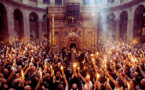
The Bulgarian Orthodox Church has decided that no official delegation will travel to Jerusalem this year to receive the Holy Fire, citing the ongoing tensions in the Middle East

Plovdiv will host the International Street Arts Festival 6Fest from April 20 to 26, 2026, turning the city into an open-air stage featuring performers from 11 countries across three continents

The Easter holiday getaway has officially begun in Bulgaria, with traffic leaving Sofia surging as thousands of people set off for the long weekend
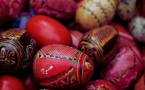
Holy Thursday marks one of the most significant days in Holy Week, as Christians reflect on the final moments before the crucifixion of Jesus Christ

Aniventure Comic Con Returns to Bulgaria with Star Guest Christopher Judge!
Global Fuel Shock: Oil Jumps Over 40% Since Iran War Began