Easter Monday in Bulgaria: Tradition and Family Visits
Orthodox Easter Monday is the day following Easter Sunday and is observed across Bulgaria as part of the wider Easter celebration within the Orthodox Christian tradition
HOT: » Which party would you vote for (if you could) in the upcoming snap vote in Bulgaria on April 19?
 Send to Kindle
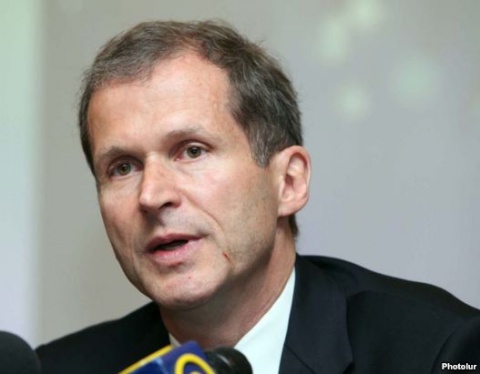 Erik Berglof, chief economist at the European Bank for Reconstruction and Development. Photo from Radio Free Europe
Bulgaria is among the emerging economies on the outskirts of Europe, which are most at risk of a slow-down in the wake of the euro-zone sovereign debt crisis, according to EBRD.
"Bulgarian banks are vulnerable [being subsidiaries of Greek parents], but a lot of work has been put into building a firewall around Greece. It seems to be holding up for now and this is good news," Erik Berglof, chief economist at the European Bank for Reconstruction and Development, told Bloomberg Television's broadcast "On the Move".
"We have preparations for the case that the subsidiaries no longer have the support of their parents. This is a scenario, which we must take into account. That might not be the main scenario, but we must take it into account," he added.
As major French and Italian banks reined in lending, fears that this might affect growth in some Southeastern Europe have emerged.
"There has not been any acceleration of this [trend], but in almost any scenario you could think of now there would be some impact on the subsidiaries of these banks."
Asked whether some of these banks may go under because of the contagion spreading out, Berglof said this is not the most likely event now.
"Now we should figure out which subsidiaries depend particularly on their parents and need new capital. This is the kind of situation we need to prepare for."
Berglof voiced optimism that European policy-makers are doing the right thing to get Europe back on track.
"I feel confident that the focus now is on the right things. As Olli Rehn mentioned recently having a coordinated capitalization of the banks is the right way to go."
Greek banks hold nearly a 30% of the Bulgarian banking market, a 20% share of the bank loans and one-third of all deposits.
Some of the biggest lenders in Bulgaria are managed by Italy's UniCredit, Greece's National Bank of Greece, Hungary's OTP and Austria's Raiffeisen.
Other Greek banks present in Bulgaria include EFG Eurobank, Piraeus, Emporiki and Alpha Bank.
Experts have warned that Bulgaria, the European Union member boasting one of the the bloc's smallest budget deficit, risks seeing its banks sucked under by the fiscal sins of neighboring Greece.
Earlier this year Bulgaria's central bank assuaged fears over funds outflow from Greek bank subsidiaries in the country to headquarters in Greece, saying this is part of the free movement of capital.

Orthodox Easter Monday is the day following Easter Sunday and is observed across Bulgaria as part of the wider Easter celebration within the Orthodox Christian tradition

Industrial output in Bulgaria posted a modest monthly increase in February 2026, but continued to decline sharply on an annual basis, according to preliminary, seasonally adjusted data from the National Statistical Institute.
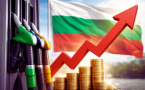
The president of the Confederation of Bulgarian Trade Unions, Plamen Dimitrov, has warned that inflation in Bulgaria is likely to exceed earlier projections, even if fuel prices begin to decline

The introduction of the euro in Bulgaria has so far produced only a limited and largely one-off effect on consumer prices, according to an analysis by the European Central Bank

Easter is the most important religious holiday in the Orthodox Christian calendar and is widely celebrated across Bulgaria. It marks the resurrection of Jesus Christ and follows the completion of Holy Week, which includes Good Friday and Holy Saturday

Holy Saturday, known in Bulgaria as Lazarus Saturday’s continuation of the Easter cycle, is a quiet but deeply symbolic day in the Orthodox Christian calendar
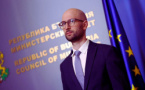
The Ministry of Finance has released a broad public dataset covering more than 7,000 public procurement contracts with a combined value exceeding 30 billion euros
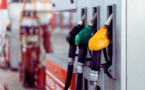
Caretaker Finance Minister Georgi Klisurski said he expects fuel prices at gas stations to ease in the coming period, pointing to a sharp decline in international oil markets
Bulgaria’s new government borrowing for 2026 has surpassed the 1 billion euro mark following the latest successful auction of state securities, according to data cited from the Bulgarian National Bank

Bulgaria recorded only a modest and one-off increase in inflation following the adoption of the euro on January 1, with the effect estimated at between 0.3 and 0.4 percentage points

Data released by the Ministry of Finance, covering budget execution for February 2026 and preliminary estimates for March 2026, indicate a marked deterioration in Bulgaria’s fiscal position

In the 2026 edition of the Index of Economic Freedom, compiled by the Heritage Foundation, Bulgaria is placed 38th out of 176 countries, positioned between Costa Rica and Oman

Aniventure Comic Con Returns to Bulgaria with Star Guest Christopher Judge!
Global Fuel Shock: Oil Jumps Over 40% Since Iran War Began