Bulgaria’s Mortgage Market Braces for Euro Transition and Inflation Impact
The Bulgarian mortgage market continues to expand steadily, showing increases in lending volumes, average loan sizes
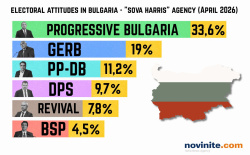
HOT: » Which party would you vote for (if you could) in the upcoming snap vote in Bulgaria on April 19?
 Send to Kindle
 Bulgaria's new Finance Minister Simeon Djankov does not rule out issuing Eurobonds on international markets in a bid to bring down lending rates. Photo by BGNES
Bulgaria's finance minister has renewed his calls on banks to lower lending rates by at least 3% due to the decreasing financial risk in the country.
Talking in the Black Sea town of Varna, Djankov said one option for achieving this is issuing Eurobonds on international markets or unblocking payments to the businesses in the construction and infrastructure sectors.
The minister said he expects to hear a dozen proposals for ways to lower lending rates at his upcoming meeting with bankers on Wednesday.
“Since the time the new government came into office, roughly one hundred days, the country's foreign risk has decreased by 3,5 percentage points, which should translate into a 3% decrease in lending rates in about four months,” Djankov said.
At their previous meeting with the finance minister at the beginning of November, the Bulgarian bankers said they will put forward a set of measures, designed to improve market conditions and prepare the ground for a long-anticipated cut in lending rates.
According to the bankers loan interest rates will fall when the deposit market flattens. Bulgarian banks now pay an average interest of 7 to 8% for euro-denominated deposits and 9 to 10% for deposits in leva.

The Bulgarian mortgage market continues to expand steadily, showing increases in lending volumes, average loan sizes

The Bulgarian National Bank (BNB) announced that the main interest rate (BIR) will be set at 1.81 percent starting October 1

Recent analysis by the financial portal "Moite pari" indicates that interest rates on bank deposits are starting to climb, particularly noticeable among smaller banks over the past year

The Bulgarian National Bank (BNB) has announced that it will stop publishing the key interest rate following the country's adoption of the euro

For the first time in four years, the United States Federal Reserve has lowered the key interest rate

Gold prices surged to a new all-time high of 2,353 USD per ounce during early trading on Monday, continuing a rapid ascent witnessed over the past two weeks

The Ministry of Finance has released a broad public dataset covering more than 7,000 public procurement contracts with a combined value exceeding 30 billion euros
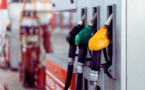
Caretaker Finance Minister Georgi Klisurski said he expects fuel prices at gas stations to ease in the coming period, pointing to a sharp decline in international oil markets
Bulgaria’s new government borrowing for 2026 has surpassed the 1 billion euro mark following the latest successful auction of state securities, according to data cited from the Bulgarian National Bank

Bulgaria recorded only a modest and one-off increase in inflation following the adoption of the euro on January 1, with the effect estimated at between 0.3 and 0.4 percentage points

Data released by the Ministry of Finance, covering budget execution for February 2026 and preliminary estimates for March 2026, indicate a marked deterioration in Bulgaria’s fiscal position

In the 2026 edition of the Index of Economic Freedom, compiled by the Heritage Foundation, Bulgaria is placed 38th out of 176 countries, positioned between Costa Rica and Oman

Aniventure Comic Con Returns to Bulgaria with Star Guest Christopher Judge!

Global Fuel Shock: Oil Jumps Over 40% Since Iran War Began