3 Months Later: Businesses and Citizens Embrace the Euro in Bulgaria as Transition Smooths
Three months into Bulgaria’s adoption of the euro, the new currency has become a routine part of daily life for citizens
HOT: » Which party would you vote for (if you could) in the upcoming snap vote in Bulgaria on April 19?
 Send to Kindle
 @Pixabay
A recent study by the Association for Responsible Non-Banking Lending (AONK) shows that nearly a quarter of Bulgarians have used quick loans at least once in their lives. The findings were presented by the organization’s chairman, attorney Nikolay Tsvetkov.
The research indicates that most borrowers, 84%, have taken out up to three quick loans, and roughly three-quarters of these loans were for sums ranging between 500 and 2,000 leva. Contrary to common belief, 74% of respondents reported they did not take a new loan to repay an existing one, challenging the notion of a widespread “debt spiral” in this segment of financial services.
Quick loans are primarily used to cover household and medical expenses, though there is a growing trend of using them for consumer purchases such as equipment, gifts, and vacations. Tsvetkov noted that this shift has been observed in previous studies, suggesting that loans are increasingly sought for discretionary spending rather than urgent needs.
The survey also highlights that many borrowers do not fully review their loan contracts. One in ten admits they did not read the contract at all before signing, while nearly half only examined the main points. At the same time, over 92% said they received all necessary information from the credit company when requested. Experts recommend comparing offers from multiple lenders and consulting the standard European form, which outlines all loan terms and costs, to make informed decisions and avoid repayment difficulties.
Demographically, the study found that quick loan users are mostly aged between 30 and 40, active in the labor market with steady incomes. Men slightly outnumber women at 52% to 48%, and most borrowers live in regional or medium-sized cities. Approximately two-thirds have secondary or specialized secondary education, with a significant portion holding higher education degrees.
Problem loans remain a small share, indicating that lenders are generally effective in assessing clients’ creditworthiness. However, experts caution that many borrowers do not verify whether the lending institution is registered with the Bulgarian National Bank, a crucial step for ensuring legal compliance and regulatory oversight.

Three months into Bulgaria’s adoption of the euro, the new currency has become a routine part of daily life for citizens
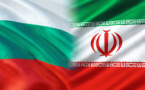
A recent survey by the sociological agency "Myara" shows that while a majority of Bulgarians perceive the conflict in Iran as a genuine threat to the country, they largely do not feel personally endangered

The number of Bulgarians living abroad who have applied to vote in the early parliamentary elections on April 19 has nearly doubled compared with the last vote in October 2024

More than 2,600 Bulgarian citizens have left countries in the Middle East and Iran since the start of the evacuation efforts, according to information from the Situation Center of the Ministry of Foreign Affairs as of 09:30 today

Last night, 120 Bulgarians who had been stranded in the Maldives finally returned home aboard a charter flight operated by the Bulgarian airline GullivAir.

The operation to evacuate Bulgarians stranded across the Middle East is ongoing, as authorities work to bring citizens to safety amid rising regional tensions.
Caretaker Finance Minister Georgi Klisurski said he expects fuel prices at gas stations to ease in the coming period, pointing to a sharp decline in international oil markets

Bulgaria’s new government borrowing for 2026 has surpassed the 1 billion euro mark following the latest successful auction of state securities, according to data cited from the Bulgarian National Bank

Bulgaria recorded only a modest and one-off increase in inflation following the adoption of the euro on January 1, with the effect estimated at between 0.3 and 0.4 percentage points

Data released by the Ministry of Finance, covering budget execution for February 2026 and preliminary estimates for March 2026, indicate a marked deterioration in Bulgaria’s fiscal position

In the 2026 edition of the Index of Economic Freedom, compiled by the Heritage Foundation, Bulgaria is placed 38th out of 176 countries, positioned between Costa Rica and Oman

Finance officials and the Bulgarian National Bank have issued a series of warnings about Bulgaria’s fiscal and economic outlook for 2026, highlighting rising pressure on public finances, slower growth, and higher inflation.

Aniventure Comic Con Returns to Bulgaria with Star Guest Christopher Judge!
Global Fuel Shock: Oil Jumps Over 40% Since Iran War Began