The Power of Knowledge Lies in Its Use
Dr. Boyko Takov: Analytical and empirical results from ongoing projects constitute a solid information base
Business | April 9, 2026, Thursday // 18:21
HOT: » Which party would you vote for (if you could) in the upcoming snap vote in Bulgaria on April 19?
 Send to Kindle
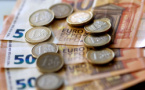
Over the past two years, Bulgaria has imported coins from Estonia totaling 70.15 million euros, according to BGNES. In 2024 alone, imports reached 33.615 million euros, equivalent to 0.527 tons. Data from January to September 2025 shows an increase, with coin imports valued at 36.535 million euros, or 0.698 tons in weight.
Coins rank as the second most significant category of goods Bulgaria imports from Estonia, following precious metals. The growth in imports in 2024–2025 has been linked largely to rising prices for gold and silver. Total imports from Estonia in 2024 amounted to 199.982 million euros, representing a 106.6% increase compared to 2023 and accounting for 0.4% of Bulgaria’s total imports. From January to September 2025, imports totaled 242.995 million euros, a 92.1% rise over the same period in 2024, making up 0.6% of the country’s overall imports.
The coins in question are primarily investment-grade gold and silver, which have become increasingly popular among Bulgarians seeking to protect savings from inflation and geopolitical uncertainty. The preference reflects both tradition and a historical skepticism toward financial instruments, as well as a still-developing domestic market. Bulgarians often follow the philosophy of J.P. Morgan, who famously said, “gold is money, and everything else is credit,” investing in real estate or gold as a safeguard for the future.
In Bulgaria, investment gold coins are widely traded, ranging from modern issues such as the American Eagle, Vienna Philharmonic, Australian Kangaroo, Chinese Panda, and Krugerrand, to historical coins dating from the early 19th century to the First World War. Among the most sought-after are the French francs, known locally as “Napoleons.”
Gold prices have been extremely volatile in early 2026. On January 26, the metal surpassed $ 5,000 per troy ounce, reaching $ 5,100. Over the following two days, it climbed further to $ 5,300 and $ 5,600, before falling nearly 11% to finish the week at $ 4,900. As of February 2, gold is trading slightly above $ 4,600 per troy ounce on global markets.

Dr. Boyko Takov: Analytical and empirical results from ongoing projects constitute a solid information base

The European Public Prosecutor’s Office (EPPO) has carried out a series of coordinated investigative actions across several countries, including Bulgaria and Romania, as part of a probe into suspected large-scale fraud involving EU funds

Holiday weather conditions are expected to remain mixed across Bulgaria, with alternating periods of sunshine and rain showers, according to the forecast
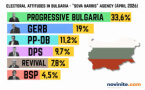
A new survey by the “Sova Harris” agency indicates that six political formations would enter the next Bulgarian National Assembly, based on data collected between April 2 and 6 among 800 respondents through standardized face-to-face interviews

Up to 90 percent of construction and renovation workers in Bulgaria are operating outside the legal framework, according to entrepreneur Lozan Lozanov, who raised concerns about the lack of regulation in construction and installation services

The Ministry of Finance has released a broad public dataset covering more than 7,000 public procurement contracts with a combined value exceeding 30 billion euros
The Ministry of Finance has released a broad public dataset covering more than 7,000 public procurement contracts with a combined value exceeding 30 billion euros

Caretaker Finance Minister Georgi Klisurski said he expects fuel prices at gas stations to ease in the coming period, pointing to a sharp decline in international oil markets
Bulgaria’s new government borrowing for 2026 has surpassed the 1 billion euro mark following the latest successful auction of state securities, according to data cited from the Bulgarian National Bank

Bulgaria recorded only a modest and one-off increase in inflation following the adoption of the euro on January 1, with the effect estimated at between 0.3 and 0.4 percentage points

Data released by the Ministry of Finance, covering budget execution for February 2026 and preliminary estimates for March 2026, indicate a marked deterioration in Bulgaria’s fiscal position

In the 2026 edition of the Index of Economic Freedom, compiled by the Heritage Foundation, Bulgaria is placed 38th out of 176 countries, positioned between Costa Rica and Oman

Aniventure Comic Con Returns to Bulgaria with Star Guest Christopher Judge!

Global Fuel Shock: Oil Jumps Over 40% Since Iran War Began