Bulgaria Weather: Mixed Easter Forecast With Sun, Rain, and Gradually Rising Temperatures
Holiday weather conditions are expected to remain mixed across Bulgaria, with alternating periods of sunshine and rain showers, according to the forecast
HOT: » Which party would you vote for (if you could) in the upcoming snap vote in Bulgaria on April 19?
 Send to Kindle
 @Pixabay
Internet use has expanded dramatically over the past three decades, evolving from a niche technology into an essential part of everyday life. From fewer than 1% of users globally in 1995, today nearly two-thirds of the world’s population is online. Data compiled by DataReportal shows that the average user now spends around 6 hours and 39 minutes a day on the internet. Of this time, roughly 2.5 hours are devoted to social networks, while close to 4.5 hours are spent accessing online content via mobile phones.
Usage levels are even higher among children and young people. According to the same data, individuals aged between 10 and 24 spend an average of 7 hours and 36 minutes online each day. This trend has raised concerns among health experts. The World Health Organization reports that more than one in ten children under 15 exhibit problematic behavior related to social media, including signs of addiction. Despite these concerns, Facebook remains the most widely used platform globally, with close to 3 billion active users per month.
In response to these developments, a number of countries have begun considering or introducing restrictions. Australia has become the first country to ban access to social networks for children under the age of 16. Denmark is preparing a similar ban for those under 15, while France could become the first EU member state to implement such a measure if the Senate approves legislation already passed by the lower house. Comparable debates are underway in Spain, Italy, Greece and Norway, with draft laws already prepared in some cases.
Against this backdrop, Bulgaria stands out for the pace at which internet access has expanded over the past decade. Among EU member states, Bulgaria has recorded the fastest growth in household internet access over the last ten years. Currently, 93% of households in the country have internet connectivity, compared with an EU average of 95%. While the gap appears small, this places Bulgaria 22nd in the overall EU ranking. The country fares even worse in terms of regular internet use, ranking 26th, with only Croatia behind it. In contrast, Ireland, Denmark and the Netherlands report near-universal daily internet use. Around 7% of Bulgarians have never used the internet at all.
Patterns of use in Bulgaria also differ from those elsewhere in the EU. Bulgarians primarily go online to make phone and video calls through various applications. Social networks and chat platforms follow as the second and third most common activities. Across the EU, however, messaging is the most frequent online activity, while social media ranks only fifth. Reading news content comes next in Bulgaria, followed by checking email. In most other EU countries, email is the second most common reason for going online. Online shopping remains less popular in Bulgaria, with only 47% of users making purchases via the internet, compared with an EU average of 72%, where buying goods and services ranks fourth overall.
In terms of devices, mobile phones are the main gateway to the internet across Europe, followed by laptops. Desktop computers are used in about one quarter of cases, ahead of tablets and smart devices such as TVs or watches, which account for around 14–15%. A notable difference is that these smart devices are more commonly used for internet access elsewhere in Europe than in Bulgaria, where desktops still play a relatively larger role.
Artificial intelligence is gradually becoming part of everyday online activity, but adoption remains uneven. In Bulgaria, one in five people use AI-based tools, compared with roughly one in three across the EU. Usage is highest in Denmark, where every second person relies on such technologies. Bulgaria ranks near the bottom, ahead of only Italy and Romania. Most Bulgarians who use AI do so for personal purposes, with 8% using it for work and 5% for education. In other EU countries, these shares are approximately twice as high. The most commonly cited reason for not using AI in Bulgaria is a perceived lack of need.
Holiday weather conditions are expected to remain mixed across Bulgaria, with alternating periods of sunshine and rain showers, according to the forecast
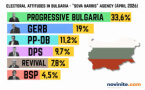
A new survey by the “Sova Harris” agency indicates that six political formations would enter the next Bulgarian National Assembly, based on data collected between April 2 and 6 among 800 respondents through standardized face-to-face interviews

Up to 90 percent of construction and renovation workers in Bulgaria are operating outside the legal framework, according to entrepreneur Lozan Lozanov, who raised concerns about the lack of regulation in construction and installation services
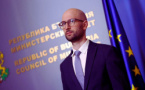
The Ministry of Finance has released a broad public dataset covering more than 7,000 public procurement contracts with a combined value exceeding 30 billion euros

The Easter holiday getaway has officially begun in Bulgaria, with traffic leaving Sofia surging as thousands of people set off for the long weekend

A 53-year-old man with a criminal record has been detained in Bulgaria during a targeted police operation against vote buying, carried out in the village of Brestnitsa in the Lovech region
The Easter holiday getaway has officially begun in Bulgaria, with traffic leaving Sofia surging as thousands of people set off for the long weekend

Holy Thursday marks one of the most significant days in Holy Week, as Christians reflect on the final moments before the crucifixion of Jesus Christ

A homeless man discovered a sack containing human body parts next to a waste container in the Trakia residential district of Plovdiv, according to local media reports

The Institute for Computer Science, Artificial Intelligence and Technology (INSAIT) at Sofia University “St. Kliment Ohridski”, together with streaming platform Netflix

On Thursday, April 9, weather conditions across Bulgaria are expected to remain unsettled, with variable cloud cover that will often be significant

The Bulgarian Medical Association has called for an urgent overhaul of healthcare funding, insisting on a 25 percent increase in the prices of clinical pathways and all medical services, alongside a revision of the user fee for hospital stays

Aniventure Comic Con Returns to Bulgaria with Star Guest Christopher Judge!

Global Fuel Shock: Oil Jumps Over 40% Since Iran War Began