The Power of Knowledge Lies in Its Use
Dr. Boyko Takov: Analytical and empirical results from ongoing projects constitute a solid information base
Business | April 9, 2026, Thursday // 18:21
HOT: » Which party would you vote for (if you could) in the upcoming snap vote in Bulgaria on April 19?
 Send to Kindle
Bulgaria remains in the final days of dual currency use, with payments accepted in both levs and euros until January 31. From February 1, all transactions will officially use only the euro. The transition is progressing steadily, according to the Coordination Center for the Euro Mechanism, though in the past three weeks authorities recorded 71 cases of attempts to pay with counterfeit euro banknotes, including so-called “prop money.” Between January 16 and 22 alone, 23 such attempts were noted, resulting in 11 pre-trial investigations.
Authorities confirmed to the Council of Ministers that the market is well supplied with euros, including both coins and banknotes. The withdrawal of Bulgarian levs is proceeding gradually, with about 10 billion levs (roughly 5.1 billion euros) still in circulation. Citizens were reminded that “Bulgarian Posts” should not be used as banks in small towns, as this could quickly deplete available cash in post offices. Reports show that complaints from the public have significantly decreased compared with early January, and no price increases have been recorded amid the currency change.
Vladimir Ivanov, Chairman of the Coordination Center for the Euro Mechanism, urged citizens to remain rational: “There is much discussion in Bulgaria about the feeling of rising costs and market interactions. We need more accurate information on prices, currency, and potential developments.” Stefan Tsvetkov, Chief Treasurer of the Bulgarian National Bank (BNB), stressed that large denominations, including the 200 and 500 euro banknotes, retain full legal tender status. “All merchants are required to accept them,” he said, following reports that some stores refused 200 euro notes.
Meanwhile, commercial banks have warned of phishing scams exploiting the euro rollout. Fraudsters are sending fake emails and SMS messages claiming duplicate payments or unlawfully withheld funds, prompting recipients to click links for supposed refunds. Cybersecurity expert Kiril Grigorov emphasized that these messages are fraudulent. “Watch for requests for personal or financial information, confirmations, or transfers. Verify the sender, and if in doubt, contact your bank directly through official channels,” he advised.
The BNB reassurances and security warnings aim to calm public concerns as Bulgaria completes its switch to the euro, while vigilance remains necessary in the coming weeks.
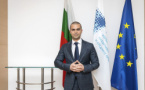
Dr. Boyko Takov: Analytical and empirical results from ongoing projects constitute a solid information base
The European Public Prosecutor’s Office (EPPO) has carried out a series of coordinated investigative actions across several countries, including Bulgaria and Romania, as part of a probe into suspected large-scale fraud involving EU funds

Holiday weather conditions are expected to remain mixed across Bulgaria, with alternating periods of sunshine and rain showers, according to the forecast
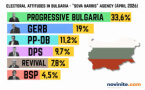
A new survey by the “Sova Harris” agency indicates that six political formations would enter the next Bulgarian National Assembly, based on data collected between April 2 and 6 among 800 respondents through standardized face-to-face interviews

Up to 90 percent of construction and renovation workers in Bulgaria are operating outside the legal framework, according to entrepreneur Lozan Lozanov, who raised concerns about the lack of regulation in construction and installation services

The Ministry of Finance has released a broad public dataset covering more than 7,000 public procurement contracts with a combined value exceeding 30 billion euros
The Ministry of Finance has released a broad public dataset covering more than 7,000 public procurement contracts with a combined value exceeding 30 billion euros
Caretaker Finance Minister Georgi Klisurski said he expects fuel prices at gas stations to ease in the coming period, pointing to a sharp decline in international oil markets
Bulgaria’s new government borrowing for 2026 has surpassed the 1 billion euro mark following the latest successful auction of state securities, according to data cited from the Bulgarian National Bank

Bulgaria recorded only a modest and one-off increase in inflation following the adoption of the euro on January 1, with the effect estimated at between 0.3 and 0.4 percentage points

Data released by the Ministry of Finance, covering budget execution for February 2026 and preliminary estimates for March 2026, indicate a marked deterioration in Bulgaria’s fiscal position

In the 2026 edition of the Index of Economic Freedom, compiled by the Heritage Foundation, Bulgaria is placed 38th out of 176 countries, positioned between Costa Rica and Oman

Aniventure Comic Con Returns to Bulgaria with Star Guest Christopher Judge!
Global Fuel Shock: Oil Jumps Over 40% Since Iran War Began