Easter Monday in Bulgaria: Tradition and Family Visits
Orthodox Easter Monday is the day following Easter Sunday and is observed across Bulgaria as part of the wider Easter celebration within the Orthodox Christian tradition
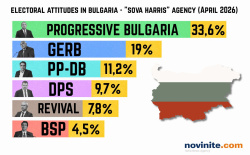
HOT: » Which party would you vote for (if you could) in the upcoming snap vote in Bulgaria on April 19?
 Send to Kindle
With Bulgaria set to adopt the euro on 1 January 2026, the country will retain the long-established fixed exchange rate of 1 euro to 1.95583 leva. This rate was definitively confirmed by the Council of the European Union in July 2025 and is final and non-negotiable. As a result, the lev’s value against the euro will remain unchanged, and all conversions involving prices, wages, pensions, savings or payments will be calculated strictly using this ratio.
The exchange rate is mandatory for all participants in the economy, including public institutions, banks, businesses and private individuals. No alternative rates may be applied, and no additional charges are permitted for the conversion itself. After 30 June 2026, however, banks and post offices that continue to exchange leva into euros may introduce service fees.
When converting amounts from leva into euros, the calculation is always performed by dividing the sum in leva by 1.95583. The exchange rate itself must not be shortened or rounded. For price conversions, the resulting euro amount is rounded to the second decimal place under standard mathematical rules: if the third digit after the decimal point is below 5, the second digit remains unchanged; if it is 5 or higher, the second digit increases by one. By way of example, 100 leva are converted into €51.13.
All bank accounts, loans and deposits will be automatically converted into euros on 1 January 2026. Account holders will not be required to submit requests or sign additional agreements, as the process will take place by default.
A different rounding principle applies to salaries, pensions and social payments. In these cases, if the third decimal digit is greater than zero, the second digit is rounded up. Under this rule, a monthly income of 2,000 leva becomes €1,022.59.
From the date of euro adoption, the euro becomes Bulgaria’s sole official currency, and prices must be set in euros. Any new goods or services introduced after 1 January 2026, as well as any price changes to existing ones, must be denominated in euros. During the dual display period, which runs until 8 August 2026, prices must also be shown in leva for information purposes.
With the fixed rate of 1 euro equal to 1.95583 leva, the switch to the euro is designed to take place without extra costs and without affecting the real value of incomes, savings or financial obligations.

Orthodox Easter Monday is the day following Easter Sunday and is observed across Bulgaria as part of the wider Easter celebration within the Orthodox Christian tradition

Industrial output in Bulgaria posted a modest monthly increase in February 2026, but continued to decline sharply on an annual basis, according to preliminary, seasonally adjusted data from the National Statistical Institute.
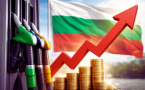
The president of the Confederation of Bulgarian Trade Unions, Plamen Dimitrov, has warned that inflation in Bulgaria is likely to exceed earlier projections, even if fuel prices begin to decline

The introduction of the euro in Bulgaria has so far produced only a limited and largely one-off effect on consumer prices, according to an analysis by the European Central Bank

Easter is the most important religious holiday in the Orthodox Christian calendar and is widely celebrated across Bulgaria. It marks the resurrection of Jesus Christ and follows the completion of Holy Week, which includes Good Friday and Holy Saturday

Holy Saturday, known in Bulgaria as Lazarus Saturday’s continuation of the Easter cycle, is a quiet but deeply symbolic day in the Orthodox Christian calendar

The Ministry of Finance has released a broad public dataset covering more than 7,000 public procurement contracts with a combined value exceeding 30 billion euros
Caretaker Finance Minister Georgi Klisurski said he expects fuel prices at gas stations to ease in the coming period, pointing to a sharp decline in international oil markets
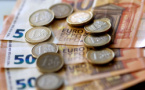
Bulgaria’s new government borrowing for 2026 has surpassed the 1 billion euro mark following the latest successful auction of state securities, according to data cited from the Bulgarian National Bank

Bulgaria recorded only a modest and one-off increase in inflation following the adoption of the euro on January 1, with the effect estimated at between 0.3 and 0.4 percentage points

Data released by the Ministry of Finance, covering budget execution for February 2026 and preliminary estimates for March 2026, indicate a marked deterioration in Bulgaria’s fiscal position

In the 2026 edition of the Index of Economic Freedom, compiled by the Heritage Foundation, Bulgaria is placed 38th out of 176 countries, positioned between Costa Rica and Oman

Aniventure Comic Con Returns to Bulgaria with Star Guest Christopher Judge!

Global Fuel Shock: Oil Jumps Over 40% Since Iran War Began