Easter Monday in Bulgaria: Tradition and Family Visits
Orthodox Easter Monday is the day following Easter Sunday and is observed across Bulgaria as part of the wider Easter celebration within the Orthodox Christian tradition
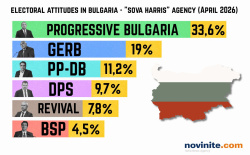
HOT: » Which party would you vote for (if you could) in the upcoming snap vote in Bulgaria on April 19?
 Send to Kindle
Martin Dimitrov, MP from “We Continue the Change-Democratic Bulgaria” (WCC-DB) appeared on Nova TV to discuss the country’s preparedness for the euro, economic risks, budgetary issues, and the relationship between the state and business, as well as Bulgaria’s international obligations.
Dimitrov acknowledged that technical difficulties might arise in the initial months after the euro is introduced, but he stressed that these issues would stem from the outgoing government’s inadequate information campaign rather than the euro itself. “Instead of addressing the serious questions and concerns of citizens, the authorities simply announced that Bulgaria will join the eurozone. Everyone already knows that,” he noted. Looking further ahead, Dimitrov believes that adopting the euro will have positive effects for the country.
Regarding prices, inflation, and business pressures, Dimitrov criticized the current government’s handling of the transition. He argued that the Euro Law created artificial incentives for price increases even before the euro’s introduction. He also said that the Consumer Protection Commission and the Competition Protection Commission, by imposing heavy fines and expanded powers, inadvertently push prices higher. “Harassment of business raises costs, while stable competition keeps prices down. It has always been like this,” he explained. Dimitrov cited Eurostat data, highlighting that the euro’s adoption is expected to contribute less than 1% to inflation.
On the budget and the recently approved extension law, Dimitrov described the decision to index salaries by roughly 5% as a compromise intended to ease social tensions. “It costs between BGN 500 million (€255 million) and 1 billion (€510 million), but it is structured so it won’t create problems,” he said. He added that the required funds can be covered by nominal economic growth, which he projects at 6.3% in 2025 and around 7% in 2026, sufficient to meet rising expenses.
Dimitrov defended the government’s choice not to adopt the previously proposed budgets, arguing it prevented a scenario of excessive deficits and debt, which could have reached BGN 20 billion (€10.2 billion), potentially replicating situations seen in Romania and Greece. He emphasized the need for accountability in public spending.
Turning to politics, Dimitrov ruled out a coalition between PP-DB, GERB, and DPS, describing the latter two as responsible for the current government’s failures. “Borissov and Peevski created this government, which is a complete failure. We cannot govern with them,” he said. He stressed that the future will largely depend on voter turnout: “The most important thing is for people to vote, for there to be a high turnout. Only then can we prevent the reproduction of the same model,” he concluded.

Orthodox Easter Monday is the day following Easter Sunday and is observed across Bulgaria as part of the wider Easter celebration within the Orthodox Christian tradition

Industrial output in Bulgaria posted a modest monthly increase in February 2026, but continued to decline sharply on an annual basis, according to preliminary, seasonally adjusted data from the National Statistical Institute.
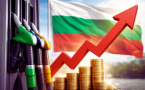
The president of the Confederation of Bulgarian Trade Unions, Plamen Dimitrov, has warned that inflation in Bulgaria is likely to exceed earlier projections, even if fuel prices begin to decline

The introduction of the euro in Bulgaria has so far produced only a limited and largely one-off effect on consumer prices, according to an analysis by the European Central Bank

Easter is the most important religious holiday in the Orthodox Christian calendar and is widely celebrated across Bulgaria. It marks the resurrection of Jesus Christ and follows the completion of Holy Week, which includes Good Friday and Holy Saturday
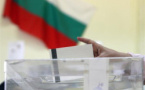
The Central Election Commission (CEC) in Bulgaria has confirmed that a total of 6,575,151 citizens are eligible to vote in the upcoming elections on April 19
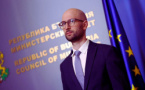
The Ministry of Finance has released a broad public dataset covering more than 7,000 public procurement contracts with a combined value exceeding 30 billion euros
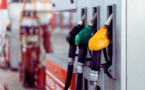
Caretaker Finance Minister Georgi Klisurski said he expects fuel prices at gas stations to ease in the coming period, pointing to a sharp decline in international oil markets

Bulgaria’s new government borrowing for 2026 has surpassed the 1 billion euro mark following the latest successful auction of state securities, according to data cited from the Bulgarian National Bank

Bulgaria recorded only a modest and one-off increase in inflation following the adoption of the euro on January 1, with the effect estimated at between 0.3 and 0.4 percentage points

Data released by the Ministry of Finance, covering budget execution for February 2026 and preliminary estimates for March 2026, indicate a marked deterioration in Bulgaria’s fiscal position

In the 2026 edition of the Index of Economic Freedom, compiled by the Heritage Foundation, Bulgaria is placed 38th out of 176 countries, positioned between Costa Rica and Oman

Aniventure Comic Con Returns to Bulgaria with Star Guest Christopher Judge!
Global Fuel Shock: Oil Jumps Over 40% Since Iran War Began