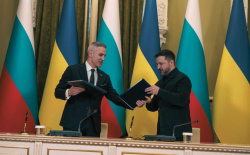
'Euro' Tops Bulgaria’s Words of 2025
“Euro” has been named the most emblematic word in Bulgaria for 2025, according to the latest survey by the popular language platform “Kak se pishe” (“How to spell?”)
Society | January 19, 2026, Monday // 10:12
HOT: » Which party would you vote for (if you could) in the upcoming snap vote in Bulgaria on April 19?
 Send to Kindle
Oxford University Press has selected "rage bait" as its Word of the Year for 2025, following a three-day public vote that drew participation from more than 30,000 people. The publisher pointed to a sharp rise in the term’s usage over the past year, noting that it has tripled according to Oxford’s language data and has become a clear reflection of the current digital environment.
The expression describes online material crafted specifically to provoke anger, frustration or outrage, with the goal of driving engagement, clicks or visibility across platforms. Linguists at Oxford say the popularity of the term mirrors a broader shift in online communication, moving from attention-grabbing tactics based on curiosity to emotional manipulation aimed at influencing user reactions. They add that the intense public debates throughout 2025 over regulating online spaces, along with widespread social tensions, helped push the phrase into mainstream conversation.
Although widely associated today with viral posts on platforms such as Twitter, the phrase has earlier roots. It first appeared in 2002 on Usenet, where it was used to describe drivers deliberately antagonizing others on the road. Over time, it evolved into general internet slang and is now frequently referenced by journalists, creators and social media users.
Casper Grathwohl, President of Oxford Languages, said the growing use of the expression highlights a rising awareness of how easily people can be drawn into manipulative dynamics online. He noted that the shift from simple click-driven content to strategies that target emotional responses represents a significant change in how digital platforms shape public behavior.
As in previous years, the Oxford Word of the Year was chosen from a shortlist of expressions considered to function as single units of meaning, regardless of length. Two other contenders reached the final round. One was "aura farming", a term describing conscious attempts to construct a captivating or magnetic presence - an idea that gained traction after viral discussions in 2024 about whether charisma can be intentionally developed. The second was "biohack", referring to efforts to fine-tune the body or mind through routines, supplements or technology, a practice that has expanded alongside growing interest in longevity and high-performance lifestyles.
Last year’s Word of the Year, "brain rot", denoted low-value digital content, particularly the type often associated with AI-generated output.

“Euro” has been named the most emblematic word in Bulgaria for 2025, according to the latest survey by the popular language platform “Kak se pishe” (“How to spell?”)

“Artificial Intelligence” with 45%, “sglobka” with 37%, and “time shelter” with 35% of the votes are the standout words and expressions for 2023 in Bulgaria

Oxford University Press (OUP) has unveiled its Word of the Year for 2023, and it's the charming newcomer "rizz"

The word "war" (voina/война) is the most frequently mentioned by Bulgarians in a large-scale study of the words that marked the past year 2022

The Oxford Dictionary chose the word 2019.
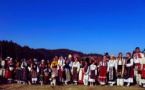
Orthodox Easter Monday is the day following Easter Sunday and is observed across Bulgaria as part of the wider Easter celebration within the Orthodox Christian tradition
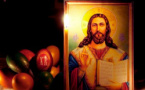
Easter is the most important religious holiday in the Orthodox Christian calendar and is widely celebrated across Bulgaria. It marks the resurrection of Jesus Christ and follows the completion of Holy Week, which includes Good Friday and Holy Saturday

Holy Saturday, known in Bulgaria as Lazarus Saturday’s continuation of the Easter cycle, is a quiet but deeply symbolic day in the Orthodox Christian calendar
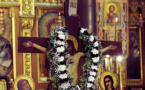
Good Friday, known in Bulgaria as Razpeti petak, is one of the most solemn and deeply observed days in the Orthodox Christian calendar
The Bulgarian Orthodox Church has decided that no official delegation will travel to Jerusalem this year to receive the Holy Fire, citing the ongoing tensions in the Middle East
Plovdiv will host the International Street Arts Festival 6Fest from April 20 to 26, 2026, turning the city into an open-air stage featuring performers from 11 countries across three continents

Aniventure Comic Con Returns to Bulgaria with Star Guest Christopher Judge!

Global Fuel Shock: Oil Jumps Over 40% Since Iran War Began