Easter Monday in Bulgaria: Tradition and Family Visits
Orthodox Easter Monday is the day following Easter Sunday and is observed across Bulgaria as part of the wider Easter celebration within the Orthodox Christian tradition
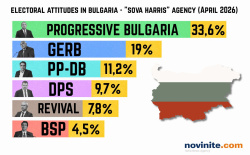
HOT: » Which party would you vote for (if you could) in the upcoming snap vote in Bulgaria on April 19?
 Send to Kindle
 Photo: Stella Ivanova
Banking services in Bulgaria rank among the most accessible within the European Union, according to a detailed analysis by the Economic Analysis and Policy Department of the Association of Banks in Bulgaria (ABB). The study focuses on countries in Central and Eastern Europe (CEE) with similar territory, population, and economic development levels, drawing several important conclusions.
Firstly, Bulgarian banks provide the lowest interest rates in Europe on newly issued loans to households for home purchases in the national currency. Data from the European Central Bank (ECB) for March 2025 show an average interest rate of 2.46% in Bulgaria. This is notably lower compared to 2.94% in Croatia, 2.99% in Slovenia, and a much higher 6.82% in Hungary.
Subscription service packages stand out for their cost efficiency, offering significantly cheaper options than using individual banking services. These packages typically include a current account, debit card, utility bill payments, ATM withdrawals, and transfers via mobile number or electronic banking channels. In many cases, the bundled price is over six times lower than paying for each service separately. Some banks tailor packages specifically for young people and pensioners, offering even more favorable terms.
When it comes to overall accessibility, the cost of basic banking packages in Bulgaria is the lowest among comparable CEE countries. According to data published by the Bulgarian National Bank (BNB), a basic package costs only €1.70 per month in Bulgaria, compared to €5.90 in Croatia, €4.90 in Hungary, and €5.90 in Slovenia. This means Bulgarian customers pay 188% less than those in Hungary, and around 247% less than clients in Croatia and Slovenia. Standard packages, which include additional services like mobile banking and inter-bank transfers, also cost significantly less in Bulgaria — between 44.5% and over 300% cheaper than in the other countries analyzed.
The banking sector in Bulgaria has undergone rapid digital transformation in recent years, moving away from a reliance on physical branches to offering comprehensive online and mobile services. This shift is driven by advances in technology, changing consumer habits, and the need for banks to stay competitive and efficient. Customers now benefit from faster, more convenient, and cheaper access to banking, including account management, credit applications, and payments.
One clear indicator of this digital shift is the sharp rise in electronic payments. Cashless transactions via debit and credit cards, mobile apps, and online banking are becoming the norm, even in traditionally cash-focused markets like Bulgaria. According to BNB data, 76% of banking transfers were initiated through digital channels by the end of 2024. Paper-based transfers have dropped dramatically — by 73% in 2023 compared to the previous year — while electronic transfers grew by 32%. This trend is partly explained by the much lower fees for digital transfers, which are often included in package deals, and the overall ease of using digital platforms.
Despite these advances, Bulgaria’s banking sector generates a smaller share of net income from fees and commissions than the European average. As of the end of 2024, the ratio of net income from fees and commissions to total operating income was 20.6% in Bulgaria, compared to an EU average of 28.1%, based on data from the European Banking Authority (EBA) and the BNB. This difference partly reflects the broad range of services included in fees and commissions, such as investment brokerage and consulting.
The Association of Banks in Bulgaria has been the main representative body for the country’s banking sector for over 30 years. ABB aims to support the development of a stable, innovative, and sustainable banking environment that benefits both the economy and society. With 22 member banks employing over 25,000 people, ABB works closely with state institutions and private organizations to promote financial literacy and secure digital services. It is also a member of key European bodies like the European Banking Federation and the European Payments Council, aligning its work with best European practices.

Orthodox Easter Monday is the day following Easter Sunday and is observed across Bulgaria as part of the wider Easter celebration within the Orthodox Christian tradition

Industrial output in Bulgaria posted a modest monthly increase in February 2026, but continued to decline sharply on an annual basis, according to preliminary, seasonally adjusted data from the National Statistical Institute.
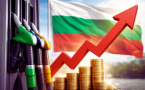
The president of the Confederation of Bulgarian Trade Unions, Plamen Dimitrov, has warned that inflation in Bulgaria is likely to exceed earlier projections, even if fuel prices begin to decline

The introduction of the euro in Bulgaria has so far produced only a limited and largely one-off effect on consumer prices, according to an analysis by the European Central Bank

Easter is the most important religious holiday in the Orthodox Christian calendar and is widely celebrated across Bulgaria. It marks the resurrection of Jesus Christ and follows the completion of Holy Week, which includes Good Friday and Holy Saturday

The Central Election Commission (CEC) in Bulgaria has confirmed that a total of 6,575,151 citizens are eligible to vote in the upcoming elections on April 19

The Ministry of Finance has released a broad public dataset covering more than 7,000 public procurement contracts with a combined value exceeding 30 billion euros

Caretaker Finance Minister Georgi Klisurski said he expects fuel prices at gas stations to ease in the coming period, pointing to a sharp decline in international oil markets

Bulgaria’s new government borrowing for 2026 has surpassed the 1 billion euro mark following the latest successful auction of state securities, according to data cited from the Bulgarian National Bank

Bulgaria recorded only a modest and one-off increase in inflation following the adoption of the euro on January 1, with the effect estimated at between 0.3 and 0.4 percentage points

Data released by the Ministry of Finance, covering budget execution for February 2026 and preliminary estimates for March 2026, indicate a marked deterioration in Bulgaria’s fiscal position

In the 2026 edition of the Index of Economic Freedom, compiled by the Heritage Foundation, Bulgaria is placed 38th out of 176 countries, positioned between Costa Rica and Oman

Aniventure Comic Con Returns to Bulgaria with Star Guest Christopher Judge!

Global Fuel Shock: Oil Jumps Over 40% Since Iran War Began