Military Patrols Deployed in Brussels and Antwerp to Protect Jewish Sites
Belgium has announced the deployment of military forces in Brussels and Antwerp starting today, with plans to extend the measures to Liege.
HOT: » Which party would you vote for (if you could) in the upcoming snap vote in Bulgaria on April 19?
 Send to Kindle
Belgium suffered a major cyberattack on Tuesday, Belgian media reported, affecting many of its key institutions. It’s origin is still unknown.
Belnet’s internet network, which connects public institutions, higher education and university establishments, research centres and public administrations, has been the target of a large-scale denial-of-service (DDoS) attack since 12pm on Tuesday, spokeswoman Davina Luyten said. A DDoS attack is when a third party overloads servers by sending them a large amount of data.
Although DDoS attacks happen regularly, this one was of a scale which reportedly completely exceeded the capacity of the Belnet network.
About 200 organisations were reportedly affected, with a number of parliamentary committees canceled because of the attack. The parliament of the Wallonia-Brussels Federation was also forced to suspend its committee work.
“Due to the health situation, some of the parliamentarians intervene remotely via the Cisco Webex system, but the internet connection problem generated by the cyberattack does not guarantee the continuation of the debates”, the parliament said in a statement.
Online reservation systems for vaccination centres were also affected in the early afternoon, before being restored.
Belnet has said it is too early to speculate on the origin of the attack.
Cyberattacks are often motivated by the desire to make money or “crash the system, run ransomware,” Olivier Bogaert, cybersecurity specialist at Belgium’s Computer Crime Unit, explained.
It can also be to “collect data, spy on a company and sell the data to a third-party company that works in the same field,” or it may be “states which may seek to destabilise IT infrastructures to create pressure,” he said.
According to RTBF, the Belgian Parliament’s Committee on External Relations was to conduct an unprecedented hearing on the situation of Uyghurs in China with the participation of a witness of the atrocities. The session had to be canceled.
Green MP Wouter De Vriendt suggested that China may well be behind the attack.
“Conclusions about the cyber attack are premature. But it is important to identify this sensitive context. Denying that is naive,” he said.
(Georgi Gotev, EURACTIV.com)
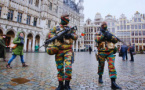
Belgium has announced the deployment of military forces in Brussels and Antwerp starting today, with plans to extend the measures to Liege.

Interest among Bulgarian high school graduates in pursuing higher education abroad continues to grow, reflecting both the ongoing digital transformation of the economy and expectations for major changes in the future labor market

Convicted sex offender Jeffrey Epstein maintained a long-running network of contacts connected to Brussels, according to documents released by the U.S. Department of Justice

Bulgaria edged past Belgium in overtime in the opening match of the World Junior Ice Hockey Championship U20, Division III, Group “A,” held at the Winter Palace in Sofia

Belgium has indicated it may agree to transfer frozen Russian assets to Ukraine under specific conditions

A three-day strike in Belgium has begun, disrupting transport nationwide and leaving many Bulgarian travelers affected

The Bulgarian Orthodox Church has decided that no official delegation will travel to Jerusalem this year to receive the Holy Fire, citing the ongoing tensions in the Middle East

Plovdiv will host the International Street Arts Festival 6Fest from April 20 to 26, 2026, turning the city into an open-air stage featuring performers from 11 countries across three continents

The Easter holiday getaway has officially begun in Bulgaria, with traffic leaving Sofia surging as thousands of people set off for the long weekend

Holy Thursday marks one of the most significant days in Holy Week, as Christians reflect on the final moments before the crucifixion of Jesus Christ

A homeless man discovered a sack containing human body parts next to a waste container in the Trakia residential district of Plovdiv, according to local media reports

The Institute for Computer Science, Artificial Intelligence and Technology (INSAIT) at Sofia University “St. Kliment Ohridski”, together with streaming platform Netflix

Aniventure Comic Con Returns to Bulgaria with Star Guest Christopher Judge!

Global Fuel Shock: Oil Jumps Over 40% Since Iran War Began