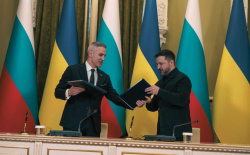
Bulgaria Expects Fuel Price Drop as Oil Falls 20%, Says Finance Minister
Caretaker Finance Minister Georgi Klisurski said he expects fuel prices at gas stations to ease in the coming period, pointing to a sharp decline in international oil markets
HOT: » Which party would you vote for (if you could) in the upcoming snap vote in Bulgaria on April 19?
 Send to Kindle
Inflation across the 19-country eurozone held up better than anticipated in the face of waning energy prices, a sign that the region's economic recovery is reverberating across the single currency bloc, official figures showed Friday, according to the USA Today.
In its first estimate of inflation for June, Eurostat, the European Union's statistics agency, found that consumer prices rose by an annual 1.3%, down slightly from 1.4% the month before.
Though the rate has not been lower since December, the decline was more modest than financial markets had anticipated. That was likely due to the fact that the core inflation rate, which strips out the volatile items of food, alcohol, energy and tobacco such as energy, rose to 1.1% in the year to June from 0.9%.
The increase in the core rate is a further sign that many prices are being pushed up by higher wages as unemployment across the region steadily falls and economic growth improves.
A run of economic data recently has raised hopes that the eurozone economy is gaining momentum, fueling speculation that the European Central Bank may start reining in its stimulus sooner than predicted. Earlier this week, ECB President Mario Draghi spoke of a "firming and broadening" recovery, words that investors interpreted as a move to lay the groundwork for a change in policy. As well as slashing interest rates, including its main one to zero, the ECB has been buying bonds — currently about $68 billion per month — to keep market interest rates down and encourage lending across the economy.
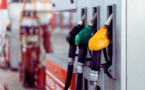
Caretaker Finance Minister Georgi Klisurski said he expects fuel prices at gas stations to ease in the coming period, pointing to a sharp decline in international oil markets

Global markets reacted sharply after US President Donald Trump stepped back from imminent military action against Iran, instead tying a suspension of strikes to Tehran’s agreement to a temporary ceasefire and the reopening of the Strait of Hormuz

Housing prices in Bulgaria have surged by 157% between 2015 and the end of 2025

Bulgaria recorded only a modest and one-off increase in inflation following the adoption of the euro on January 1, with the effect estimated at between 0.3 and 0.4 percentage points

Specialists in the real estate and tourism sectors are forecasting a notable rise in the prices of vacation properties in Bulgaria, with estimates pointing to an increase of between 25% and 30%
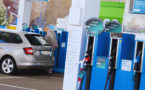
Fuel prices in Germany have recently reached new highs, with diesel briefly exceeding 2.40 euros per litre during the Easter holiday period before easing slightly afterward

The Ministry of Finance has released a broad public dataset covering more than 7,000 public procurement contracts with a combined value exceeding 30 billion euros
Caretaker Finance Minister Georgi Klisurski said he expects fuel prices at gas stations to ease in the coming period, pointing to a sharp decline in international oil markets
Bulgaria’s new government borrowing for 2026 has surpassed the 1 billion euro mark following the latest successful auction of state securities, according to data cited from the Bulgarian National Bank
Bulgaria recorded only a modest and one-off increase in inflation following the adoption of the euro on January 1, with the effect estimated at between 0.3 and 0.4 percentage points

Data released by the Ministry of Finance, covering budget execution for February 2026 and preliminary estimates for March 2026, indicate a marked deterioration in Bulgaria’s fiscal position

In the 2026 edition of the Index of Economic Freedom, compiled by the Heritage Foundation, Bulgaria is placed 38th out of 176 countries, positioned between Costa Rica and Oman

Aniventure Comic Con Returns to Bulgaria with Star Guest Christopher Judge!
Global Fuel Shock: Oil Jumps Over 40% Since Iran War Began