Bulgaria: What Taxpayers Need to Know After the Euro Changeover
The annual campaign for filing personal income tax returns under Article 50 of the Personal Income Tax Act is underway
HOT: » Which party would you vote for (if you could) in the upcoming snap vote in Bulgaria on April 19?
 Send to Kindle
 File photo, BGNES
Big corporations manage to avoid paying taxes in Central and Eastern Europe even when rates are as low as they are in Bulgaria, a report by several NGOs in the region has shown.
Bulgaria enjoys one of Europe's lowest individual income and corporate tax rates, a flat 10%.
Indirect taxes thus put the main burden of the companies' activities on the population itself, according to the text titled "Runaway Taxes - Who pays tax in Central and Eastern Europe?"
The report "was inspired by Dimitar Sabev, a tax justice campaigner in Bulgaria, who had already carried our research into this area in 2015." He found that, as of that year, the top 10 companies by revenue in Bulgaria had received a net tax credit.
"In other words as a group, the ten biggest companies in Bulgaria received more from the state in terms of tax rebates and offsets than they put back in."

"Looking at the tax structure of Bulgaria we can see that corporations as a whole pay more than in other countries in our study, and there is a more equal balance between the amount paid by corporations on their income and by individuals. Social Security contributions are also relatively low.
However, the relatively low levels of tax paid by people on their income is made up in other indirect taxes paid by individuals. Compared to other countries in our study Bulgaria collects more in excises, taxes on individual items such as alcohol and tobacco, and on VAT than any other country. These taxes, of course, raise the cost of living and are generally considered to be more regressive than direct taxes."
Dimitar Sabev writes:
"The ten companies with highest turnover for 2015 in Bulgaria paid a combined BGN 44 M (EUR 22.5 M) in corporate taxes. This is a relatively low contribution to the national budget.
The top ten Bulgarian companies’ combined sales amount to roughly one quarter of the gross domestic product – yet the tax receipts from their business are equal to only 2.3 percent of the corporate taxes collected for the last year."
He also argues "the Bulgarian business top ten is, strictly speaking, a receiver of taxes" as "the corporate tax laws allow for deduction of former losses from the tax base, and there are many companies in Bulgaria that declare losses for many years," the state itself being the biggest user of such tax credits.
Techniques used to reduce profits and taxes include calculating enormous expenses for external services like consulting and management fees worth thousands of euro per day.
While transparency regarding taxes is relatively high in Bulgaria, this does not lead to a better public analysis and discourse as "by providing or withdrawing advertising revenue, the biggest companies can control the narrative on taxes in the national media."
"If one is big enough one could not bother paying taxes. The loopholes in the public finances opened by “smart” Big Business are offset by onerous invisible taxes levied on the general – and indifferent public," Sabev concludes.
In Bulgaria, the statistics for the top ten companies were compiled by Za Zemiata, accompanied by some further research.
The report is available here.

The annual campaign for filing personal income tax returns under Article 50 of the Personal Income Tax Act is underway

Deputy Governor of the Bulgarian National Bank Petar Chobanov has urged the ruling coalition not to raise taxes

Economist Dimitar Chobanov has stressed that Bulgaria should focus on adjusting public spending rather than raising taxes

Silvia Georgieva, executive director of the National Association of Municipalities in Bulgaria, has indicated that for 2026, a widespread update of local taxes and fees across the country’s municipalities is unlikely

Sofia Municipality is setting up a dedicated working group tasked with converting all local taxes, fees, and service prices from Bulgarian leva to euros

Sofia Municipality's Municipal Revenue Directorate has announced that paper notifications for local taxes and fees are being printed and will soon be sent to the nearly 1.15 million property and vehicle owners in Sofia
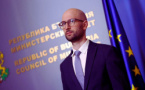
The Ministry of Finance has released a broad public dataset covering more than 7,000 public procurement contracts with a combined value exceeding 30 billion euros
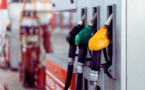
Caretaker Finance Minister Georgi Klisurski said he expects fuel prices at gas stations to ease in the coming period, pointing to a sharp decline in international oil markets
Bulgaria’s new government borrowing for 2026 has surpassed the 1 billion euro mark following the latest successful auction of state securities, according to data cited from the Bulgarian National Bank

Bulgaria recorded only a modest and one-off increase in inflation following the adoption of the euro on January 1, with the effect estimated at between 0.3 and 0.4 percentage points

Data released by the Ministry of Finance, covering budget execution for February 2026 and preliminary estimates for March 2026, indicate a marked deterioration in Bulgaria’s fiscal position

In the 2026 edition of the Index of Economic Freedom, compiled by the Heritage Foundation, Bulgaria is placed 38th out of 176 countries, positioned between Costa Rica and Oman

Aniventure Comic Con Returns to Bulgaria with Star Guest Christopher Judge!
Global Fuel Shock: Oil Jumps Over 40% Since Iran War Began