Easter Monday in Bulgaria: Tradition and Family Visits
Orthodox Easter Monday is the day following Easter Sunday and is observed across Bulgaria as part of the wider Easter celebration within the Orthodox Christian tradition
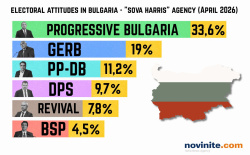
HOT: » Which party would you vote for (if you could) in the upcoming snap vote in Bulgaria on April 19?
 Send to Kindle
 Bulgarian President Rosen Plevneliev delivers his speech to the Council of Europe in Strasbourg, France, 26 January 2016. Photo EPA/BGNES
Democracy in Europe cannot be taken for granted and has to be defended on a daily basis, Bulgaria’s President Rosen Plevneliev said on Tuesday.
"Contrary to the expectations in 1989 that the building of a ‘true democracy’ would require just a few years, Bulgarian citizens today realize that the creation of democratic institutions and the adoption of European legislation is not enough," Plevneliev said in an address to the Parliamentary Assembly of the Council of Europe (PACE) in Strasbourg.
Bulgaria assumed the rotating chairmanship of the Committee of Ministers of the Council of Europe in November 2015 and will host its next session in May 2016.
"We will make every effort and rely on the support of European parliaments and governments to achieve the objectives that we have set within the Bulgarian presidency, " Plevneliev said.
The violation of the rule of law, the pursuit of selfish interests as opposed to international principles, the creation of frozen conflicts, terrorism, migration and chauvinism are the main challenges facing Europe at present, Plevneliev said in his address.
The "record number" of crises in Europe cannot be be "bequeathed" to future generations; they require specific solutions and actions, the Bulgarian head of state noted in his address.
"We must act. Mistakes can be corrected but inaction cannot be an alternative as it creates a grey zone of instability and illegitimacy,” Plevneliev said.
Plevneliev told PACE that since it joined the Council of Europe in 1992, Bulgaria has come a long way.
"Thanks to the Council of Europe’s guidance in the years of transition, we managed to establish a modern democratic state where human rights and the rule of law are held high.”
“The engine of European integration brought dramatic and positive change, including a developing economy. Over the years, Bulgaria has become a pillar of stability and an important factor in the Balkans, working to deepen regional cooperation,” Plevneliev added.
“The recent reforms undertaken by the government in the fields of education, security and justice are a proof that we are acting in a responsible way and achieving sustainable results,” he said.
Talking about the challenges to be addressed, he pointed out in particular the need of efficient mechanisms to guarantee the rule of law and the need of an early crises detection system and a proative approach.
“We should not wait for weapons and crises to appear on our TV screens, in order to act,” he said.
Referring to the current migration crisis in Europe, Plevneliev said that Bulgaria was following the rules of the Dublin Regulation and the Schengen Agreement.
“Closing our doors to those fleeing for their lives is not an option. We show solidarity with all refugees and give humanitarian status to those that meet the criteria,” he said.
Pleneliev also highlighetd the need to address the roots of the global threats of terrorism and violent extremism, not just their consequences.
Social exclusion, inequality, lack of access to basic human rights, unemployment and lack of prospects are the factors which fuel hatred and lead to radicalisation.
“We can prevent the radicalisation of marginalised groups within our own societies only through education and integration,” he said.
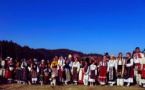
Orthodox Easter Monday is the day following Easter Sunday and is observed across Bulgaria as part of the wider Easter celebration within the Orthodox Christian tradition

Industrial output in Bulgaria posted a modest monthly increase in February 2026, but continued to decline sharply on an annual basis, according to preliminary, seasonally adjusted data from the National Statistical Institute.
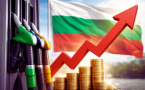
The president of the Confederation of Bulgarian Trade Unions, Plamen Dimitrov, has warned that inflation in Bulgaria is likely to exceed earlier projections, even if fuel prices begin to decline

The introduction of the euro in Bulgaria has so far produced only a limited and largely one-off effect on consumer prices, according to an analysis by the European Central Bank

Easter is the most important religious holiday in the Orthodox Christian calendar and is widely celebrated across Bulgaria. It marks the resurrection of Jesus Christ and follows the completion of Holy Week, which includes Good Friday and Holy Saturday

Holy Saturday, known in Bulgaria as Lazarus Saturday’s continuation of the Easter cycle, is a quiet but deeply symbolic day in the Orthodox Christian calendar
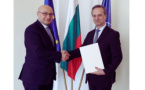
The newly appointed Ambassador of the Republic of Azerbaijan to Bulgaria, H.E. Elmar Mammadyarov, has officially begun his diplomatic mission after presenting copies of his credentials to Deputy Foreign Minister Radi Naydenov at the Ministry of Foreign Af
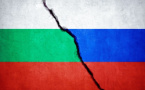
The Russian Embassy in Sofia has circulated a warning issued by the Foreign Ministry in Moscow, cautioning its citizens about what it describes as a heightened risk of detention abroad at the request of US authorities
The Bulgarian Parliament has adopted a decision establishing February 14 as the official Day of Bulgarian–Polish Friendship and Cooperation. The measure passed unanimously, receiving 165 votes in favor.

Acting Foreign Minister Nadezhda Neynski said that the diplomatic note sent by Iran to Bulgaria should be viewed as standard communication in a period of heightened international tension, stressing that it does not constitute a threat but rather a formal
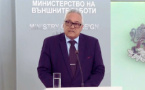
Acting Deputy Foreign Minister Marin Raykov has commented on the diplomatic note sent by Iran to Bulgaria, stressing that it should not be interpreted as a reason for public alarm
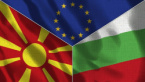
Bulgaria’s Foreign Ministry has reiterated its position that North Macedonia must fully implement its commitments regarding the protection of the rights of communities, particularly in the context of its EU accession process

Aniventure Comic Con Returns to Bulgaria with Star Guest Christopher Judge!
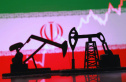
Global Fuel Shock: Oil Jumps Over 40% Since Iran War Began