Trade Unions in Bulgaria: Grey Economy is 30%
30% is the grey economy, according to trade union figures.
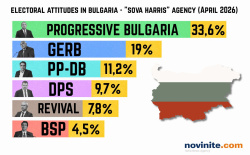
HOT: » Which party would you vote for (if you could) in the upcoming snap vote in Bulgaria on April 19?
 Send to Kindle
 Photo by BGNES
Bulgaria had the biggest grey economy in Europe in 2012, at 31.9% of the GDP, according to a survey of France's Economic and Social Council.
The share of the grey economy was lowest in Austria, at 7.6% of the GDP, followed by Luxembourg with 8.2%, the Netherlands with 9.5%, the United Kingdom with 10.1%, France with 10.8%, Ireland, Germany and Finland with 12.7%, respectively, and 13.3%.
Other countries with similar results to Bulgaria's score were Romania with 29.1%, Lithuania with 28.5%, Estonia with 28.2% and Latvia with 26.1%, and Greece with 23.6%.
The EU average share of the grey economy stood at16.8%.
Experts from France's Economic and Social Council, as cited by the BGNES news agency, believe that the grey economy in EU member states reached 18.9% in 2013, or EUR 2.1 trillion.
According to the report, the main factors which encourage the grey economy are mass unemployment, the economic crisis, poverty, taxes increasing labor costs, and strong competition, which affected the results of the companies.
The authors of the report recommend strengthening control and sanctions as a measure against the grey economy
They also recommend banning the payment of salaries in cash, even when the matter involves small sums of money.

30% is the grey economy, according to trade union figures.

In the fourth quarter of 2017 gross domestic product (GDP) amounted to BGN 27,427 million at current prices, according to the preliminary data from the National Statistical Institute.

Gross Domestic Product (GDP) expanded with 3.

In the third quarter of 2017 Gross Domestic Product (GDP) at current prices amounts to 26 990 million BGN.

Gross Domestic Product (GDP) in the third quarter of 2017 increased by 0.

Bulgaria and Romania can join the Eurozone once they have met all membership criteria, the managing director of the European Stability Mechanism (ESM), the Eurozone's rescue fund, said.

Acting Energy Minister Traycho Traykov said Bulgaria should not tap into its 90-day fuel reserves to ease prices, stressing that they must remain a safeguard in case of an actual supply disruption
Bulgaria has secured a six-month extension of the Lukoil waiver, following a decision by the US Treasury Department’s Office of Foreign Assets Control (OFAC)
The Bulgarian National Bank (BNB) has decided to increase the countercyclical capital buffer to 2.25%, in a move aimed at easing pressure on the rapidly growing housing credit market and strengthening the resilience of the banking system.
Energy expert Boyan Rashev has warned that Europe could be moving toward what he described as an “energy lockdown” scenario if fuel supply pressures continue to worsen
Fuel prices in Bulgaria have continued to edge upward, with diesel and gasoline both registering increases in the days following the Easter holiday

Bulgaria’s tourism sector has never been stronger and has been achieving steady growth for the past few years.

Aniventure Comic Con Returns to Bulgaria with Star Guest Christopher Judge!
Global Fuel Shock: Oil Jumps Over 40% Since Iran War Began