Easter Monday in Bulgaria: Tradition and Family Visits
Orthodox Easter Monday is the day following Easter Sunday and is observed across Bulgaria as part of the wider Easter celebration within the Orthodox Christian tradition
HOT: » Which party would you vote for (if you could) in the upcoming snap vote in Bulgaria on April 19?
 Send to Kindle
 Bulgaria's Finance Minister Simeon Djankov. Photo by Sofia Photo Agency
International speculators have targeted Bulgaria's currency board at the beginning of the ruling party term in 2009, the finance minister has revealed for the first time.
"The topic was kept secret in a bid to avoid panic that speculators may force Bulgaria into devaluation, just as it happened in Hungary, for instance," Minister Simeon Djankov said in an interview for Sega daily.
"If we had not made it clear back then that we are ready to take difficult decisions, the same fate would have befallen us too," he commented, taking up a question about the government's tight fiscal policy.
Speculators used for their attack the so-called credit default swap (CDS) with spreads widening to 700bp at the beginning of 2009.
In February the same year the currencies of Poland, Ukraine and Hungary dipped by more than 30%.
"From the end of 2008 till May 2010 international speculators flocked to buy foreign exchange, wanting to make the peg unviable and coerce authorities into eventually breaking the peg between the lev and euro.
"These things are always discussed after they are over to make speculators understand you are strong enough," the minister added.
Bulgaria currently operates in a currency board regime and the lev is pegged to the euro.
The country installed its currency board system (CBS) on the first of July fifteen years ago, ending its hyperinflation, which had peaked with a monthly inflation rate of 242%, in February 1997.
This mechanism ensures that all the local currency in circulation is covered by foreign exchange reserves in the coffers of the Central bank. All, government, and Central Bank alike - cannot print money and must operate within the straitjacket.
The Currency Board regime has proved to be one of the most trusted institutions, according to surveys.
Bulgarians prefer to use the lev instead of switching to the euro, even though the local currency is pegged to the euro, analysts say.

Orthodox Easter Monday is the day following Easter Sunday and is observed across Bulgaria as part of the wider Easter celebration within the Orthodox Christian tradition

Industrial output in Bulgaria posted a modest monthly increase in February 2026, but continued to decline sharply on an annual basis, according to preliminary, seasonally adjusted data from the National Statistical Institute.
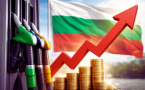
The president of the Confederation of Bulgarian Trade Unions, Plamen Dimitrov, has warned that inflation in Bulgaria is likely to exceed earlier projections, even if fuel prices begin to decline

The introduction of the euro in Bulgaria has so far produced only a limited and largely one-off effect on consumer prices, according to an analysis by the European Central Bank

Easter is the most important religious holiday in the Orthodox Christian calendar and is widely celebrated across Bulgaria. It marks the resurrection of Jesus Christ and follows the completion of Holy Week, which includes Good Friday and Holy Saturday
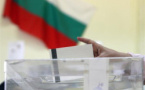
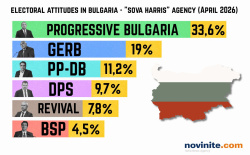
The Central Election Commission (CEC) in Bulgaria has confirmed that a total of 6,575,151 citizens are eligible to vote in the upcoming elections on April 19

The Ministry of Finance has released a broad public dataset covering more than 7,000 public procurement contracts with a combined value exceeding 30 billion euros
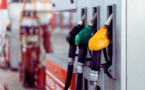
Caretaker Finance Minister Georgi Klisurski said he expects fuel prices at gas stations to ease in the coming period, pointing to a sharp decline in international oil markets
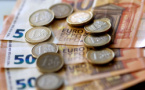
Bulgaria’s new government borrowing for 2026 has surpassed the 1 billion euro mark following the latest successful auction of state securities, according to data cited from the Bulgarian National Bank

Bulgaria recorded only a modest and one-off increase in inflation following the adoption of the euro on January 1, with the effect estimated at between 0.3 and 0.4 percentage points
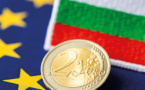
Data released by the Ministry of Finance, covering budget execution for February 2026 and preliminary estimates for March 2026, indicate a marked deterioration in Bulgaria’s fiscal position

In the 2026 edition of the Index of Economic Freedom, compiled by the Heritage Foundation, Bulgaria is placed 38th out of 176 countries, positioned between Costa Rica and Oman

Aniventure Comic Con Returns to Bulgaria with Star Guest Christopher Judge!
Global Fuel Shock: Oil Jumps Over 40% Since Iran War Began