Majority of Bulgarians Fear Impact of Green Deal on Electricity Bills
Amid the implementation of measures under the European Union's Green Deal, 64% of Bulgarians have identified the escalating electricity prices as their top concern
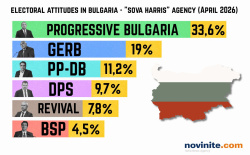
HOT: » Which party would you vote for (if you could) in the upcoming snap vote in Bulgaria on April 19?
 Send to Kindle
 Angel Semerdzhiev, head of the Bulgarian energy watchdog, DKEVR, announces plans for changes in prices of electricity from renewable energy sources. Photo by BGNES.
Prices of electricity from wind, hydropower and biomass will be increased from July 1, Bulgaria's State Commission for Energy and Water Regulation (DKEVR), said in a statement Friday.
The intentions for the price changes of electricity from renewable energy sources follow closely the adoption of the Renewable Energy Act, that has been labeled as restrictive to investments in the field.
Biomass electricity prices will grow by 16.41% to BGN 195.03 per MW/h for power plants with a capacity of up to 5 MW/h running on agricultural waste. At present, there are no such plants in Bulgaria, but the country plans to build capacities worth up to BGN 1 B.
The cost of electricity generated by low-head and medium-head hydropower plants with a capacity of 200 KW/h - 10 000 MW/h will increase by over 4.50%.
The sharpest fluctuation will be in prices of electricity from photovoltaics with a capacity of up to 30 KW/p (kilowatts-peaks). Electricity generated by solar power will drop by 17.53-25.39% to BGN 576.50 per MW/h.
The price formation categories of photovoltaics also change, with the previous division of solar parks with a capacity below 5 KW/p and a capacity over 5 KW/p being replaced with three segments of "below 30 KW/p", "30-200 KW/p" and "over 200 KW/p".
The decrease in prices of electricity from solar power comes days after the introduction of a ban on the construction of such facilities on fertile lands belonging to 1st-4th category. The regulation was part of amendments to the Protection of Agricultural Lands Act passed at the end of last week.
The final version of the power rates will be approved in end-May. Before that, the tariffs will be discussed at an open session of DKEVR scheduled for May 25.
The price update of energy from Renewable Energy Sources will be the second one for this year. In end-April, Bulgaria's Renewable Energy Act was revised, obliging DKEVR to adjust prices of RES energy within one month.
Electricity from renewable energy sources is sold at preferential prices in Bulgaria and power distributors and the national power utility NEK are under obligation to buy out the entire output.
The preferential tariffs are calculated against a total value of electricity generated from fossil fuels.
The installation quotas for renewable energy sources themselves are to be determined by the State Commission for Energy and Water Regulation (DKEVR) each year by the end of June.
Prices are fixed on the basis of 80% of the average sale price of electricity in the previous year, which was BGN 94.27 in 2010, plus a supplement is added. The supplement can be no less than 95% of the one added in 2009. The supplement reflects the inflation for the past year and the 1.27%-plus increase in power rates in the period.
During the latest price update in end-March, electricity from biomass went up by 116.82% to BGN 398.00 per MW/h for power plants with a capacity of 150 KW/h to 500 KW/h operating indirectly through biomass from plant and animal substances.
Energy derived from wood waste is more expensive. For the first time this year, the category has been subdivided in two- electricity from power plants with a capacity of up to 5 MW/h (BGN 252.73/ MW/h) and electricity from wood waste derived through a combined method (BGN 288.04/MW/h). Until now, such plants had a universal tariff of BGN 217.19 per MW/h.
In the meantime, the cost of electricity generated from RES was reduced by an average 1.30% in April.

Amid the implementation of measures under the European Union's Green Deal, 64% of Bulgarians have identified the escalating electricity prices as their top concern

Energy-intensive industries in Bulgaria are facing a severe threat of curtailed operations or potential closures due to the soaring electricity prices

The name of the person who currently keeps social peace in Bulgaria is Ivan Ivanov, head of the Energy and Water Regulatory Commission.

The Energy Ministry and other government departments will prepare measures in support of businesses that have been put in a tight corner by the high electricity prices in recent months.

A shocking jump in the current electricity price for business.

Maya Manolova has requested information from the Energy and Water Regulatory Commission under the Law on Access to Public Information (APIA) regarding the forthcoming increase in electricity prices as of July 1st, 2019.

Bulgaria’s fuel market has recorded a sharp upward shift since the outbreak of the war in Iran, with diesel and petrol prices rising significantly across the country
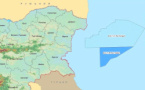
The second exploration drilling in the Krum-1 area of the Khan Asparuh block in Bulgaria’s Black Sea has also failed to identify commercially significant natural gas deposits, according to OMV Petrom

The Ombudswoman institution has voiced strong opposition to the proposed increase in heating prices in Sofia, which is expected to approach nearly 30 percent
The Energy and Water Regulatory Commission (EWRC) in Bulgaria has set the price of natural gas for April 2026 at 34.27 euros per megawatt-hour, excluding access, transmission, excise duties and VAT

Fuel prices in Bulgaria have recorded a sharp upward movement over the past month, with diesel showing the most significant increase, according to data from the Fuelo platform
Bulgargaz has defended its previously submitted proposal for a 5% rise in natural gas prices for April before the Energy and Water Regulatory Commission, with CEO Veselin Sinabov stressing that there is currently no justification for any further increases

Aniventure Comic Con Returns to Bulgaria with Star Guest Christopher Judge!

Global Fuel Shock: Oil Jumps Over 40% Since Iran War Began