Bulgaria as Inward Investment Location: Meeting with Aidan Manktelow, EIU
Report of the British Bulgarian Chamber of Commerce on Meeting with Aidan Manktelow of The Economist Intelligence Unit.
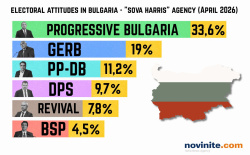
HOT: » Which party would you vote for (if you could) in the upcoming snap vote in Bulgaria on April 19?
 Send to Kindle
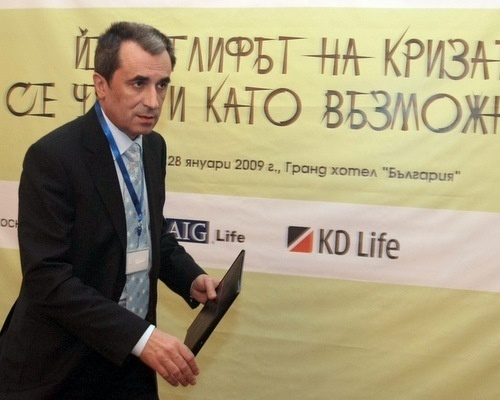 Always moderately optimistic, Finance Minister Plamen Oresharski has repeatedly said that Bulgaria doesn't need to turn to the International Monetary Fund for emergency funding. Photo by BGNES
Given Bulgaria's large external debt and current-account deficit, the Economist Intelligence Unit (EIU) has assumed that the country will require some financial assistance from the IMF and the EU.
Real GDP growth is expected to contract by 3.8% in 2009, following estimated growth of 6% in 2008, mainly because of limited access to external finance and the poor economic outlook for the euro zone, according to EIU latest forecast.
Growth is forecast to rebound modestly, to 0.9%, in 2010.
Inflation will continue to trend down from the high rate in 2008 as domestic demand pressures ease, food inflation drops and world oil prices remain low. Inflation is forecast to average 3.5% in 2009 and 3% in 2010.
Owing to a sharp contraction in domestic demand, the analysts forecast that the current-account deficit will narrow to 13.3% of GDP in 2009 and 9.7% of GDP in 2010, from 24.1% of GDP in 2008.
The Economist's analytical unit commented that the European Union will keep Bulgaria under close scrutiny, continuing to demand judicial reforms, as well as concrete results against corruption and organised crime.
The experts believe that citizens for European Development of Bulgaria (CEDB), the main opposition party, will lead the government after the election due in July 2009.

Report of the British Bulgarian Chamber of Commerce on Meeting with Aidan Manktelow of The Economist Intelligence Unit.

The British Bulgarian Chamber of Commerce and the American Chamber of Commerce in Bulgaria have invited their members and friends to a meeting with Aidan Marktelow of the Economist Intelligence Unit (EIU).

The British Bulgarian Chamber of Commerce and the American Chamber of Commerce in Bulgaria have invited their members and friends to a meeting with Aidan Marktelow of the Economist Intelligence Unit (EIU).
Bulgaria has continued the trend of dropping down the Economist Intelligence Unit's Democracy index, being ranked 52th with an index of 6.

Bulgaria's real GDP, which contracted in 2009 and grew by an estimated 0.1% in 2010, is forecast to expand with an annual average growth of around 3.8% in 2011-15, according to the latest report of the Economist Intelligence Unit (EIU).

Bureaucracy, corruption and inefficient state administration are the main obstacles for doing business in Bulgaria, according to a risk scenario watchlist for country by the Economist Intelligence Unit (EIU).

The Ministry of Finance has released a broad public dataset covering more than 7,000 public procurement contracts with a combined value exceeding 30 billion euros
Caretaker Finance Minister Georgi Klisurski said he expects fuel prices at gas stations to ease in the coming period, pointing to a sharp decline in international oil markets
Bulgaria’s new government borrowing for 2026 has surpassed the 1 billion euro mark following the latest successful auction of state securities, according to data cited from the Bulgarian National Bank

Bulgaria recorded only a modest and one-off increase in inflation following the adoption of the euro on January 1, with the effect estimated at between 0.3 and 0.4 percentage points

Data released by the Ministry of Finance, covering budget execution for February 2026 and preliminary estimates for March 2026, indicate a marked deterioration in Bulgaria’s fiscal position

In the 2026 edition of the Index of Economic Freedom, compiled by the Heritage Foundation, Bulgaria is placed 38th out of 176 countries, positioned between Costa Rica and Oman

Aniventure Comic Con Returns to Bulgaria with Star Guest Christopher Judge!
Global Fuel Shock: Oil Jumps Over 40% Since Iran War Began