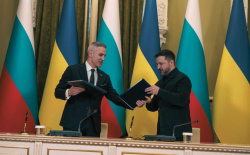
€7.3 Billion on the Table: Is Bulgarian Business Ready for Europe’s Defense Boom?
Europe is undergoing a fundamental shift in how it approaches defense, moving beyond increased spending toward the creation of an entirely new industrial ecosystem
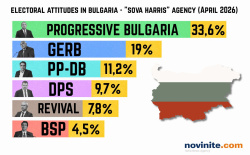
HOT: » Which party would you vote for (if you could) in the upcoming snap vote in Bulgaria on April 19?
 Send to Kindle
The introduction of the euro in Bulgaria has so far produced only a limited and largely one-off effect on consumer prices, according to an analysis by the European Central Bank. The findings come amid widespread public concern that replacing the lev with the euro would trigger significant price increases.
The ECB notes that such fears are typical in countries undergoing a currency transition and are often linked to expectations of price rounding, additional transition costs, and opportunistic increases in sectors with weaker competition. To address these risks, Bulgarian authorities introduced monitoring mechanisms and anti-abuse checks, alongside a requirement for dual price display in leva and euros for a full year between August 2025 and August 2026.
Initial data indicate that the impact of the currency switch has followed patterns observed in other euro area enlargements. Price increases have been modest and concentrated mainly in services, while overall inflation dynamics remain stable. At the same time, public concerns about rising prices are beginning to ease, and support for the euro is gradually strengthening.
Looking at inflation data, the Harmonized Index of Consumer Prices shows a downward trend in annual inflation, from 3.5% in December 2025 to 2.3% in January and 2.1% in February 2026. Monthly data, which provide a more immediate picture, show that prices rose by 0.6% in January compared to December, an unusually high increase for that time of year. This rise was driven primarily by food and services, while prices for energy and non-food industrial goods declined.
A closer comparison with historical trends reveals that the services sector experienced the most noticeable increase in January. Areas such as restaurants, hotels, healthcare, transport, rentals, administrative and personal services saw the strongest upward movement. However, this trend did not persist. In February, monthly inflation slowed sharply to 0.2%, with all major components returning to typical seasonal patterns, suggesting that the earlier increase was temporary rather than structural.
The ECB estimates that if January price developments had followed historical averages from 2011 to 2021, inflation would have been around 0.3 to 0.4 percentage points lower. This points to a minor short-term effect linked to the currency change, consistent with previous euro adoption experiences.
Retail-level data further support this conclusion, showing only marginal price adjustments, usually amounting to a few euro cents, without evidence of systematic increases. Even pricing strategies, such as the use of “.99” endings, temporarily declined after the transition before gradually returning.
Additional analysis suggests that part of the price adjustment may have occurred even before the euro was introduced. Between May and December 2025, average monthly inflation may have exceeded underlying economic factors by around 0.4 percentage points, indicating early pricing reactions ahead of the official changeover.
Public sentiment has also shifted in recent months. Surveys show a marked decline in perceived inflation in January 2026, the sharpest drop since the COVID-19 period, while expectations of future price increases are softening. At the same time, support for the euro has risen above the 50% threshold, reaching 54% in February, marking a notable change in public attitudes.
Summarizing its findings, the ECB concludes that the transition to the euro on January 1, 2026, has had only a limited and temporary impact on prices, with no lasting inflationary pressure. Perceptions of inflation remain contained, and public confidence in the new currency is improving. The institution emphasizes that these trends align with the experience of other euro area countries and highlight the importance of continued monitoring to ensure price stability going forward.

Europe is undergoing a fundamental shift in how it approaches defense, moving beyond increased spending toward the creation of an entirely new industrial ecosystem

A leading global research center on democratic systems has issued a stark warning about political trends in several countries, concluding in its latest annual report that Bulgaria is now among those showing clear signs of democratic backsliding

Industrial output in Bulgaria posted a modest monthly increase in February 2026, but continued to decline sharply on an annual basis, according to preliminary, seasonally adjusted data from the National Statistical Institute.
The president of the Confederation of Bulgarian Trade Unions, Plamen Dimitrov, has warned that inflation in Bulgaria is likely to exceed earlier projections, even if fuel prices begin to decline

Orthodox Easter Monday is the day following Easter Sunday and is observed across Bulgaria as part of the wider Easter celebration within the Orthodox Christian tradition

Easter is the most important religious holiday in the Orthodox Christian calendar and is widely celebrated across Bulgaria. It marks the resurrection of Jesus Christ and follows the completion of Holy Week, which includes Good Friday and Holy Saturday

Viktor Orban’s long hold on power has come to an abrupt end after a decisive electoral victory by Péter Magyar, whose Tisza party is projected to secure a commanding parliamentary majority

NEW POLL: HUNGARIANS UNITED ON NEED FOR A ‘DIFFERENT’ RELATIONSHIP WITH THE EU, BUT DIVERGENCES REMAIN ON UKRAINE
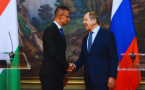
A group of Members of the European Parliament has raised concerns over the potential leakage of confidential EU information to Russia, urging stronger safeguards within the European Parliament
The European Public Prosecutor’s Office (EPPO) has carried out a series of coordinated investigative actions across several countries, including Bulgaria and Romania, as part of a probe into suspected large-scale fraud involving EU funds

The caretaker government has approved a decision endorsing the Partnership Agreement between the European Union and its Member States and the Mercosur bloc

US Vice President JD Vance launched a sharp attack on the European Union during a visit to Budapest, accusing Brussels of interfering in Hungary’s election just days before a closely contested vote that could reshape the country’s political landscape

Aniventure Comic Con Returns to Bulgaria with Star Guest Christopher Judge!
Global Fuel Shock: Oil Jumps Over 40% Since Iran War Began