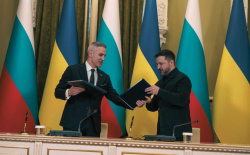
Is Russian Oil Flowing to Bulgaria in 2026?
Bulgaria's only oil refinery, Lukoil Neftochim Burgas, processed Russian crude for most of its post-Soviet history. Since March 2024, that has been banned by law
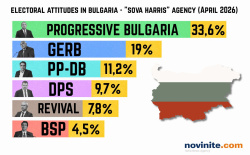
HOT: » Which party would you vote for (if you could) in the upcoming snap vote in Bulgaria on April 19?
 Send to Kindle
 @Veselin Borishev (RFE/RL)
A leading global research center on democratic systems has issued a stark warning about political trends in several countries, concluding in its latest annual report that Bulgaria is now among those showing clear signs of democratic backsliding. The Varieties of Democracy (V-Dem) Institute argues that concerns long debated in public discourse are now backed by data, placing Bulgaria within a group of states moving toward autocratization.
According to the institute, eight countries currently warrant close monitoring due to what it describes as a pronounced drift toward authoritarian governance. These are not marginal cases, but systems that have progressed “three-quarters of the way” toward abandoning the democratic framework they still formally maintain. Bulgaria is a recent addition to this category, alongside Portugal and Vanuatu, with the latter recording the second-steepest democratic decline in 2025 after the United States. Sierra Leone and Sudan were added earlier and are now considered close to fully autocratic systems, while Cyprus, Namibia and Russia have appeared in this grouping before.
Separate from this core group, the report identifies a broader category of 24 countries where signs of autocratization are present but less consistent. Among them are Spain, Iceland, Bosnia and Herzegovina, as well as Lithuania and Albania, which are only marginally within this zone.
Data in the report highlights a longer trajectory of democratic strain in Bulgaria. Indicators suggest a shock to the system around 2009, followed by persistent instability over roughly the past five years. Since 2023, however, the deterioration appears to have accelerated sharply, giving the impression of a country crossing a critical threshold. Particularly striking is the declining assessment of the Central Election Commission’s ability to organize elections, now rated even lower than in the early 1990s. At the same time, practices such as vote-buying, electoral irregularities, and both direct censorship and self-censorship among journalists are described as worsening significantly.
The V-Dem Institute, based at the University of Gothenburg, relies on input from thousands of experts and maintains a vast database covering hundreds of democratic indicators. Within academic circles, its credibility is often regarded as surpassing that of other widely cited benchmarks such as Freedom House or the Economist’s Democracy Index. Still, its methodology is not without critics. Disputes persist over how concepts like “liberal democracy,” “electoral democracy,” and the intermediate “gray zone” are defined and weighted. Some analysts argue that technical capacities, such as the efficiency of election administration, can appear stronger in authoritarian or semi-authoritarian systems without guaranteeing fairness or protection of civil rights. For this reason, they stress the need to distinguish carefully between “autocracy” and what they term “pseudo-democracy.”
Despite these debates, the overall evaluation of Bulgaria remains largely unaffected. Even if described as a “pseudo-democracy,” the country’s placement in V-Dem’s framework continues to raise concerns. Notably, some states flagged as at risk of authoritarian tendencies do not show immediate deterioration in the institute’s main classifications. Cyprus, for example, remains among liberal democracies, while Bulgaria and Portugal are categorized as electoral democracies. Their inclusion in the warning group is therefore seen less as a reflection of sudden change and more as a signal of accumulated vulnerabilities.
The report also points to developments in the United States as a case of measurable democratic decline, driven by reduced media freedom, weakened congressional oversight of the executive, and erosion in judicial independence and rule of law. While some comparisons have been made to the state of US democracy in the 1960s, core elements such as election quality and universal suffrage remain unchanged. As a result, the drop is more pronounced in the Liberal Democracy Index than in the Electoral Democracy Index.
In terms of rankings, Bulgaria stands 67th in the Liberal Democracy Index, positioned alongside countries such as the Dominican Republic, Nepal, Montenegro, Senegal and Romania. In the Electoral Democracy Index, it is placed 73rd.
Regionally, the data outlines a stark picture for Eastern Europe. Only 29 percent of the population lives under democratic systems. Of these, just 5 percent are in liberal democracies, specifically the Czech Republic and the Baltic states, while 24 percent reside in electoral democracies such as Bulgaria and Poland. A clear majority, 65 percent, live in electoral autocracies including Hungary, Russia and Serbia. Belarus is classified as the only fully closed autocracy in the region, accounting for 3 percent of the population. Another 3 percent fall within “gray zone” regimes, covering countries like Albania, Bosnia and Herzegovina, Moldova and North Macedonia.
Source: https://www.v-dem.net/documents/75/V-Dem_Institute_Democracy_Report_2026_lowres.pdf

Bulgaria's only oil refinery, Lukoil Neftochim Burgas, processed Russian crude for most of its post-Soviet history. Since March 2024, that has been banned by law
Healthcare costs in Bulgaria are rising at a significantly faster pace than overall inflation, with price growth in the sector in 2026 roughly twice the national average compared to 2025

Around half a million Bulgarians chose to spend Easter inside the country, while roughly 120,000 traveled abroad

Bulgargaz has submitted a proposal to the Energy and Water Regulatory Commission (EWRC) suggesting a natural gas price of €35.98 per megawatt hour (MWh) for May
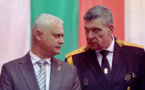
Acting Interior Ministry Secretary General Georgi Kandev has reported that police operations against vote buying in Bulgaria have so far led to the seizure of around 1 million euros, alongside thousands of inspections and a sharp rise in citizen alerts ah
The Social Assistance Agency has started disbursing the 20 euro compensation introduced to offset rising fuel costs
Acting Interior Ministry Secretary General Georgi Kandev has reported that police operations against vote buying in Bulgaria have so far led to the seizure of around 1 million euros, alongside thousands of inspections and a sharp rise in citizen alerts ah
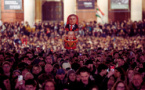
Political analysts suggest that the outcome of Hungary’s recent elections could resonate in Bulgaria ahead of its own vote, potentially shaping voter behavior and political positioning
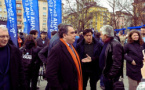
Speaking at a public meeting in Pazardzhik, “We Continue the Change” leader Asen Vassilev warned that a new external shock linked to Iran could trigger another major economic crisis, with direct effects on energy prices, food costs and vulnerable househol
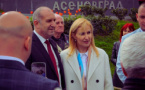
Speaking in Asenovgrad, the leader of “Progressive Bulgaria” Rumen Radev said that a high voter turnout could fundamentally reshape the political landscape, arguing that mass participation would lead to the removal of Boyko Borissov and Delyan Peevski fro

Europe is undergoing a fundamental shift in how it approaches defense, moving beyond increased spending toward the creation of an entirely new industrial ecosystem
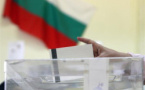
The Central Election Commission (CEC) in Bulgaria has confirmed that a total of 6,575,151 citizens are eligible to vote in the upcoming elections on April 19

Aniventure Comic Con Returns to Bulgaria with Star Guest Christopher Judge!
Global Fuel Shock: Oil Jumps Over 40% Since Iran War Began