€7.3 Billion on the Table: Is Bulgarian Business Ready for Europe’s Defense Boom?
Europe is undergoing a fundamental shift in how it approaches defense, moving beyond increased spending toward the creation of an entirely new industrial ecosystem
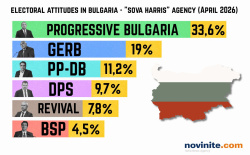
HOT: » Which party would you vote for (if you could) in the upcoming snap vote in Bulgaria on April 19?
 Send to Kindle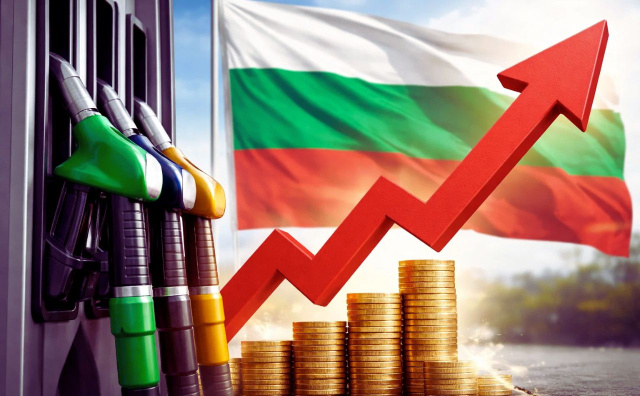
The president of the Confederation of Bulgarian Trade Unions, Plamen Dimitrov, has warned that inflation in Bulgaria is likely to exceed earlier projections, even if fuel prices begin to decline. Speaking to the Bulgarian National Radio, he stressed that a formal meeting of the Tripartite Council had been expected before Easter to discuss proposed anti-crisis measures, but such a step has yet to take place.
Dimitrov said the unions will continue to push for dialogue with the government, although he expressed uncertainty about the outcome. “If the right decisions are not made, people will continue to suffer,” he stated, adding that price increases already seen in the economy are unlikely to reverse. “Regardless of whether fuel prices fall, there will be higher-than-forecast inflation and the price of everything that has risen will not return.”
According to him, there are signs that some ministers have responded informally, but the measures introduced so far lack coherence. “We see actions that move in the direction we suggested, but they are fragmented and systematically disorganized,” he commented, arguing that a more structured and comprehensive approach is needed.
He emphasized that any intervention should begin with a clear identification of the most affected sectors and an assessment of how support for businesses would influence inflation. The goal, he explained, should be both to limit inflationary shocks and to protect vulnerable groups. “This is the logic of our proposal,” Dimitrov said.
The trade union leader also criticized the government’s recent financial support measures, including a 20-euro payment to vulnerable groups linked to rising fuel costs. He described the approach as ineffective, saying the funds were distributed without sufficient targeting. “This is helicopter money… without certainty that it reaches those most in need,” he argued, reiterating that more focused assistance would yield better results.
In his view, support for the transport sector is also insufficient and should be expanded to include public transport systems. Dimitrov pointed to examples from other countries, noting that policies in over 40 states prioritize subsidizing railways and urban transport to prevent fare increases and reduce reliance on private vehicles. “There should be no increase in ticket prices, so that people are not forced to use their cars because of expensive fuel,” he said.
He further highlighted proposals to introduce caps on fuel markups, suggesting limits of 10% for wholesalers and up to 20% for retailers. According to Dimitrov, industry representatives claim current levels are already below these thresholds, which would make such limits feasible as a preventive measure. He added that the proposal includes targeted support for transport companies, with allocations of up to 500 liters of fuel per month for light vehicles and 1,000 liters for heavy trucks and buses, alongside compensation of 20 cents per liter.
On the issue of energy policy, Dimitrov underlined the need to ensure sufficient funding in the Energy Security Fund at least until the end of the year. This, he said, is essential to maintain stable electricity prices for households when the new regulatory period begins on July 1.
Europe is undergoing a fundamental shift in how it approaches defense, moving beyond increased spending toward the creation of an entirely new industrial ecosystem

A leading global research center on democratic systems has issued a stark warning about political trends in several countries, concluding in its latest annual report that Bulgaria is now among those showing clear signs of democratic backsliding

Industrial output in Bulgaria posted a modest monthly increase in February 2026, but continued to decline sharply on an annual basis, according to preliminary, seasonally adjusted data from the National Statistical Institute.

The introduction of the euro in Bulgaria has so far produced only a limited and largely one-off effect on consumer prices, according to an analysis by the European Central Bank
Orthodox Easter Monday is the day following Easter Sunday and is observed across Bulgaria as part of the wider Easter celebration within the Orthodox Christian tradition

Easter is the most important religious holiday in the Orthodox Christian calendar and is widely celebrated across Bulgaria. It marks the resurrection of Jesus Christ and follows the completion of Holy Week, which includes Good Friday and Holy Saturday
Bulgaria’s fuel market has recorded a sharp upward shift since the outbreak of the war in Iran, with diesel and petrol prices rising significantly across the country
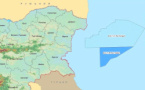
The second exploration drilling in the Krum-1 area of the Khan Asparuh block in Bulgaria’s Black Sea has also failed to identify commercially significant natural gas deposits, according to OMV Petrom

The Ombudswoman institution has voiced strong opposition to the proposed increase in heating prices in Sofia, which is expected to approach nearly 30 percent
The Energy and Water Regulatory Commission (EWRC) in Bulgaria has set the price of natural gas for April 2026 at 34.27 euros per megawatt-hour, excluding access, transmission, excise duties and VAT
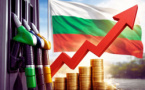
Fuel prices in Bulgaria have recorded a sharp upward movement over the past month, with diesel showing the most significant increase, according to data from the Fuelo platform
Bulgargaz has defended its previously submitted proposal for a 5% rise in natural gas prices for April before the Energy and Water Regulatory Commission, with CEO Veselin Sinabov stressing that there is currently no justification for any further increases

Aniventure Comic Con Returns to Bulgaria with Star Guest Christopher Judge!
Global Fuel Shock: Oil Jumps Over 40% Since Iran War Began