147 Years Since Sofia Was Chosen as Bulgaria’s Capital
- Tweet
 Send to Kindle
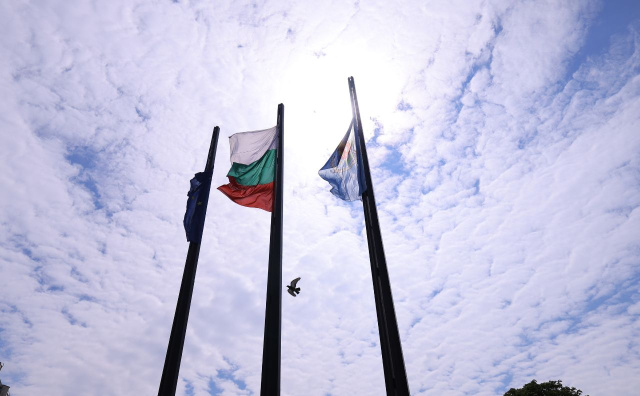 Photo: Stella Ivanova
A total of 147 years have passed since Sofia was officially designated as the capital of Bulgaria. This decision was taken on April 3 (March 22, old style) in 1879, when the Constituent Assembly, convened in the former capital Veliko Tarnovo, selected Sofia as the administrative center of the newly established Principality of Bulgaria.
The idea to make Sofia the capital was put forward by Prof. Marin Drinov, a prominent historian, scholar and public figure. At the time, the city was still relatively small. Data from 1878 shows that Sofia had a population of 11,694 people, along with modest infrastructure: two schools, seven churches, ten inns, 120 shops, 62 taverns, 19 bakeries and a total of 3,306 houses. Its territory covered just 2.84 square kilometers.
In his work “The Geographical Unity of the Bulgarian Lands,” Prof. Ivan Batakliev highlights the strategic importance of Sofia’s location. He notes that Bulgarian territories are arranged in a way that places the Sofia region at their core, giving it a natural role as a unifying center. Although the country’s geometric center lies further east, near Pazardzhik in Upper Thrace, Sofia holds a central position in terms of connectivity and cohesion.
Batakliev emphasizes that key transport routes pass through Sofia, not only within Bulgaria but across the Balkan Peninsula. Among them is the major diagonal road leading to Constantinople, as well as the principal north-south route following the valleys of the Iskar and Struma rivers. Because of this, the choice of Sofia as the capital was far from accidental. It emerged as the country’s main communications hub and cultural focal point, gradually establishing itself as the leading integrative center of Bulgarian lands. According to Batakliev, these characteristics justify viewing Sofia and its surrounding region as a distinct and significant part of Bulgaria’s territorial structure.
Sofia: Grows but Does Not Age
Holy Week Begins in Bulgaria: Church Outlines the Final Days of Christ’s Life
Holy Week has begun, marking the final days of the earthly life of Jesus Christ, the Bulgarian Orthodox Church announced, outlining the sequence of services that will be held across the country
Palm Sunday (Tsvetnitsa) in Bulgaria: A Day of Names and Renewal
Tsvetnitsa, known in English as Palm Sunday, is one of the most widely celebrated spring holidays in Bulgaria
Lazarovden: A Look at One of Bulgaria’s Spring Traditions
Lazarovden (St. Lazarus Day) is one of Bulgaria’s most recognizable spring holidays, combining Christian meaning with long-standing folk customs

Bulgarian Author Rene Karabash Reaches Booker Prize Shortlist With “She Who Remains”
The novel She Who Remains by Bulgarian author Rene Karabash has been shortlisted for the International Booker Prize, according to information published on the official website of the awards.
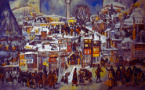
Record Art Sale in Bulgaria: Boyadzhiev's "Two Weddings" Reaches €280,000 After Fierce Bidding
Zlatyu Boyadzhiev’s painting “Two Weddings” ("Две сватби")has been sold for 280,000 euros at the Artmark spring auction held in Sofia, marking one of the most significant results for Bulgarian fine art on the market.
Alexey Shor: Musical Style, Concertos, Suites and Orchestral Works
Alexey Shor is a Ukrainian-born American composer who creates pieces for solo instruments and orchestra, often described as traditional, straightforwardand emotional.