Easter Monday in Bulgaria: Tradition and Family Visits
Orthodox Easter Monday is the day following Easter Sunday and is observed across Bulgaria as part of the wider Easter celebration within the Orthodox Christian tradition
HOT: » Which party would you vote for (if you could) in the upcoming snap vote in Bulgaria on April 19?
 Send to Kindle
Discussion around the admission of third-country workers to the Bulgarian labor market has intensified, often with emotions running high. To make informed decisions, however, it is necessary to rely on data rather than rhetoric. Understanding the approximate size of this workforce provides a foundation for evaluating potential impacts on the economy and labor market.
Accurate figures are difficult to establish, as different sources provide varying estimates. According to data obtained from the Migration Agency under the Access to Information Act, around 15,600 work permits were issued to third-country nationals in 2025. In contrast, the Employment Agency reports a figure exceeding 25,000. Eurostat offers an alternative perspective, reporting total residence permits at year-end rather than annual flows. Its latest available figures, for 2024, indicate that 20,900 permits were issued to third-country nationals citing employment as the reason for residence, compared to just 6,200 at the end of 2020. These work-related permits make up a small fraction of the total, which approaches 120,000 when family and other reasons are included. Seasonal or short-term workers, especially in tourism and agriculture, are not fully captured in these year-end figures.
Examining the origins of these workers, Russia leads with over 3,500 work permits, nearly double the pre-pandemic number, reflecting both skilled migration and the post-Ukraine war movement of professionals to Europe. Turkey (3,100 permits) and Uzbekistan (3,000) follow, with the United Kingdom (2,700) and Nepal (1,400) also contributing significant numbers. Uzbek and Nepalese workers are newcomers to the Bulgarian labor market; in 2020 only 89 permits were issued to Uzbeks and four to Nepalese. Other countries showing gradual increases include India, Bangladesh, Vietnam, and Kyrgyzstan. UK citizens are a special case: before Brexit they were not considered third-country workers, and post-Brexit data indicate their numbers have stayed relatively stable. Similarly, the inflow of workers from Ukraine and North Macedonia has not produced dramatic changes.
Overall, even at the highest estimates, third-country nationals constitute less than 1.5% of Bulgaria’s 2.9 million employed population. Their presence satisfies only a small portion of the country’s labor demand, meaning that their current impact on the overall workforce is limited. However, regionally and by sector, concentrations are evident. Hotels, restaurants, construction, agriculture, and certain manufacturing subsectors rely disproportionately on migrant labor.
The trend is evolving rapidly. Over five years, the number of work permits has quadrupled, bringing workers from countries that previously sent only a handful of individuals each year. Despite this growth, conditions for most businesses and workers have not fundamentally changed. Third-country workers remain only one element of addressing chronic labor shortages, alongside increased productivity, investment, and skills development.
Source: Institute for Market Economics
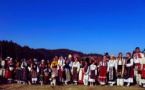
Orthodox Easter Monday is the day following Easter Sunday and is observed across Bulgaria as part of the wider Easter celebration within the Orthodox Christian tradition

Industrial output in Bulgaria posted a modest monthly increase in February 2026, but continued to decline sharply on an annual basis, according to preliminary, seasonally adjusted data from the National Statistical Institute.
The president of the Confederation of Bulgarian Trade Unions, Plamen Dimitrov, has warned that inflation in Bulgaria is likely to exceed earlier projections, even if fuel prices begin to decline

The introduction of the euro in Bulgaria has so far produced only a limited and largely one-off effect on consumer prices, according to an analysis by the European Central Bank
Easter is the most important religious holiday in the Orthodox Christian calendar and is widely celebrated across Bulgaria. It marks the resurrection of Jesus Christ and follows the completion of Holy Week, which includes Good Friday and Holy Saturday

Holy Saturday, known in Bulgaria as Lazarus Saturday’s continuation of the Easter cycle, is a quiet but deeply symbolic day in the Orthodox Christian calendar
Dr. Boyko Takov: Analytical and empirical results from ongoing projects constitute a solid information base

Up to 90 percent of construction and renovation workers in Bulgaria are operating outside the legal framework, according to entrepreneur Lozan Lozanov, who raised concerns about the lack of regulation in construction and installation services
The Ministry of Finance has released a broad public dataset covering more than 7,000 public procurement contracts with a combined value exceeding 30 billion euros

Mobile slot gaming has exploded in popularity, and it’s easy to see why.
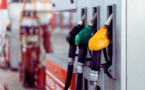
Caretaker Finance Minister Georgi Klisurski said he expects fuel prices at gas stations to ease in the coming period, pointing to a sharp decline in international oil markets

Boris Azarenko is an entrepreneur whose professional background lies in banking and finance and who later founded major property development businesses.

Aniventure Comic Con Returns to Bulgaria with Star Guest Christopher Judge!
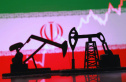
Global Fuel Shock: Oil Jumps Over 40% Since Iran War Began