Bulgaria Weather: Mixed Easter Forecast With Sun, Rain, and Gradually Rising Temperatures
Holiday weather conditions are expected to remain mixed across Bulgaria, with alternating periods of sunshine and rain showers, according to the forecast
HOT: » Which party would you vote for (if you could) in the upcoming snap vote in Bulgaria on April 19?
 Send to Kindle
The European Court of Justice (CJEU) has ruled that Bulgaria must establish clear and effective procedures for the legal recognition of gender identity, including the ability to update personal documents such as identity cards and birth certificates, Bulgarian media "Capital" reported. The decision comes after years in which Bulgarian courts denied legal gender reassignment, contrary to EU law, and follows earlier condemnations from the European Court of Human Rights in Strasbourg for the country’s refusal to allow gender changes.
The ruling underscores that EU member states are required to provide accessible procedures for legal gender recognition as part of the right to private life. While issuing identity documents falls under national competence, states must ensure that their practices comply with EU law. Discrepancies between a person’s experienced gender and official documents can create significant obstacles in daily life, particularly during identity checks, cross-border travel, or professional activities. Any restriction on free movement must meet objective public interest requirements and the principle of proportionality under EU law.
The CJEU explicitly stated that Bulgarian legislation preventing the change of gender data in civil registries, including gender, first name, patronymic, surname, and civil registration number, for citizens who exercise their right to free movement is incompatible with EU law. Moreover, Bulgarian courts are not bound by Constitutional Court interpretations that impede the application of EU law. National courts must follow the CJEU, even if domestic constitutional rulings contradict EU standards.
The decision arose from a preliminary ruling requested by the Bulgarian Supreme Court of Cassation in the case of K.M.H., a Bulgarian citizen born male in Stara Zagora in 1990 who now lives in Italy, has begun hormone therapy, and identifies as female. Her application to change her legal gender in Bulgaria was repeatedly rejected despite medical opinions and judicial expertise confirming her gender identity.
This development follows a long history of shifting national case law. Earlier, some Bulgarian courts allowed legal gender changes, but this approach was reversed following Constitutional Court decisions. In July 2018, the Constitutional Court declared the Istanbul Convention incompatible with the Bulgarian Constitution, citing political and social considerations. Subsequent rulings reinforced the notion that only biological sex at birth is recognized, making legal gender changes impossible.
In October 2021, the Constitutional Court reaffirmed that the Constitution recognizes only male and female sexes and that birth registration determines lifelong legal identity. Then, in February 2023, the Civil Chamber of the Supreme Court of Cassation issued an interpretative decision declaring that Bulgarian law does not allow transgender persons to change their legal gender. The vote was closely split, with 28 judges in favor and 21 dissenting, prompting the referral to the CJEU.
Earlier guidance from the Advocate General of the CJEU, Jean Richard de la Tour, had already stated that Bulgarian courts could not deny legal gender reassignment, whether by requiring surgery or citing gaps in national law or constitutional provisions. The recent CJEU ruling confirms this and mandates that Bulgaria revise both its judicial practice and legal framework to align with EU standards.
This ruling marks a decisive shift in Bulgaria’s approach to transgender rights, requiring both courts and lawmakers to provide effective legal mechanisms for gender recognition, in line with EU law and the protection of fundamental rights.
Source: https://curia.europa.eu/site/upload/docs/application/pdf/2026-03/cp260033en.pdf

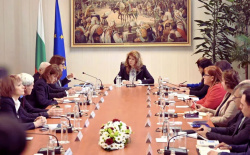
Holiday weather conditions are expected to remain mixed across Bulgaria, with alternating periods of sunshine and rain showers, according to the forecast

Up to 90 percent of construction and renovation workers in Bulgaria are operating outside the legal framework, according to entrepreneur Lozan Lozanov, who raised concerns about the lack of regulation in construction and installation services

The Ministry of Finance has released a broad public dataset covering more than 7,000 public procurement contracts with a combined value exceeding 30 billion euros

The Easter holiday getaway has officially begun in Bulgaria, with traffic leaving Sofia surging as thousands of people set off for the long weekend

A 53-year-old man with a criminal record has been detained in Bulgaria during a targeted police operation against vote buying, carried out in the village of Brestnitsa in the Lovech region
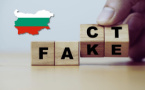
Bulgaria is bracing for an increase in disinformation activity in the run-up to the parliamentary elections on April 19, with authorities warning of coordinated attempts to influence voters and destabilize public trust
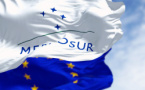
The caretaker government has approved a decision endorsing the Partnership Agreement between the European Union and its Member States and the Mercosur bloc

US Vice President JD Vance launched a sharp attack on the European Union during a visit to Budapest, accusing Brussels of interfering in Hungary’s election just days before a closely contested vote that could reshape the country’s political landscape
Fuel prices in Germany have recently reached new highs, with diesel briefly exceeding 2.40 euros per litre during the Easter holiday period before easing slightly afterward
A recently revised German military service framework has triggered public debate after it emerged that it places new travel-related obligations on men aged between 17 and 45

Spain has officially launched its system of digital identity, which came into effect on April 2 and grants the electronic version of the national identity card the same legal validity as the physical document

Unemployment in the euro area edged up slightly in February, reaching 6.2% compared to the record low of 6.1% recorded in January, according to figures released by Eurostat

Aniventure Comic Con Returns to Bulgaria with Star Guest Christopher Judge!
Global Fuel Shock: Oil Jumps Over 40% Since Iran War Began