Easter Monday in Bulgaria: Tradition and Family Visits
Orthodox Easter Monday is the day following Easter Sunday and is observed across Bulgaria as part of the wider Easter celebration within the Orthodox Christian tradition
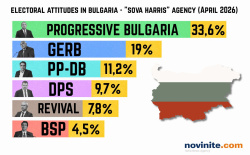
HOT: » Which party would you vote for (if you could) in the upcoming snap vote in Bulgaria on April 19?
 Send to Kindle
The Fiscal Council has assessed that a 25% surge in global oil prices would constitute a moderate external shock for Bulgaria, primarily impacting the economy through higher energy import costs, rising inflation, and a potential slowdown in external demand.
In its 2026 fiscal outlook simulation, the Council notes that Bulgaria’s integration within the European Union provides structural stability through diversified energy sources, strategic reserves, and macroeconomic coordination mechanisms. Despite these buffers, a 25% oil price increase would exert moderate pressure on the state budget, potentially pushing the deficit to between 3.3% and 3.6% of GDP. The most immediate fiscal effect would come from higher operating costs for government services, transport, and public administration. Under such a scenario, the deficit could rise by 0.15–0.35 percentage points of GDP from a baseline of roughly 3%, reaching a range of 3.25–3.6% without compensatory measures.
Inflation would also feel the impact. Rising oil prices increase transport and production costs, which in turn affect consumer prices. In Bulgaria, a 25% increase could translate into an additional 0.4-1.0 percentage points of inflation, depending on domestic market conditions and the pass-through of price changes from the euro area.
Trade effects are expected to be moderate. Bulgaria imports refined petroleum and energy raw materials, so higher oil prices would worsen the trade balance, widening the current account deficit by roughly 0.2-0.4% of GDP.
The Council emphasizes that Bulgaria benefits from protective mechanisms as an EU member. Ongoing diversification of the energy sector and investments in infrastructure help mitigate vulnerability to external shocks.
The recent sharp rise in oil prices in early March was driven by escalating military tensions between the United States, Israel, and Iran. U.S. and Israeli strikes on Iran, followed by Iranian counterattacks, led to a partial blockade of the Strait of Hormuz - a critical route carrying nearly 20% of the world’s oil. Currently, traffic through the strait is minimal, and the high military threat has fueled market anxiety. While the market reacted strongly, analysts cited in the Fiscal Council report suggest that if normal operations resume quickly, the price spike may be temporary.

Orthodox Easter Monday is the day following Easter Sunday and is observed across Bulgaria as part of the wider Easter celebration within the Orthodox Christian tradition

Industrial output in Bulgaria posted a modest monthly increase in February 2026, but continued to decline sharply on an annual basis, according to preliminary, seasonally adjusted data from the National Statistical Institute.

The president of the Confederation of Bulgarian Trade Unions, Plamen Dimitrov, has warned that inflation in Bulgaria is likely to exceed earlier projections, even if fuel prices begin to decline

The introduction of the euro in Bulgaria has so far produced only a limited and largely one-off effect on consumer prices, according to an analysis by the European Central Bank

Easter is the most important religious holiday in the Orthodox Christian calendar and is widely celebrated across Bulgaria. It marks the resurrection of Jesus Christ and follows the completion of Holy Week, which includes Good Friday and Holy Saturday

Holy Saturday, known in Bulgaria as Lazarus Saturday’s continuation of the Easter cycle, is a quiet but deeply symbolic day in the Orthodox Christian calendar

Bulgaria’s fuel market has recorded a sharp upward shift since the outbreak of the war in Iran, with diesel and petrol prices rising significantly across the country
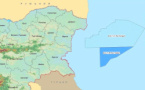
The second exploration drilling in the Krum-1 area of the Khan Asparuh block in Bulgaria’s Black Sea has also failed to identify commercially significant natural gas deposits, according to OMV Petrom

The Ombudswoman institution has voiced strong opposition to the proposed increase in heating prices in Sofia, which is expected to approach nearly 30 percent
The Energy and Water Regulatory Commission (EWRC) in Bulgaria has set the price of natural gas for April 2026 at 34.27 euros per megawatt-hour, excluding access, transmission, excise duties and VAT

Fuel prices in Bulgaria have recorded a sharp upward movement over the past month, with diesel showing the most significant increase, according to data from the Fuelo platform

Bulgargaz has defended its previously submitted proposal for a 5% rise in natural gas prices for April before the Energy and Water Regulatory Commission, with CEO Veselin Sinabov stressing that there is currently no justification for any further increases

Aniventure Comic Con Returns to Bulgaria with Star Guest Christopher Judge!
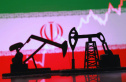
Global Fuel Shock: Oil Jumps Over 40% Since Iran War Began