Is Russian Oil Flowing to Bulgaria in 2026?
Bulgaria's only oil refinery, Lukoil Neftochim Burgas, processed Russian crude for most of its post-Soviet history. Since March 2024, that has been banned by law
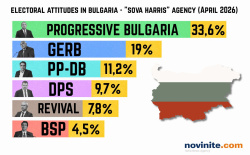
HOT: » Which party would you vote for (if you could) in the upcoming snap vote in Bulgaria on April 19?
 Send to Kindle
Former Bulgarian President Georgi Parvanov (2002–2012) expressed strong support for the newly elected leader of the Bulgarian Socialist Party (BSP), Krum Zarkov, praising his intelligence, education, and integrity. Speaking to BNT, Parvanov recalled Zarkov’s previous resignations under Kornelia Ninova and Rumen Radev, noting that he left both times quietly, without scandal, while steadfastly defending his positions.
Further reading: Bulgaria: New Socialist Party Leader Vows Unity and Action, Saying Victory Belongs to All
Parvanov emphasized that the BSP remains the primary left-wing formation in Bulgaria. He warned that anyone attempting to appropriate the party’s legacy would be disappointed. Reflecting on past leadership, he said that previous BSP leaders had paid the price for agreements with other political figures, including older party leaders, and acknowledged that a lack of character at the time contributed to electoral losses. He also noted that coalition politics, particularly with GERB, had been difficult due to GERB’s tendency to weaken its partners, while recalling that the DPS under Ahmed Dogan had been a more reliable coalition partner in his own government.
New Leadership Sparks Hope for the BSP
According to Parvanov, prior to the BSP congress, it was reasonable to predict that Rumen Radev could have weakened the party in elections. However, Zarkov’s election marks a turning point, creating a real chance to restore trust among both veteran and younger members of the party. Parvanov noted that Radev has not signaled any intention of representing left-wing voters, and the former president questioned whether Radev’s approach to combating the oligarchy and mafia could be more effective now than during his tenure as head of state, given that the presidency provides broader leverage than a party leadership position.
Parvanov described the current political landscape in Bulgaria as dominated by a “triple model,” consisting of Boyko Borissov, Delyan Peevski, and Rumen Radev. He suggested that while these figures do not cooperate, their combined influence effectively hinders political development and governance in the country.
Parvanov’s Political Position and Support
When asked whom he would support in the upcoming elections, Parvanov was clear: he will not vote for Radev. Instead, he expressed full support for BSP under Zarkov, citing a renewed motivation to back a leadership that he believes can bring the party back into political relevance.
On the topic of presidential candidates, Parvanov praised Vice President Iliyana Yotova, with whom he has worked for three decades, describing her conduct as exemplary. He also criticized the recent behavior of MECH leader Radostin Vassilev, who withdrew from consultations with the head of state, contrasting it with Yotova’s professionalism and declaring that she could be a worthy presidential candidate.
Parvanov’s remarks underline both his confidence in the BSP’s new leadership and his clear opposition to Radev as a representative of left-leaning voters, framing the upcoming elections as a potential revival for the centenary party under Zarkov.

Bulgaria's only oil refinery, Lukoil Neftochim Burgas, processed Russian crude for most of its post-Soviet history. Since March 2024, that has been banned by law

Energy expert Martin Vladimirov from the Center for the Study of Democracy has warned that fuel prices in Bulgaria have not yet reached their peak, adding that the country is gradually converging with average EU levels.

Former Defense Minister Prof. Todor Tagarev has commented on Bulgaria’s military aviation situation, noting concerns about the condition of the country’s current fighter fleet and the pace at which new aircraft are being integrated.

Healthcare costs in Bulgaria are rising at a significantly faster pace than overall inflation, with price growth in the sector in 2026 roughly twice the national average compared to 2025

Around half a million Bulgarians chose to spend Easter inside the country, while roughly 120,000 traveled abroad

Bulgargaz has submitted a proposal to the Energy and Water Regulatory Commission (EWRC) suggesting a natural gas price of €35.98 per megawatt hour (MWh) for May
Acting Interior Ministry Secretary General Georgi Kandev has reported that police operations against vote buying in Bulgaria have so far led to the seizure of around 1 million euros, alongside thousands of inspections and a sharp rise in citizen alerts ah
Political analysts suggest that the outcome of Hungary’s recent elections could resonate in Bulgaria ahead of its own vote, potentially shaping voter behavior and political positioning
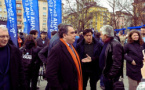
Speaking at a public meeting in Pazardzhik, “We Continue the Change” leader Asen Vassilev warned that a new external shock linked to Iran could trigger another major economic crisis, with direct effects on energy prices, food costs and vulnerable househol
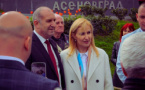
Speaking in Asenovgrad, the leader of “Progressive Bulgaria” Rumen Radev said that a high voter turnout could fundamentally reshape the political landscape, arguing that mass participation would lead to the removal of Boyko Borissov and Delyan Peevski fro
Europe is undergoing a fundamental shift in how it approaches defense, moving beyond increased spending toward the creation of an entirely new industrial ecosystem
A leading global research center on democratic systems has issued a stark warning about political trends in several countries, concluding in its latest annual report that Bulgaria is now among those showing clear signs of democratic backsliding

Aniventure Comic Con Returns to Bulgaria with Star Guest Christopher Judge!
Global Fuel Shock: Oil Jumps Over 40% Since Iran War Began