Easter Monday in Bulgaria: Tradition and Family Visits
Orthodox Easter Monday is the day following Easter Sunday and is observed across Bulgaria as part of the wider Easter celebration within the Orthodox Christian tradition
HOT: » Which party would you vote for (if you could) in the upcoming snap vote in Bulgaria on April 19?
 Send to Kindle
 Parliament Speaker Raya Nazaryan and Secretary-General Mathias Cormann
Bulgaria is on track to potentially join the Organization for Economic Cooperation and Development (OECD) by 2027, though significant steps still need to be completed to secure full membership. This was highlighted during a meeting in Sofia between OECD Secretary-General Mathias Cormann and outgoing Prime Minister Rosen Zhelyazkov, which also included Finance Minister Temenuzhka Petkova, Parliament Speaker Raya Nazaryan, and Foreign Minister Georg Georgiev.
According to Zhelyazkov, Bulgaria is approaching the end of the third roadmap in its accession process. Progress has been made across 25 thematic groups. By early 2025, seven groups had finalized their files, and since then, an additional 11 files have been completed. Seven files remain outstanding, with the expectation that they will be successfully finalized this year, paving the way for Bulgaria to become the OECD’s 39th member. Zhelyazkov emphasized that every future government would need to continue this work.
“This process is more than a matter of prestige; it is a crucial factor in boosting the country’s investment potential,” Zhelyazkov noted. He stressed that improving competitiveness depends on strong education, a supportive investment climate, and a well-functioning labor market. Strengthening public administration and enhancing workforce productivity are also essential, particularly in light of demographic challenges and broader social system considerations.
Secretary-General Kormann praised Bulgaria’s recent progress and expressed confidence that full OECD membership could be achieved by the end of 2026. He underlined that accession would serve as a major economic driver, fostering stronger growth, job creation, and a higher standard of living for Bulgarian citizens.
Bulgaria first expressed its intent to join the OECD in 2007, and in early 2022, the OECD Council formally opened membership talks. Since 2018, successive Bulgarian governments have coordinated their efforts through a structured roadmap to meet the organization’s requirements. Zhelyazkov described OECD membership as the country’s next significant economic and political objective, one that enjoys broad support across political lines.
He explained that the OECD accession process has been divided into three roadmaps: 2018–2020, 2021–2023, and 2023–2025. Each roadmap contains multiple thematic groups, with detailed discussions and progress reports tracking Bulgaria’s advancements. By early 2025, seven of these groups had completed their dossiers, and as of now, nine additional files are finalized, with two more on the verge of completion. The remaining seven files are expected to be addressed this year.
Beyond procedural milestones, Zhelyazkov highlighted that Bulgaria must also address broader structural challenges to ensure competitiveness. Enhancing education, the investment environment, labor market efficiency, and public administration performance will be critical. These improvements aim to generate higher added value and productivity in the workforce, ensuring sustainable growth while addressing demographic and social system pressures.
Joining the OECD, he concluded, represents both a prestigious achievement and a concrete opportunity to strengthen Bulgaria’s economic foundation and international standing.

Orthodox Easter Monday is the day following Easter Sunday and is observed across Bulgaria as part of the wider Easter celebration within the Orthodox Christian tradition

Industrial output in Bulgaria posted a modest monthly increase in February 2026, but continued to decline sharply on an annual basis, according to preliminary, seasonally adjusted data from the National Statistical Institute.
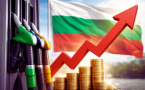
The president of the Confederation of Bulgarian Trade Unions, Plamen Dimitrov, has warned that inflation in Bulgaria is likely to exceed earlier projections, even if fuel prices begin to decline

The introduction of the euro in Bulgaria has so far produced only a limited and largely one-off effect on consumer prices, according to an analysis by the European Central Bank

Easter is the most important religious holiday in the Orthodox Christian calendar and is widely celebrated across Bulgaria. It marks the resurrection of Jesus Christ and follows the completion of Holy Week, which includes Good Friday and Holy Saturday

Holy Saturday, known in Bulgaria as Lazarus Saturday’s continuation of the Easter cycle, is a quiet but deeply symbolic day in the Orthodox Christian calendar
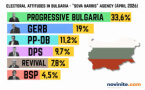
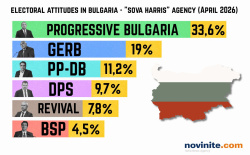
A new survey by the “Sova Harris” agency indicates that six political formations would enter the next Bulgarian National Assembly, based on data collected between April 2 and 6 among 800 respondents through standardized face-to-face interviews
Bulgaria is bracing for an increase in disinformation activity in the run-up to the parliamentary elections on April 19, with authorities warning of coordinated attempts to influence voters and destabilize public trust

The Prosecutorial College of the Supreme Judicial Council has declined to remove Borislav Sarafov from his position as Acting Prosecutor General, despite calls from the Justice Ministry to act following a recent Constitutional Court ruling

The government has decided to withdraw all three Bulgarian nominations for the position of European Prosecutor, effectively restarting the procedure after identifying serious flaws in the initial selection process
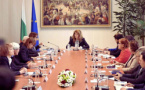
President Iliana Yotova convened a meeting of institutions responsible for the conduct of the early parliamentary elections on April 19, with a focus on assessing preparedness and ensuring that every vote is properly safeguarded
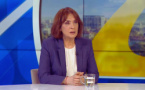
Bulgaria’s caretaker Foreign Minister Nadezhda Neynsky said the announcement of a two-week ceasefire between the United States and Iran brought a sense of relief after weeks of escalating tensions in the Middle East

Aniventure Comic Con Returns to Bulgaria with Star Guest Christopher Judge!
Global Fuel Shock: Oil Jumps Over 40% Since Iran War Began