Bulgaria Weather: Mixed Easter Forecast With Sun, Rain, and Gradually Rising Temperatures
Holiday weather conditions are expected to remain mixed across Bulgaria, with alternating periods of sunshine and rain showers, according to the forecast
HOT: » Which party would you vote for (if you could) in the upcoming snap vote in Bulgaria on April 19?
 Send to Kindle
After a marathon sitting lasting more than ten hours, Bulgaria’s National Assembly adopted amendments to the Electoral Code on second reading, significantly reducing the number of polling stations abroad in countries outside the European Union. Under the new rules, no more than 20 polling stations may be opened outside Bulgarian diplomatic and consular missions in non-EU states. The debate was dominated by sharp disputes over whether the changes restrict the voting rights of Bulgarians living abroad.
The proposal, introduced by "Revival", was strongly criticized by "We Continue the Change-Democratic Bulgaria (WCC-DB), which described it as a deliberate attempt to curtail the rights of Bulgarian citizens outside the EU. WCC–DB MP Nadezhda Yordanova argued that the amendments lacked clear justification and were the result of opaque political arrangements, aimed at punishing voters abroad who had withdrawn support from certain parties in previous elections.
From a different perspective, the Bulgarian Socialist Party (BSP) defended the changes on financial grounds. BSP parliamentary group leader Dragomir Stoynev questioned why the state should fund elections for citizens who live abroad and do not pay taxes in Bulgaria, suggesting that if voting abroad is to be expanded, the costs should be borne by the voters themselves. This prompted WCC-DB’s Martin Dimitrov to counter that Bulgarians living abroad send substantial sums back to the country, which ultimately benefit the state budget.
The Alliance for Rights and Freedoms (APS) warned that the amendments create artificial barriers to voting, while "Revival" rejected these accusations. "Revival" MP Tsoncho Ganev claimed that for decades certain parties had relied on manipulated or coerced votes in Bulgaria and on voters abroad, particularly in Türkiye, whom he alleged often lacked knowledge of the Bulgarian language. APS MP Sevim Ali responded by accusing "Revival" of executing a political order linked not only to GERB but also to DPS leader Delyan Peevski.
The debate repeatedly stalled due to quorum checks, procedural interruptions and calls for breaks. MECH MP Hristo Rastashki blamed long-standing governance by GERB leader Boyko Borissov for driving many Bulgarians to emigrate, while "Greatness" MP Juliana Mateeva warned that the adopted texts were unconstitutional.
A central moment of the session came when WCC leader Asen Vassilev took the floor and spoke for more than 80 minutes. He read, polling station by polling station, detailed voting results from the United Kingdom and the United States, arguing that each location represented Bulgarian citizens whose right to vote was now being effectively limited. "Revival" MP Tsveta Rangelova rejected the claim, insisting that no one was being deprived of voting rights, while GERB MP Alexander Ivanov criticized the chair for allowing Vassilev’s prolonged intervention.
Inspired by this tactic, "Revival" MP Georgi Hrisimirov later read out voting data from more than 120 polling stations in Türkiye, further extending the sitting. Throughout the day, quorum was repeatedly lost and restored, with the minimum 121 MPs often barely present. The opposition’s strategy, particularly Vassilev’s extended speech, was widely seen as an attempt to collapse the quorum and delay the vote.
Despite rejected proposals to set the cap at 30, 70 or even 100 polling stations, the amendment fixing the limit at 20 was ultimately approved. The vote passed with the support of GERB, BSP, TISP and "Revival", while WCC-DB, DPS-New Beginning, the Alliance for Rights and Freedoms, Greatness, and several independent MPs opposed it. Warnings were issued that the changes could be challenged before the Constitutional Court, and calls were made for a presidential veto.
The amendments apply to polling stations outside embassies and consulates, which may now be opened only if more than 40 applications are submitted, within the overall cap. Compared with previous elections, the number of polling stations in Türkiye will be reduced roughly eightfold. MPs also agreed to postpone the creation of a multi-mandate “Abroad” constituency until 2028.
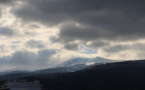
Holiday weather conditions are expected to remain mixed across Bulgaria, with alternating periods of sunshine and rain showers, according to the forecast
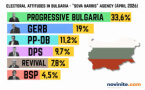
A new survey by the “Sova Harris” agency indicates that six political formations would enter the next Bulgarian National Assembly, based on data collected between April 2 and 6 among 800 respondents through standardized face-to-face interviews

Up to 90 percent of construction and renovation workers in Bulgaria are operating outside the legal framework, according to entrepreneur Lozan Lozanov, who raised concerns about the lack of regulation in construction and installation services
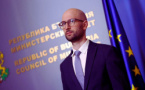
The Ministry of Finance has released a broad public dataset covering more than 7,000 public procurement contracts with a combined value exceeding 30 billion euros

The Easter holiday getaway has officially begun in Bulgaria, with traffic leaving Sofia surging as thousands of people set off for the long weekend

A 53-year-old man with a criminal record has been detained in Bulgaria during a targeted police operation against vote buying, carried out in the village of Brestnitsa in the Lovech region
A new survey by the “Sova Harris” agency indicates that six political formations would enter the next Bulgarian National Assembly, based on data collected between April 2 and 6 among 800 respondents through standardized face-to-face interviews

Bulgaria is bracing for an increase in disinformation activity in the run-up to the parliamentary elections on April 19, with authorities warning of coordinated attempts to influence voters and destabilize public trust

The Prosecutorial College of the Supreme Judicial Council has declined to remove Borislav Sarafov from his position as Acting Prosecutor General, despite calls from the Justice Ministry to act following a recent Constitutional Court ruling

The government has decided to withdraw all three Bulgarian nominations for the position of European Prosecutor, effectively restarting the procedure after identifying serious flaws in the initial selection process
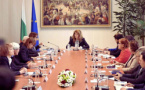
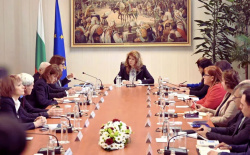
President Iliana Yotova convened a meeting of institutions responsible for the conduct of the early parliamentary elections on April 19, with a focus on assessing preparedness and ensuring that every vote is properly safeguarded
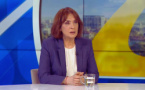
Bulgaria’s caretaker Foreign Minister Nadezhda Neynsky said the announcement of a two-week ceasefire between the United States and Iran brought a sense of relief after weeks of escalating tensions in the Middle East

Aniventure Comic Con Returns to Bulgaria with Star Guest Christopher Judge!

Global Fuel Shock: Oil Jumps Over 40% Since Iran War Began